

You publish an affiliate review post. It starts ranking, traffic trickles in, commissions show up in your dashboard, and you move on to the next piece of content. That is how it is supposed to work, and for a while it does.
Then one day, maybe months later, you happen to click one of those old links. And instead of landing on the product page, you get a 404 error. Or a redirect to the merchant’s homepage. Or a page for a product that does not exist anymore. You check a few more links on that same post and find two more that are broken in different ways.
That page has been getting traffic the entire time. Every visitor who clicked one of those links hit a dead end, and you never knew it was happening because nothing in your affiliate dashboard flags a broken outbound link. The clicks just vanish, and so do the commissions that should have come with them.
This is not a rare edge case. It is one of the most common and most invisible ways affiliates lose money, and it is almost always fixable once you know what to look for.
Why “Publish and Move On” Feels Right But Usually Isn’t
I understand the instinct to keep creating. New content feels like forward progress, and going back to check old posts feels like maintenance work that does not move the needle. When you only have a few hours a week to work on your business, spending any of that time on content you already published feels like a step backward.
But affiliate links are not static. The internet changes underneath your content constantly. Merchants shut down affiliate programs, product pages get moved or deleted, URLs break during site redesigns, and commission structures change without notice. A link that worked perfectly when you published a post six months ago might be completely dead today, and you would have no way of knowing unless you went back and checked.
The real cost is not just the broken link itself, it’s the compounding effect. A post that gets 200 visits a month with a broken affiliate link is not just losing commissions this month. It has been losing them every month since the link broke, and it will keep losing them until someone catches it. Multiply that across five or ten posts and the numbers get uncomfortable fast.

The Five Problems (and How to Fix Each One)
Most affiliate link issues fall into one of five categories. Some are obvious once you spot them, but the reason they cost so much money is that almost nobody goes looking for them on a regular basis.

Problem 1: Dead Links and 404 Errors
This is the most straightforward problem and the easiest to spot. You click the link, and the page simply does not exist anymore. You get a 404 error, a “page not found” message, or a redirect to a generic homepage that has nothing to do with the product you recommended.
This happens when merchants restructure their websites, discontinue specific products, or change their URL formats. It also happens when affiliate networks update their tracking links and the old format stops resolving.
The fix is simple: click the link, see where it goes, and either update it to the correct new URL or replace the recommendation entirely if the product no longer exists. If the merchant has a new version of the same product, update your review to reflect the current offering and point the link to the right page.
Problem 2: Expired or Deactivated Affiliate Programs
Sometimes the link itself still works and the product page still loads, but your affiliate tracking is no longer active. This happens when a merchant leaves an affiliate network, when your account with a specific program gets deactivated due to inactivity, or when the program itself shuts down.
The tricky part is that everything looks normal to your readers. They click, they land on a real product page, and they might even buy. But because your tracking is no longer active, you get nothing.
The way to catch this is to log into your affiliate dashboards and cross-reference which programs you are actively promoting against which ones are still active in your account. If a program has been deactivated, you can often reapply or find the same merchant on a different network. If the program no longer exists at all, it is time to find a comparable product to recommend instead.
Problem 3: Links Pointing to Out-of-Stock or Discontinued Products
This one is especially common in ecommerce and physical product niches. The link works, the tracking is active, but the product itself is out of stock or has been discontinued. Your reader clicks through, sees “currently unavailable,” and leaves. No sale, no commission, and a bad experience that makes your recommendation feel outdated.
Seasonal products, limited-run items, and products from smaller brands are the most likely culprits here. The fix depends on the situation. If the product is temporarily out of stock, you might add a note to your post mentioning that and suggest an alternative. If it has been discontinued, swap in a replacement product that serves the same purpose and update your review accordingly.
Problem 4: Better-Paying Alternatives You Have Not Switched To
This is not a broken link problem, but it costs you money just the same. The affiliate world moves fast, and the commission rate or program terms that were the best option when you first published might not be the best option anymore.
New affiliate programs launch regularly, and existing programs adjust their rates. A product you are promoting at 20% commission might now be available through a different network at 30%, or a competing product with better conversion rates might have launched since you wrote your original review.
Checking this does not take long. Look at the products you promote most, search for their affiliate programs on the major networks, and compare the current rates to what you are earning now. Even a small percentage increase across your highest-traffic pages adds up meaningfully over the course of a year.
Problem 5: Missing Affiliate Links on Pages That Should Have Them
This is the one most people overlook entirely. You have pages that get consistent traffic and mention products or services that have affiliate programs, but you never added affiliate links to those pages. Maybe you wrote the post before you joined that particular program, or maybe you mentioned a tool in passing without thinking to link it.
Go through your top traffic pages and read them with fresh eyes. Every time you mention a product, tool, or service by name, ask yourself whether there is an affiliate program for it. If there is and you are not linking to it, that is free money you are leaving behind on a page that is already doing the hard work of attracting visitors.
Three Real-World Scenarios

Scenario one: The product review blogger. Sandra had a roundup post comparing five project management tools. Two of the five had changed their pricing pages, and one had shut down its affiliate program entirely. She updated the links, swapped in a new tool for the one that closed, and saw commissions from that single post increase noticeably within the first month.
Scenario two: The niche site owner. Neil built a site reviewing outdoor gear and had not checked his Amazon links in over a year. Several products had been discontinued and the links were redirecting to generic category pages. He replaced them with current versions of the same products and recovered clicks that had been bouncing to dead ends for months.
Scenario three: The content creator with a resource page. Justina had a popular “tools I use” page that mentioned eight different platforms, but only four of them had affiliate links. She signed up for the affiliate programs of the other four, added the links, and turned a page that was already getting steady traffic into a much better revenue source without creating a single new piece of content.
Why This Matters More Than You Think
Your existing content that already has traffic is your most undervalued asset. A quick audit done once a quarter catches problems before they compound, surfaces revenue you are leaving on the table, and keeps your recommendations current so readers trust what you are pointing them to. It is one of the highest-return activities in affiliate marketing because you are optimizing pages that are already doing the hard work of attracting visitors.
Your 5-Minute Quick Win
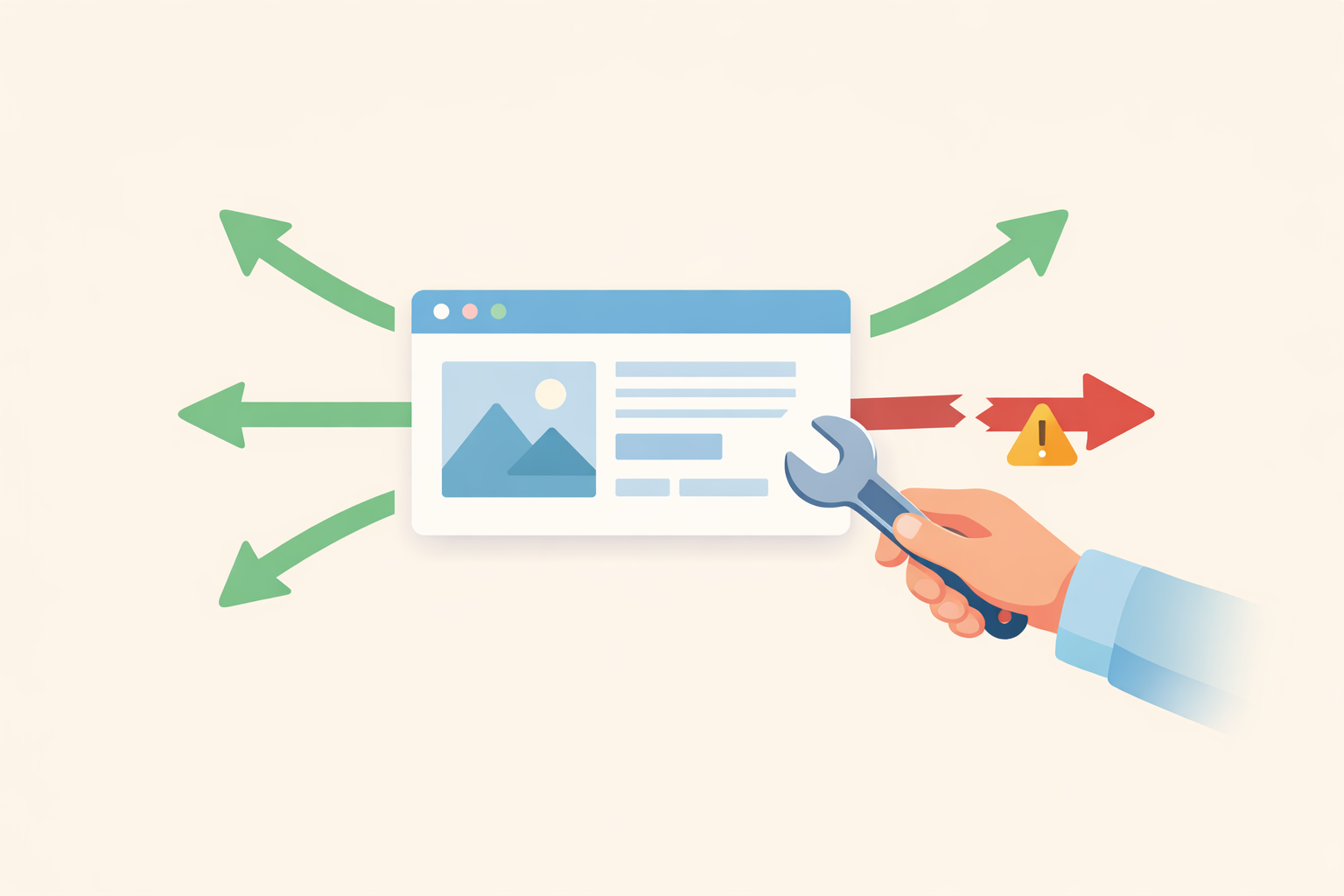
Open your analytics right now and find your single highest-traffic page that contains affiliate links. Click every outbound link on that page. Just that one page, today. If every link lands on the right product page and your tracking is still active, great. If even one is broken, you just found money that has been leaking, and you can fix it in minutes.
“But What If…”
“I only have a handful of posts, so this probably does not apply to me.”
It applies even more. When you only have a few posts driving traffic, every single link matters more because you have less volume to absorb the loss. A broken link on one of three posts is a much bigger problem than a broken link on one of three hundred.
“My affiliate links are managed through a plugin, so they should be fine.”
Link management plugins are great for organizing and redirecting your links, but they do not check whether the destination page still works or whether the affiliate program is still active. The plugin keeps your redirect working, but if the page it points to is a 404, your readers still hit a dead end.
“I do not get enough traffic yet to worry about this.”
If you are getting any traffic at all, broken links are costing you some amount of money. And building the habit now means you will never have to do a massive retroactive audit later when your traffic does grow. It is much easier to check a handful of posts quarterly than to audit hundreds of pages after years of neglect.
The next piece of content you create matters but so does the content you have already created (and it is already out there working for you right now). The content you published last month, last quarter, and last year is still attracting visitors and still shaping whether those visitors become commissions or dead ends. The only question is whether that content is working for you or against you.

