
For the last decade or so, online marketing has been built around one core idea: win the click. Get someone to your page, then persuade them to buy. Every headline, every ad, every funnel was designed to grab a human’s attention and hold it long enough to convert.
That model still works, but something underneath it is shifting. I’ve been watching it happen with my own students, and I’ve seen it accelerate just in the last six months. The “visitor” landing on your offer page is no longer always a person. Increasingly, it’s an AI agent doing research on behalf of a person. A tool like ChatGPT, Perplexity, or a shopping assistant that’s been asked to compare options, find the best deal, or recommend a solution. The human shows up later, if your offer makes the cut.

And that’s the key phrase: if your offer makes the cut. Because the game is no longer just about getting traffic to your page. It’s about getting recommended by the AI that’s filtering options before the human ever sees them.
You’re not just trying to win a click anymore. You’re trying to win a spot on a shortlist.
Why “Optimize for Humans” Feels Right But Isn’t Enough Anymore
If your first reaction is “I built my page for real people, not robots,” I get it. That instinct makes complete sense, and it’s not wrong exactly. Your page still needs to convert the human who eventually lands on it.
But here’s what’s changing: When an AI agent scans your page, it doesn’t feel anything. It doesn’t get pulled in by a dramatic hero image or an emotional headline. It doesn’t read your origin story and think, “I trust this person.” What it does is extract facts, compare them to alternatives, and decide whether your offer is clear enough and credible enough to recommend. If your page relies on emotion and storytelling alone, with the actual details buried three scrolls down, the agent moves on to something more structured.
 This doesn’t mean you strip out everything human from your pages. It means you add a layer that was never necessary before: clarity and structure that an AI agent can parse just as easily as a human can read. Think of it as making your offer bilingual, so it speaks to both audiences at the same time.
The Agent-Ready Offer Checklist
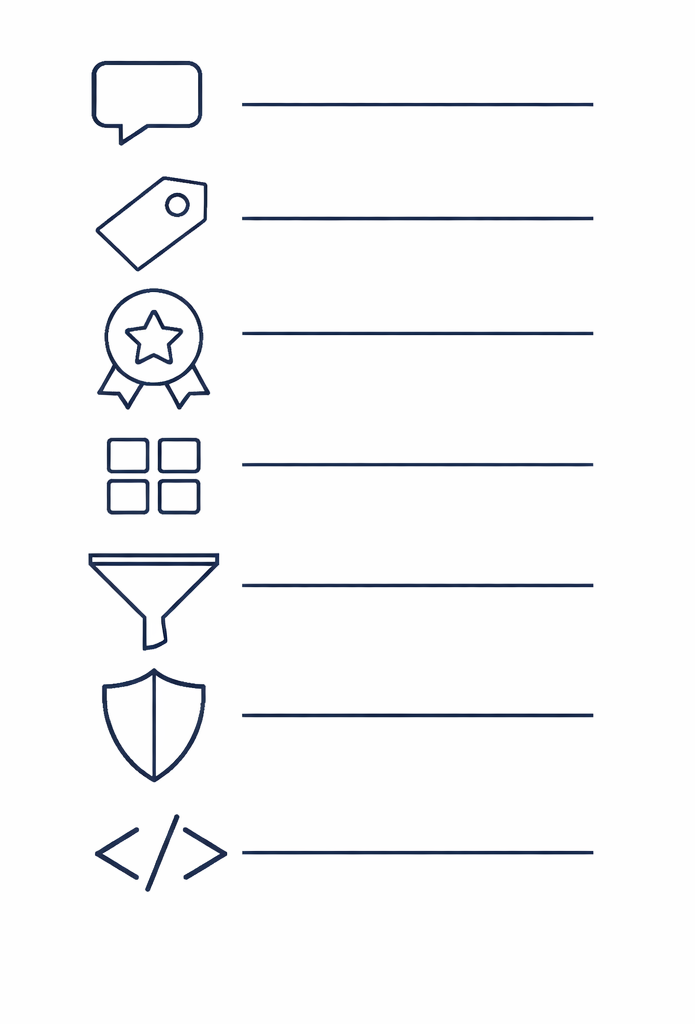 Here are seven specific things you can check and fix on your offer pages so they don’t get filtered out before the human ever shows up. None of these require a redesign. Most of them are copy changes you can make in an afternoon.
1. Lead With a Plain-Language Value Statement
The first 50 words on your page need to answer three questions: what do you sell, who is it for, and what outcome does it deliver? No metaphors, no clever wordplay, no “unlock your potential” filler. Just a clear, factual statement.
I’ve reviewed hundreds of student landing pages over the years, and the most common problem is that you can’t tell what the offer actually is until you’re halfway down the page. That’s always been a conversion issue with humans, but with AI agents it’s a dealbreaker. If the agent can’t extract your core value proposition from the top of the page, it moves on. It doesn’t scroll hopefully the way a curious human might.
2. Make Your Pricing Scannable
AI agents compare on price because their users ask them to:
“Find me three options under $50”
or
“compare these two courses and tell me which is the better value.”
If your pricing is hidden behind a “book a call” button, buried in a FAQ accordion, or only revealed after an email opt-in, the agent simply cannot include you in a comparison. You become invisible.
This doesn’t mean you have to plaster a giant price tag at the top, but your pricing, or at minimum your pricing range, needs to be on the page in plain text that an agent can read and extract.
3. Add Structured Proof
“Thousands of happy customers” tells an agent nothing useful. “327 students enrolled in the last 12 months with an average completion rate of 74%” tells it everything. AI agents weight specific, verifiable claims far more heavily than vague social proof, because specificity is one of the signals they use to assess credibility.
Look at your testimonials and results sections. Wherever you can, add numbers, timeframes, and named outcomes. “Sarah went from zero to $2,400/month in 90 days” is infinitely more parseable than “Sarah loved the course and totally transformed her business.”
4. Use a Comparison-Friendly Layout
When an agent is comparing your offer to two or three alternatives, it’s essentially building a table in its memory. Features, price, guarantee, audience, outcomes. If your page makes it easy to extract those data points, you have a structural advantage.
That means having clear sections for what’s included, who it’s for, and what results to expect. It doesn’t need to be a literal feature-comparison table, but the information needs to be organized in a way that an agent can pull specific answers to specific questions. Long, flowing narrative copy without any structural anchors makes this very difficult.
5. Kill the Fluff Paragraphs
Every paragraph on your page should contain at least one concrete claim, fact, or specific detail. Paragraphs that are pure hype, pure emotion, or pure motivation without any substance get treated as noise by AI agents. They don’t hurt you with humans necessarily, but they dilute the signal-to-noise ratio for an agent trying to extract what actually matters about your offer.
Read through your page and ask yourself: if I deleted this paragraph, would the agent miss any real information? If the answer is no, that paragraph is fluff, and it’s making your page harder for agents to process.
6. Include a Clear Guarantee or Risk-Reversal Statement
AI agents look for trust signals, and a guarantee is one of the clearest signals of confidence in your own offer. It’s also an easy comparison point. When an agent is presenting three options to a user, being able to say “this one includes a 30-day money-back guarantee” is a significant differentiator.
Make your guarantee visible, specific, and written in plain language. “Full refund within 30 days, no questions asked” works. A vague “satisfaction guaranteed” buried in your footer does not.
7. Add Machine-Readable Metadata
This is the one technical item on the list, but it matters more than most people realize. Schema markup, clean heading tags (H1, H2, H3 used correctly, not just for styling), structured FAQ sections, and alt text on images all help AI agents parse your page accurately. Think of it as giving the agent a set of labels so it doesn’t have to guess what each section means.
If you’re not comfortable with code, most modern page builders and WordPress themes let you add schema markup through plugins. It takes 10 minutes and it makes your page significantly more readable to any AI that visits it.
Three Real-World Scenarios
 Scenario one: an affiliate product review page.
You’ve written a detailed review of a software tool and you’re promoting it through an affiliate link. An AI agent comparing that tool to two alternatives will pull from your review if it can find clear pricing, a feature summary, and specific results. If your review is mostly opinion and story without those data points, the agent will pull from a competitor’s review instead, and your affiliate link never gets surfaced.
Scenario two: a small ecommerce product page.
You sell a physical product in a niche category. An agent asked “what’s the best X under $40” needs to find your price, your product specs, and your shipping terms on the page. If those details are locked inside image carousels or expandable tabs that don’t render as text, the agent can’t read them. A quick fix: make sure every key detail appears as actual text on the page, not just inside images.
Scenario three: a digital course sales page.
You’re selling a $297 course on email marketing. An agent evaluating your course against two others will compare curriculum detail, time commitment, student outcomes, and guarantee terms. The course page that makes all four of those things immediately scannable in plain text is the one that makes the shortlist.
Why This Matters
The shift here isn’t theoretical. AI-assisted shopping and research is growing every month, and the people using it tend to be exactly the kind of informed, comparison-driven buyers you want. They’re not impulse-clicking ads. They’re asking their AI to find the best option and explain why.
If your pages aren’t ready for that, you’re not losing traffic in the traditional sense. You’re losing something harder to measure: you’re being quietly excluded from recommendations you never knew were happening. And because you never see the agent visit or the comparison it ran, you have no idea you were filtered out.
 Your 5-Minute Quick Win
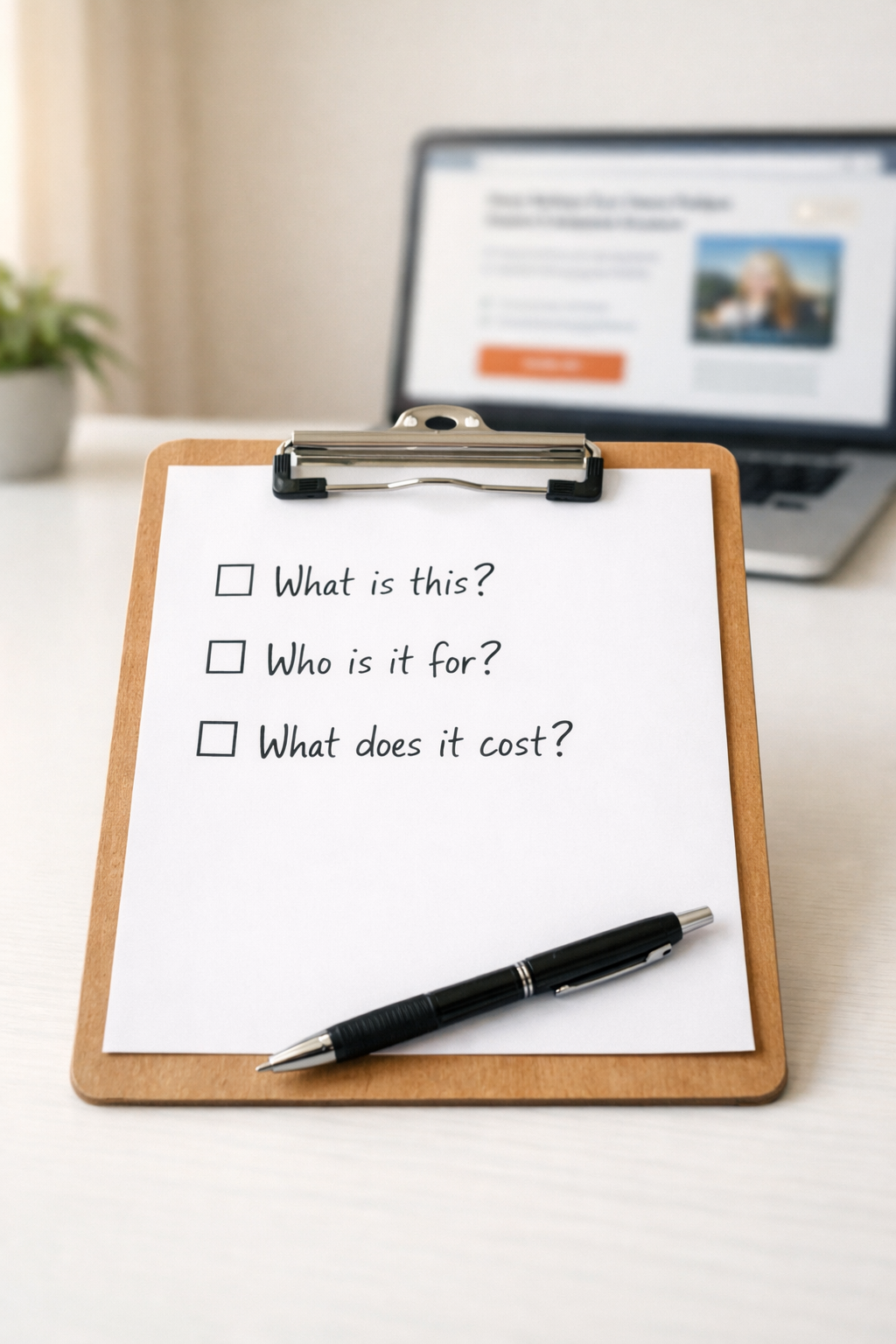
Open your best-performing offer page right now and read just the first 100 words. Can you answer these three questions from those words alone:
- what is this
- who is it for
- what does it cost?
If you can’t answer all three, rewrite that opening paragraph so all three answers are there in plain language.
That single change makes your page more readable to both AI agents and the humans they’re helping.
“But What If…”
“What if I sell a service, not a product? Does this still apply?”
It applies even more, because services are harder for agents to compare than products. The less tangible your offer, the more important it is to give the agent concrete details: what’s included, what the process looks like, what the timeline is, and what results past clients have gotten with specific numbers.
“What if I don’t want to show pricing publicly?”
That’s a business decision, and there are valid reasons for it. But you should know the tradeoff: if your price isn’t on the page, AI agents will exclude you from any price-based comparison. One middle ground is to include a “starting at” range or a pricing tier overview that gives agents enough to work with.
“What if AI agents aren’t really shopping in my niche yet?”
They might not be today, but the adoption curve is steep and it’s accelerating. Making these changes now costs you very little, and every single item on this checklist also improves your page for human visitors. There’s genuinely no downside to getting ahead of this.
The offer pages that win over the next few years won’t just be the ones that convert visitors. They’ll be the ones that get recommended by the AI doing the filtering before a visitor ever shows up.
Making your page agent-ready isn’t about chasing a trend. It’s about recognizing that the first impression of your offer is increasingly being made by a machine, and making sure that machine has every reason to put you on the shortlist.

