
You know the moment I’m talking about: Someone lands on your store, browses for a few minutes, picks out a couple of items, taps “add to cart”. Great.
But then something happens.
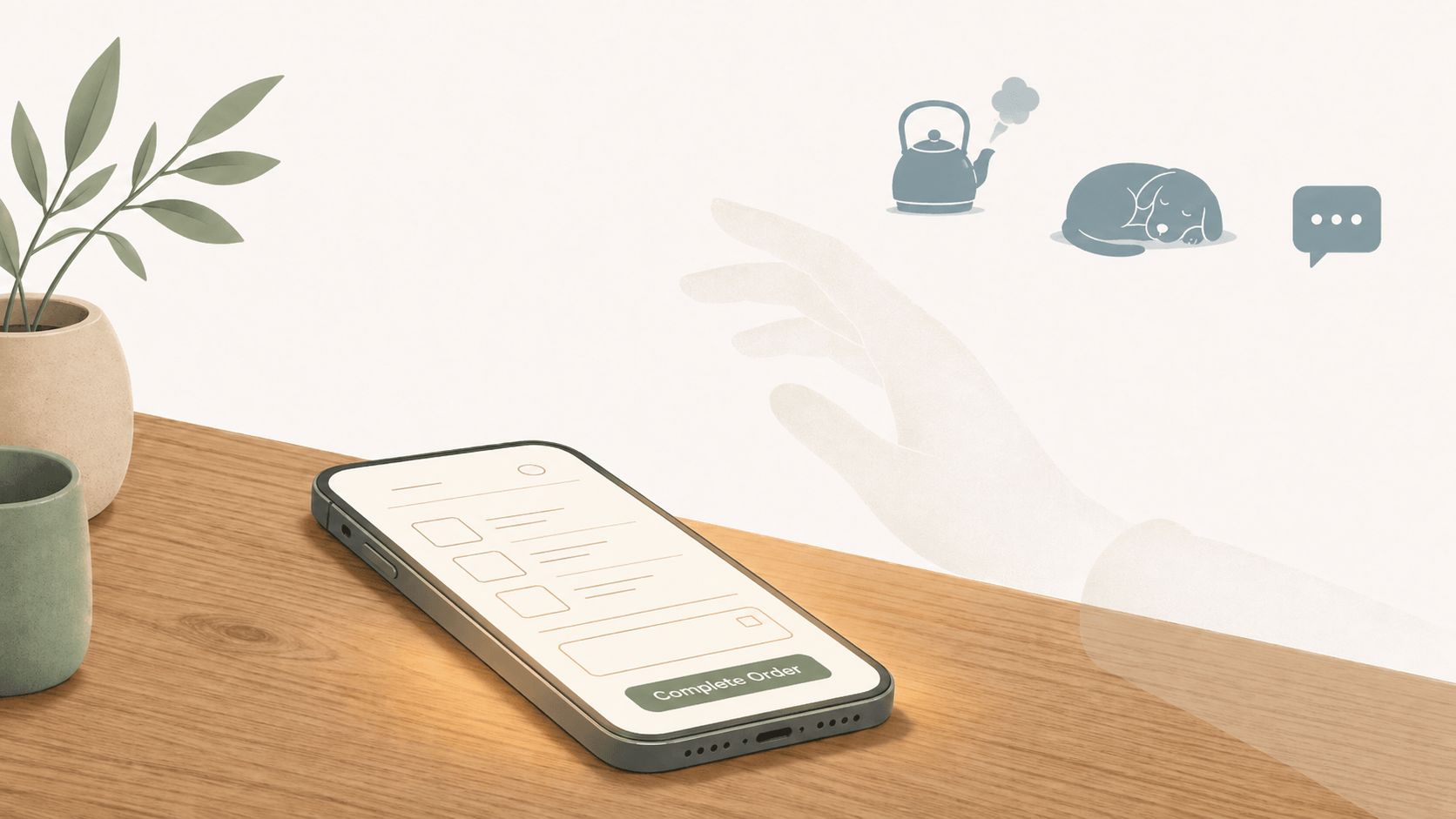
The dog barks, the kettle boils, a Slack ping pulls them away, SOME distraction and they put the phone down. Ugh.
The cart sits there. The session ends, and the sale never closes.
So, a few hours later your store fires off the standard recovery email, the one almost every ecommerce platform sets up for you by default. Subject line: “You left something behind.”
It feels like the thing you’re supposed to do, so most stores leave it on, tick the box, and assume that part of the funnel is handled.
But that single email is doing almost none of the work it could be doing. It treats hesitation like forgetfulness, and those are not the same thing.
The buyer did not forget, they hesitated, and one polite reminder rarely answers the question that made them hesitate in the first place.
The Quiet Cart Method
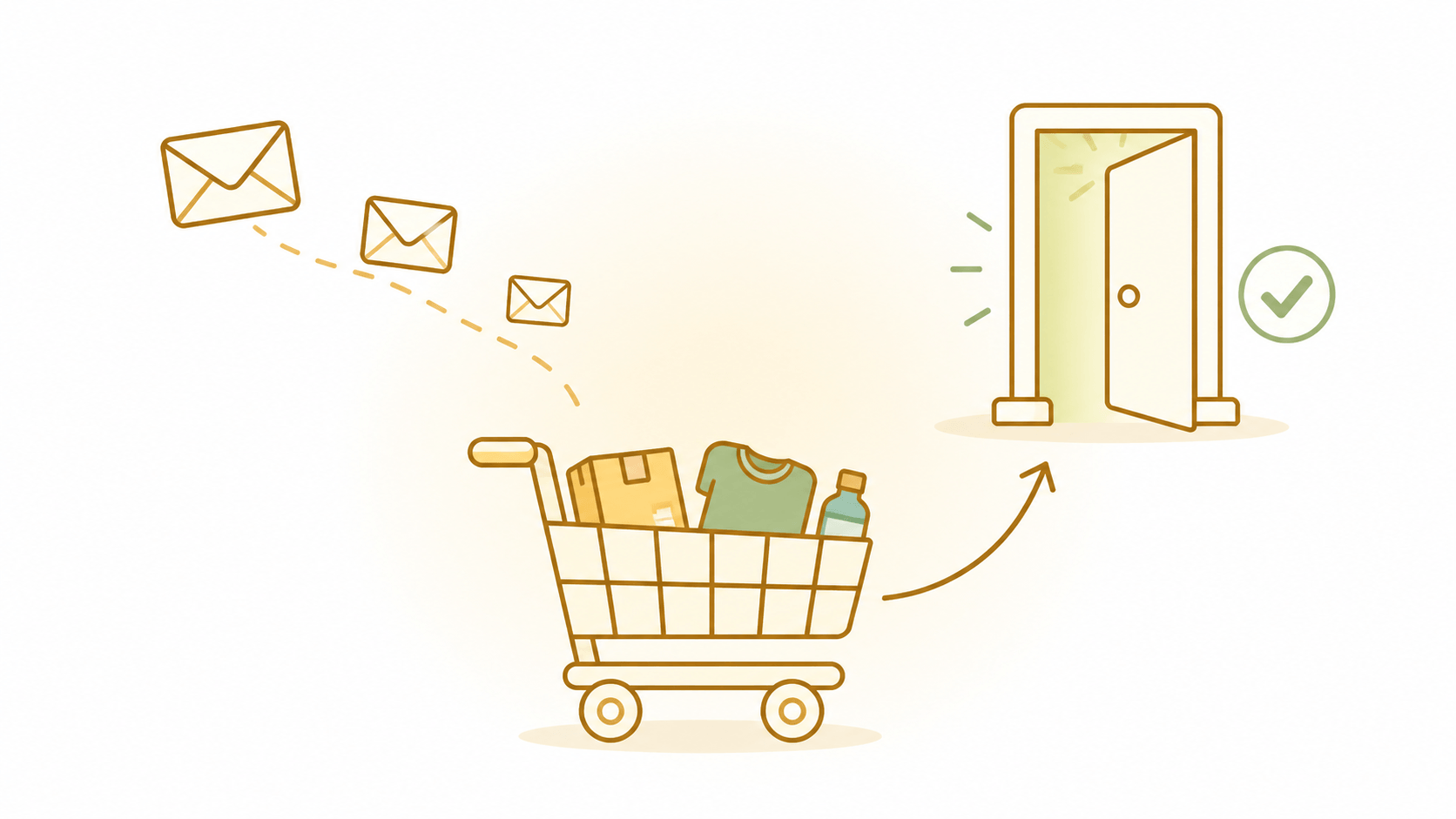
An abandoned cart is not a dead lead. It is a quiet one. The buyer raised their hand, walked toward the door, and then got distracted by something else. Your job is not to drag them back. Your job is to gently re-open the door, on their schedule, in a way that answers the actual question that made them pause.
The Quiet Cart Method does that with three emails, each with a clear and different job.
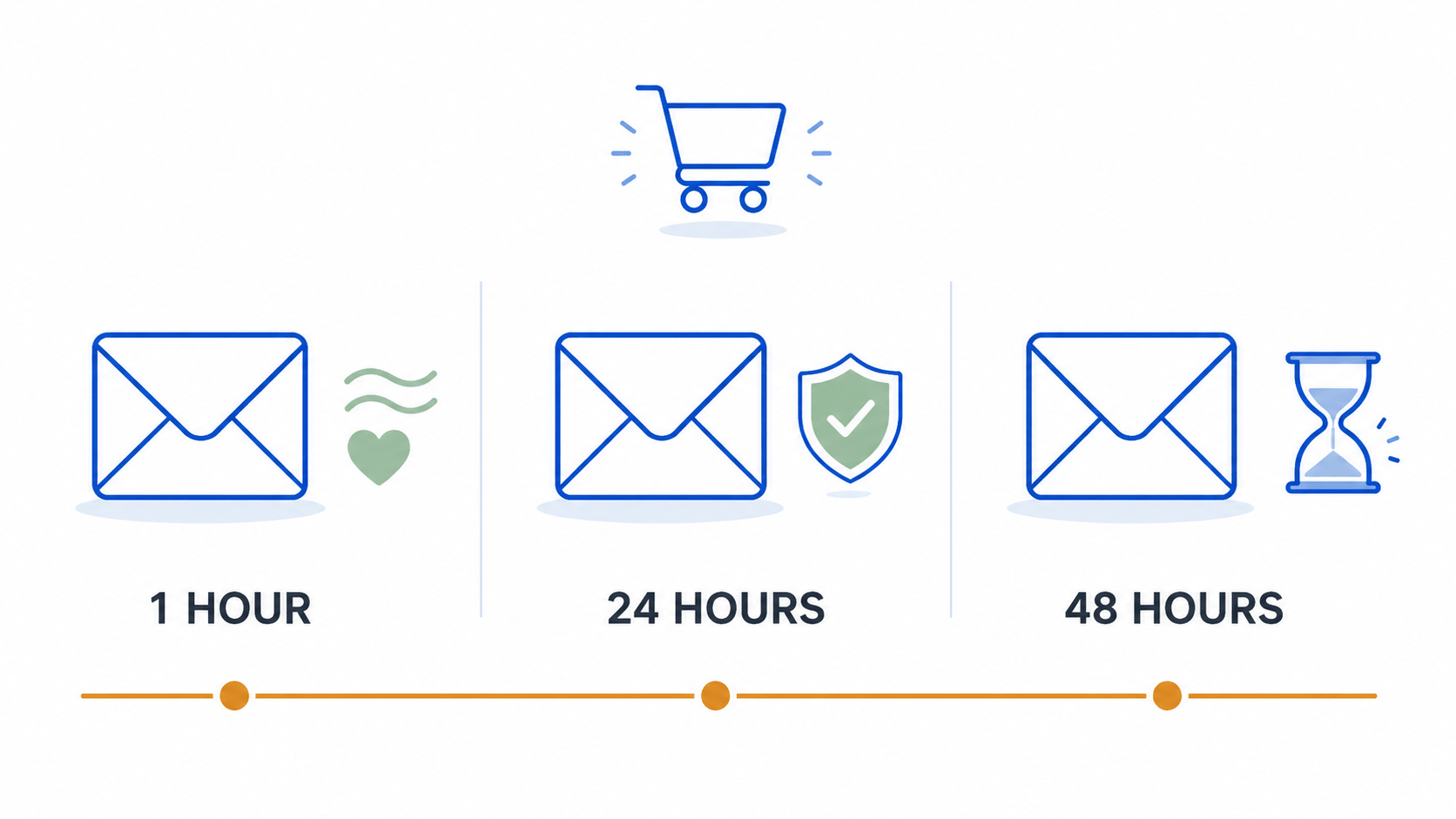
Step 1: The Gentle Reminder (1 hour after)
The first email goes out about an hour after the cart is abandoned, and its only job is to make it stupidly easy to come back. No discount, no pressure, no “this offer expires soon” line. Just a short note that assumes life happened, a single image of what they were looking at, and a one-tap link straight back to checkout.
Keep the copy short and warm, because two or three sentences is plenty. Something like, “Hey, looks like your cart is still hanging around. If now isn’t the right time, no worries. If you want to pick up where you left off, the link below takes you straight back.”
Most platforms let you trigger this on a one-hour delay automatically. The buyer is still in the right headspace, the product is still in their head, and the friction to come back is now almost zero.
Step 2: The Trust Signal (24 hours after)
The second email goes out about 24 hours later, and its job is completely different. This one handles the question that probably made them hesitate in the first place, not by guessing but by leaning on whichever objection comes up most often for your store.
If your most common objection is sizing, this email leads with a real customer review from someone who explains how the sizing worked for them. If it is shipping or returns, this email reassures the reader with the actual policy, like free returns within 30 days or two-day shipping in the box. If it is quality, this email shows a real photo from a real customer or links to a short video.
The key is that you are not selling here, you are answering. Pick the one objection that is most common in your customer support replies, your reviews, or your DMs, and build email two around resolving it. Then close with the same one-tap link back to checkout.
Step 3: The Soft Scarcity (48 hours after)
The third email goes out about 48 hours after the original cart was abandoned, and this one is the closer. Soft scarcity is the right tone here, not hype, so no fake countdown timers and no “ONLY 3 LEFT IN STOCK” panic in red text.
Instead, an honest line. If stock is genuinely running low, say so. If you are about to clear out the cart and release the items back into available inventory, tell them. If the cart price has been held for them and is about to revert, mention it.
The tone matters. Something like, “Just a heads up, we’re going to clear out your cart in the next day or so to free up the items for other customers. If you’d like to grab them before that happens, here’s the link.” That is gentle, and it is honest, and that combination is exactly what works on this audience.
Three Real-World Scenarios
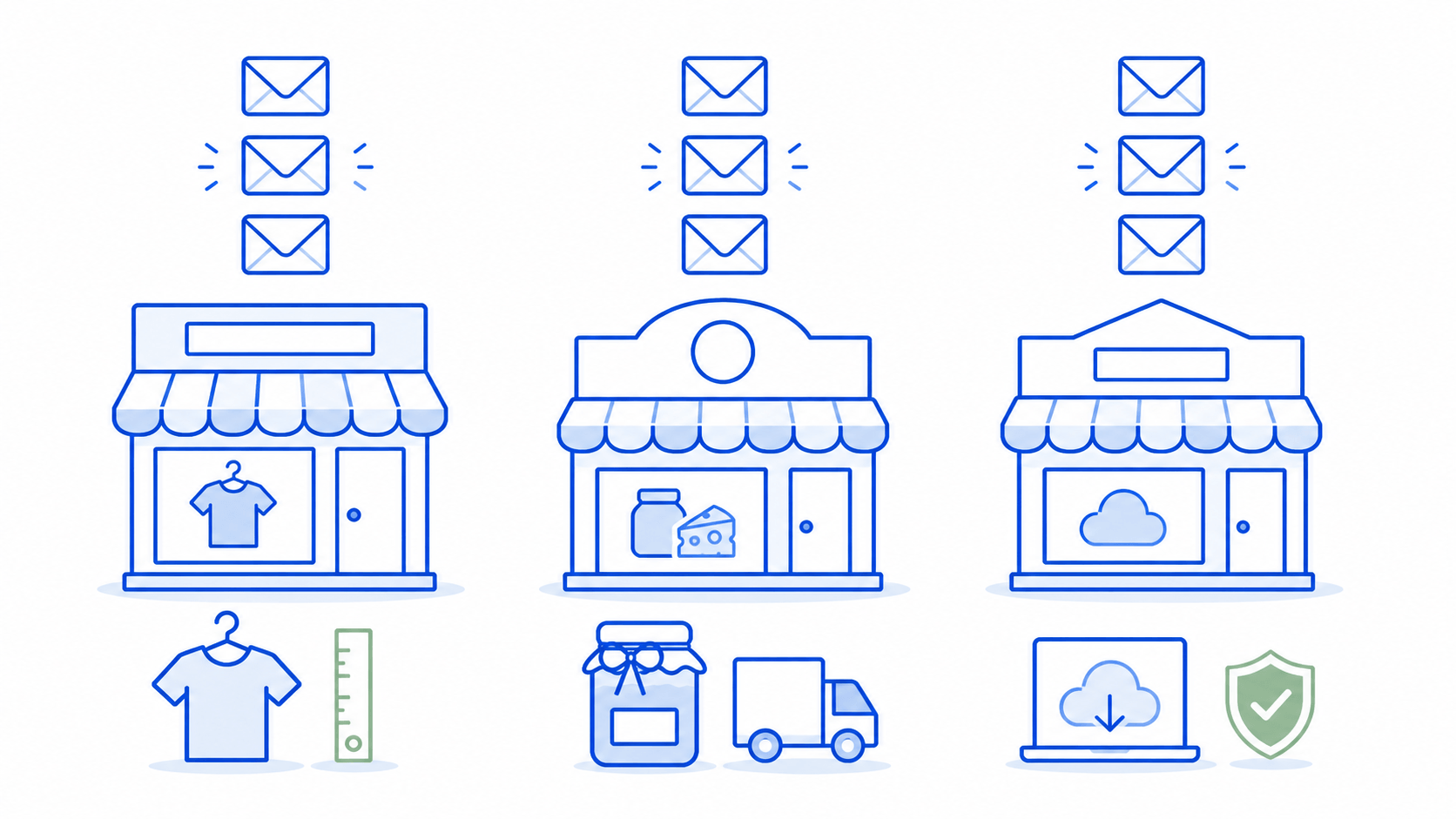
Scenario one: a small apparel store. The most common objection is sizing, so email two leads with a customer review explaining how the fit worked. Email three notes that the popular size in the cart is running low, which is true because it usually is.
Scenario two: a specialty food brand. The most common worry is freshness in transit, so email two reassures the buyer about shipping speed and packaging, ideally with a short note from a recent customer. Email three mentions that the upcoming production batch is filling up, so the cart will be cleared if it sits much longer.
Scenario three: a digital product store. Trust is everything here, so email two leans on the 30-day money-back guarantee and links to one short testimonial from a buyer who used it. Email three notes that the cart is being held at the current price for another 24 hours before it resets to the standard rate.
Why This Matters
Abandoned cart traffic is the cheapest revenue source in any ecommerce store. You have already paid to get that visitor, they have already chosen the product, looked at the price, and made it most of the way through the funnel. The hard part is done.
Recovering even a fraction of those carts compounds month after month with no extra ad spend. A store recovering 22 percent of abandoned carts each month, instead of the 5 to 8 percent most one-email setups recover, is pulling in a meaningful chunk of additional revenue from work it has already done. That difference does not come from being louder or pushier, it comes from sending the right email at the right time, three times instead of once, with each one doing a different job.
Your 5-Minute Quick Win

Open your email tool right now.
Most ecommerce platforms have an abandoned cart flow built in already, sitting there with one default email turned on, so add two more.
Schedule the gentle reminder at one hour, the trust signal at 24 hours, and the soft scarcity at 48 hours.
Use placeholder copy for now if you have to, because even rough drafts in the right structure will outperform a single polished email. You can refine the wording later.
“But What If…”
“What if I don’t have an email platform set up for this yet?”
You probably do already, even if you have not realized it. Shopify, WooCommerce, BigCommerce, and Wix all have an abandoned cart email feature built in for free. Open the settings, find the “abandoned cart” or “checkout recovery” section, and you will see one email already configured. Just add two more.
“What if my list and traffic are too small for this to matter?”
Even 10 abandoned carts a month at a $40 average order value is $4,800 a year sitting uncollected. Pulling back even a fifth of that adds up fast, and the smaller your store, the more every recovered sale matters.
“What if three emails feels pushy?”
Polite re-entry is not pushy. None of the three emails push, they re-open a door the buyer already walked toward, on a timeline that respects the buyer’s life rather than trying to rush them.
Most cart recovery setups stop too early. They send one polite email, mark the box, and assume the rest is up to the buyer.
But buyers do not abandon carts because they forgot, they abandon because something paused them, and a single reminder rarely addresses whatever that pause was.
Three small emails, set up once, do something different. They turn a quiet cart back into a clicked one, and that is where a lot of the easy money in ecommerce still lives.

