

You find a niche that gets you excited. Maybe it is something you already know a bit about, or maybe you read that people are making good money in it, and you can feel the momentum building.
So you do what almost everyone does next. You grab the domain, sign up for a couple of tools, sketch out some content, and maybe put $50 into a test campaign to see what happens.
None of that tells you the one thing you actually need to know: whether there are buyers in this niche at all.
I have watched this play out hundreds of times. Someone pours weeks of effort and a few hundred dollars into a niche, builds the site, writes the content, sets everything up properly, and then waits for sales that never come.
The niche was never going to pay. They just did not find that out until the money and the time were already gone. The frustrating part is that the answer was available the whole time, for free, in about half an hour.
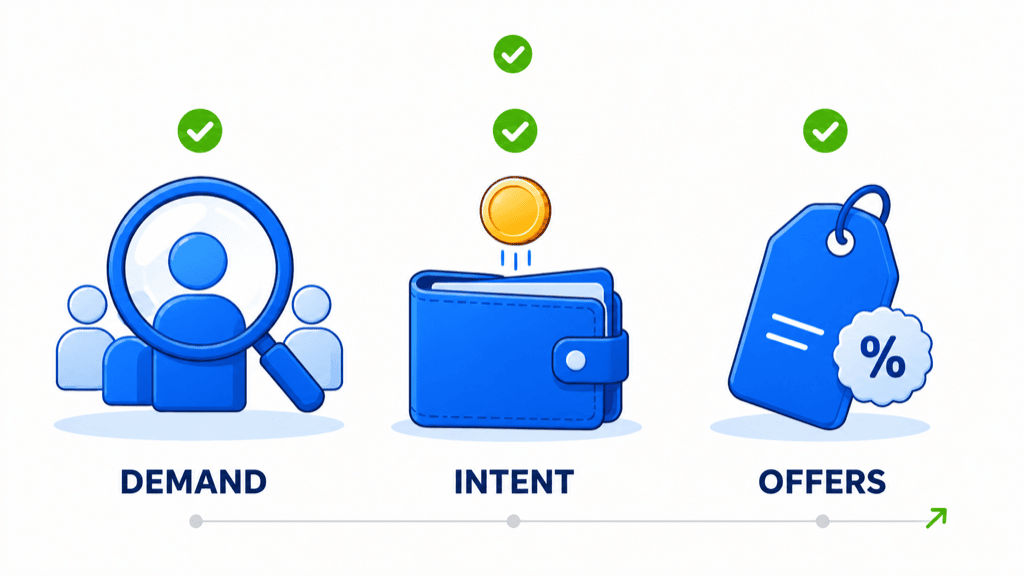
That is what this post is about. Before you spend a single dollar, you can get the market to tell you whether a niche is worth building. I call it the 30-Minute Niche Test, and it comes down to checking three signals in order:
- Real Demand — are enough people looking for this?
- Buyer Intent — are they trying to buy, or just browse?
- Offer Availability — is there something worth promoting?
The 30-Minute Niche Test

The test is simple. There are three signals, and I think of them as green lights. You check them one at a time, and you only move forward when each one comes back green.
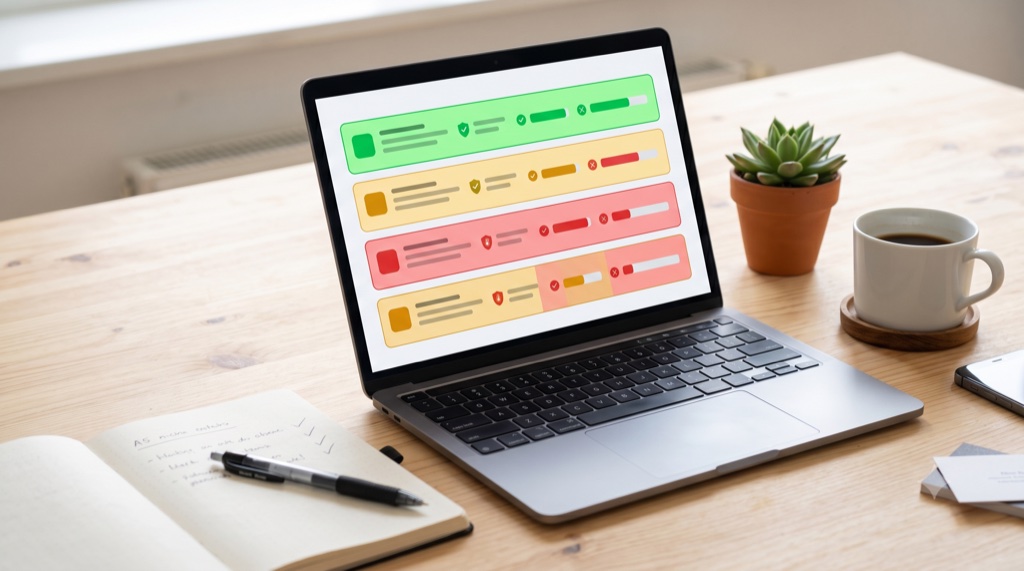
- All three green? You have found a niche worth building, and you can commit to it with real confidence.
- Even one red? You stop, you keep your money, and you go look at the next idea.
The whole point is to make the market vote before you build anything. You are not doing research for the sake of feeling busy. You are looking for a clear go or no-go answer, and you can usually get it in under 30 minutes once you know what you are looking at.
Green Light 1: Real Demand
The first thing that kills a niche is that nobody is actually there. So the first green light is simple: are enough people looking for this?
You can read this for free:
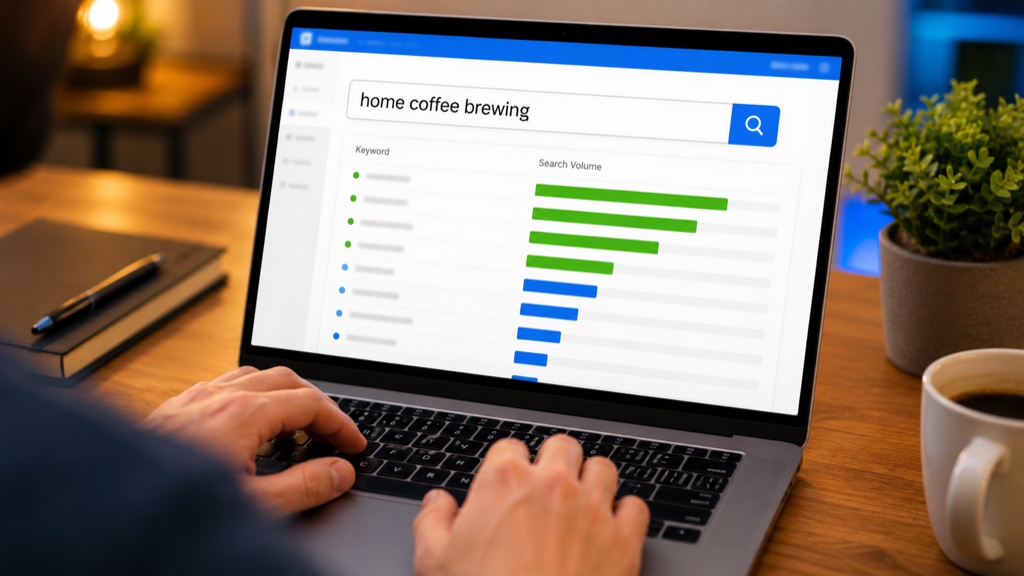
- Drop your niche and a handful of related phrases into Google and watch what auto-suggests as you type. Those suggestions are real searches that real people are making.
- Then run those same phrases through a free keyword tool like Google Keyword Planner or the free tier of something like Ubersuggest, and look at the rough monthly search volume.
Here is the rough benchmark I use, so you are not staring at numbers with no idea what counts as good:
- The broad niche itself should show at least a few thousand searches a month across its main terms.
- Underneath it, you want a handful of more specific phrases each pulling somewhere in the 300 to 3,000 searches a month range.
That middle band is the sweet spot, because there is genuine demand there without every big publisher already fighting over it.
You are not looking for one giant number, you are looking for a cluster of solid phrases that add up. If the main terms barely scrape a couple of hundred searches between them and nothing more specific shows any real volume, the niche is too quiet to build a business on.

Green Light 2: Buyer Intent
This is the green light most beginners skip, and it is the one that decides whether the niche pays.
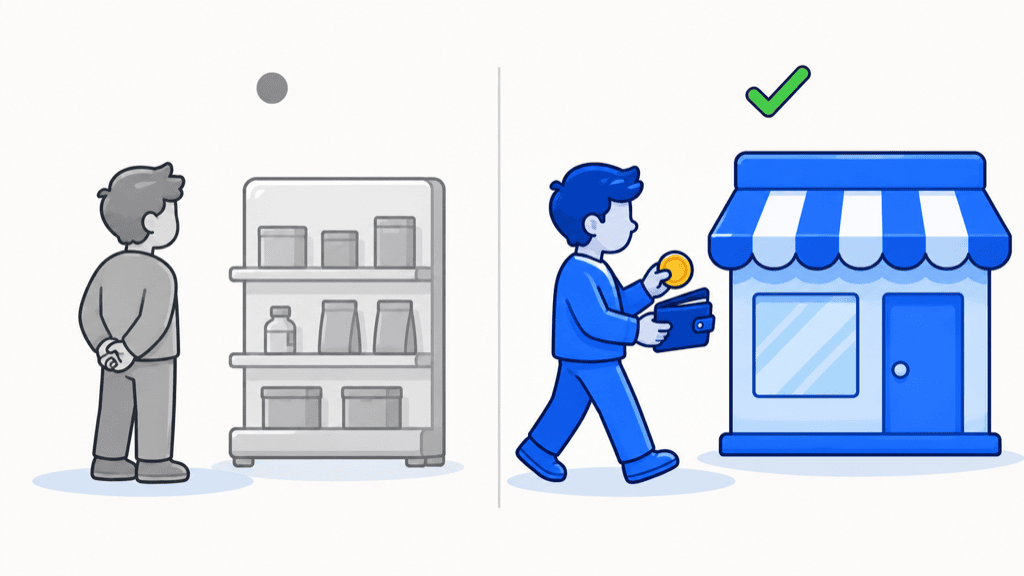
A crowd is not the same as a market. Plenty of niches have huge interest and almost no money in them, because the people searching are curious, not ready to spend.
So the second signal is about intent: are people trying to buy, or just browsing? The clearest free tell is in the language of the searches themselves.
- Wallet half out: best, review, vs, top, price. Someone comparing options before they buy.
- Just browsing: how, why, free. Someone who wants information and has no plans to spend today.
Now look at what comes up when you search your niche:
- Comparison pages, buying guides, and product roundups dominating the results? That is the market showing you money is moving through it, because nobody builds those pages unless they convert.
- Free advice and discussion threads with no commercial pages in sight? That is a quieter signal worth respecting.
Green light two confirms the crowd has its wallet out, not just its curiosity.
Green Light 3: Offer Availability
The third green light is the one people assume will be fine and sometimes is not. You can have real demand and real buyer intent, and still have nothing worth promoting.
A niche with no offers is a dead end no matter how good the first two signals look.
So before you commit, confirm there are actual products you can earn on. In a few minutes you can check:
- The big affiliate networks you already have access to.
- Whether the main brands in the niche run their own affiliate programs.
- The commission on offer while you are there.
That answers two questions at once: is there something real to promote, and is the payout worth your effort?
A niche packed with $5 commissions on items nobody buys twice is a very different business from one with recurring offers or higher-ticket products that pay you properly per sale. Green light three is where you confirm the money is reachable, not just present somewhere in the market.
Three Real-World Scenarios
Scenario one: the clean green light. Someone is looking at a niche around home coffee equipment. The searches show steady demand in the thousands, the top results are full of best-of guides and machine comparisons, and the affiliate programs pay solid commissions on gear people upgrade often. All three lights are green, so this is a build.
Scenario two: the buyer-intent fail. Someone loves the idea of a niche around free workout routines. Demand is enormous and the crowd is real, but almost every search is informational and the top results are free content with nothing to sell against. Green light one passed, green light two came back red, so they walk away before building a thing.
Scenario three: the offer fail. Someone finds a niche with strong demand and clear buyer intent around a specific hobby. People are searching to buy and the comparison pages are there, but when they check the networks the products are cheap one-time purchases with tiny commissions and no real programs behind them. The first two lights were green, the third was red, so the math never works and they move on.
Why This Matters
The market votes with its wallet, and your only real job before building anything is to read that vote.
Everyone wants to skip this part because checking feels slower than starting. It is the opposite. The slow path is spending six weeks building in a niche that was never going to pay, then starting over. Thirty minutes of free signals is what protects you from that.
Time is the one asset you do not get back, and money spent on the wrong niche is money you cannot put toward the right one. That is why validation is not the cautious option. It is what lets you commit fast, build hard, and stop second-guessing, because you already know the buyers are waiting on the other side.
Your 5-Minute Quick Win
Pick the niche you are most tempted by right now, the one you have been thinking about building.
In the next five minutes, run only green light one on it:
- Type it into Google and watch the auto-suggestions.
- Check the rough search volume on three related phrases in a free keyword tool.
You will get an instant read on whether the crowd is even there before you read another word. That single check has talked plenty of people out of a bad niche and into a better one.
“But What If…”
“What if my niche is so specific it barely shows up in the tools?”
That is usually green light one giving you an honest answer. A niche too small to register in the free tools is often too small to build a business on. Zoom out one level to the broader category and test that instead, then niche down once you confirm real demand exists above it.
“What if all three lights are green but I am still not sure?”
Then you are sure enough to start, and that is the point of the test. It is not designed to remove every doubt, only to confirm the niche has buyers, intent, and offers before you spend anything. The remaining questions get answered by building, not by more research.
“What if a strong competitor is already in the niche?”
That is often a green flag, not a red one. Competition usually means money, because people do not stick around in niches that do not pay. Your job is not to find an empty niche, it is to find a paying one and carve out a sharper, more specific angle inside it.
Most people spend money to find out whether a niche works. They build first and let their bank balance deliver the verdict weeks later, when it is expensive to be wrong.
You can get the same answer in as little as 30 minutes, for free, before any of it is on the line.

