

Most affiliate marketers go looking for their next niche in the wrong place.
They open a keyword tool, scan columns of search volume, and pick whatever looks busy. It feels productive, but it skips the only question that actually predicts whether a niche will pay you: are real people frustrated enough about something to spend money fixing it?
A keyword tool can tell you 40,000 people searched for “standing desk” last month. But it won’t tell you that half of them are furious their desk wobbles every time they type.
That second piece of information is the one worth money, because frustration is what opens wallets.
That gap is where Reddit comes in. It’s the most honest market research panel on the internet, and it’s free.
People go there to vent, to ask what they should buy, and to compare what they already own. Nobody is being polite for a brand survey. They are telling each other exactly what they want and what they are sick of, in their own words.
The Pain Thread Method
The Pain Thread Method is simple, and the whole system comes down to three moves:
- Read a niche subreddit looking for two specific kinds of threads.
- Watch for the patterns that repeat, the same problem coming up again and again from different people.
- Map each repeated pattern to a product category you can promote as an affiliate.
There are no tools to buy and no spreadsheets to set up, so you can start right now with nothing but a browser.
Here is how to run it…
Step 1: Pick a subreddit where people already spend money
Not every community is worth your time. Some subreddits are pure entertainment, and the people there are not in a buying frame of mind. You want communities built around a hobby, a problem, or a goal that already has a market of products around it. Good hunting grounds include:
- Home coffee and espresso
- Aquariums and fishkeeping
- Home gyms
- Dog ownership
- Gardening and RVing
- Mechanical keyboards
- Skincare
The test is simple: do members of this community routinely buy gear, supplies, or tools to get better at the thing?
If the answer is yes, money is already moving, and your job is just to find out where it wants to go next.
Avoid the biggest, busiest subreddits at first. A focused community of 80,000 hobbyists who buy regularly tells you more than a five-million-member giant where the best threads get buried under memes and screenshots within the hour.
Step 2: Hunt the two goldmine threads
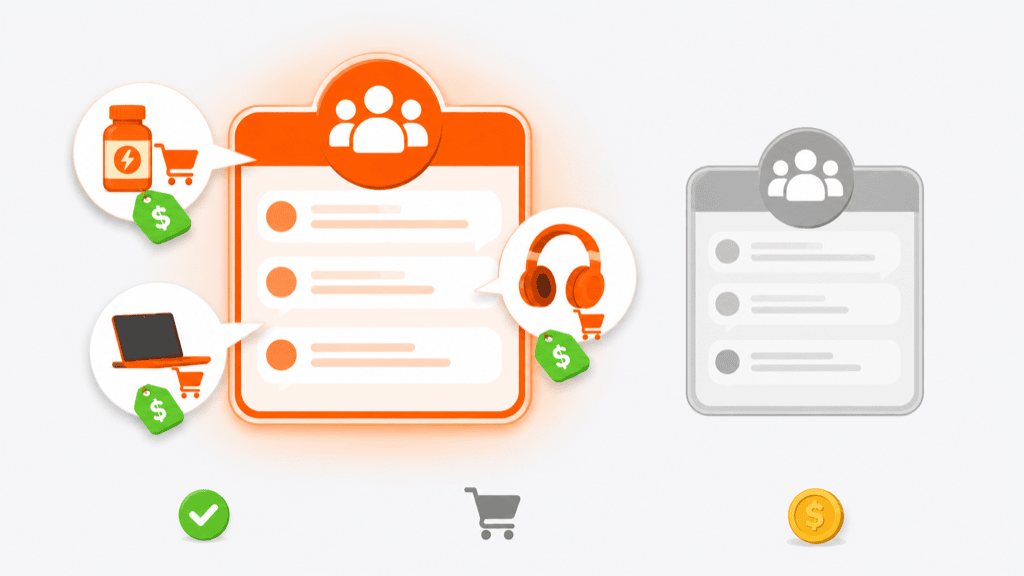
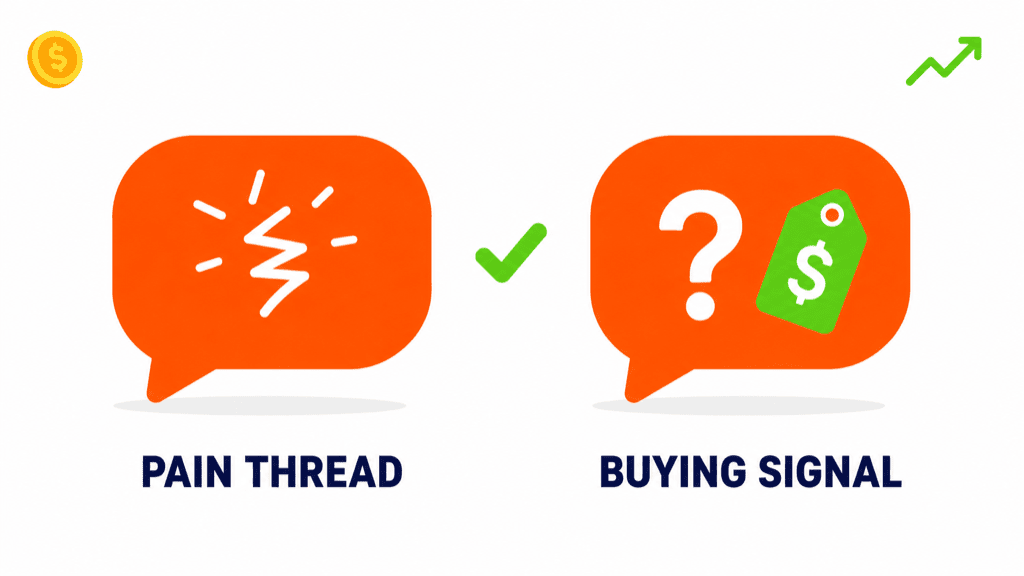
Once you are in, you are looking for two thread types and nothing else.
1. The pain thread. Someone venting about a problem they have not been able to solve. You can spot these from titles like:
- “Why does X keep happening?”
- “I’m so frustrated with my current Y”
- “Is it just me, or is Z impossible to get right?”
2. The recommendation request. The buying signal in its purest form, where a member is openly asking what to spend money on:
- “What should I buy for…?”
- “Best Y for under $100?”
- “Is Z worth the money?”
- “Talk me out of buying this”
Someone asking the community what to buy is someone with their wallet already half open, and the replies tell you which products people actually trust and which ones let them down.
Sort the subreddit by top posts of the month and skim. You can spot both thread types from the titles alone, so this goes faster than you would expect.
Step 3: Look for the repeat
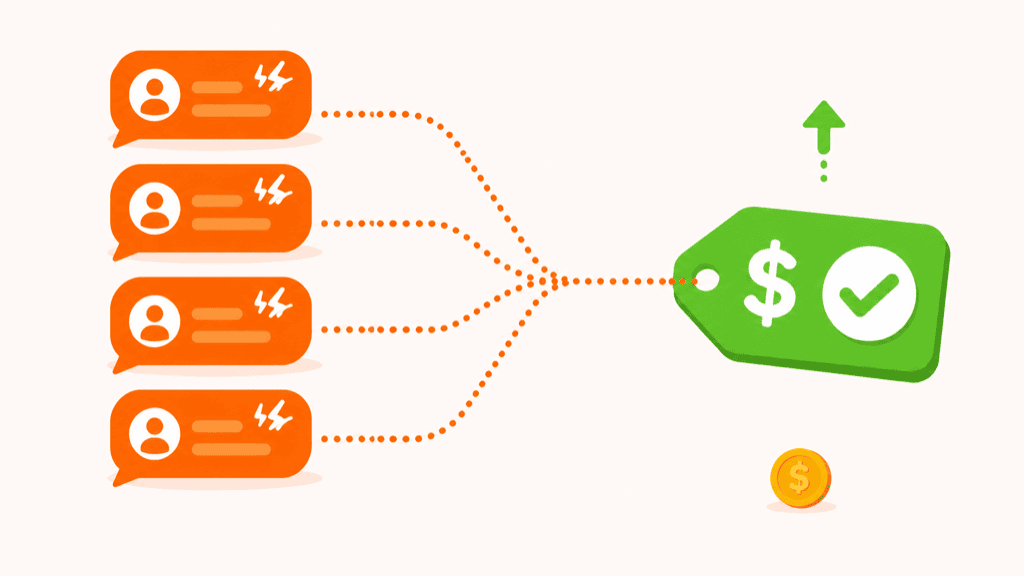
One person complaining about wobbly desks is an anecdote. Fifteen people complaining about it across the month is a market.
A single thread can send you chasing a problem only one person has. What you want is the pain or the question that keeps resurfacing from different members, in different words, week after week.
The repeat is a strong indication of a recurring demand, and recurring demand is what turns a niche into $1,000 a month instead of a one-time fluke.
Keep a simple note open and tally the themes as they come up. After some research you will notice three or four problems clearly dominating the conversation.
Step 4: Map each pattern to a product category
Now you turn the patterns into candidates. For each recurring pain or question, ask one thing: what product solves this, and can I promote it as an affiliate? Here is how that mapping looks in practice:
- Wobbly-desk complaints map to anti-wobble braces and sturdier standing desks
- “My dog destroys every toy in an hour” maps to heavy-duty chew toys for aggressive chewers
- “Best beginner espresso machine under $300?” maps to a short list of machines with affiliate programs through the manufacturer or a retailer
Write down five of these. That is your shortlist for the afternoon, pulled straight from what real buyers told you they want.
Three Real-World Scenarios
Scenario one: the coffee affiliate. Linda spends a few evenings reading a home-espresso subreddit and keeps seeing the same question come up, which is which grinder to buy without overspending. She builds a simple comparison post around three grinders that all have affiliate programs, and it becomes her highest-earning page within two months.
Scenario two: the dog-niche dropshipper. Mark reads a large dog-owner community and spots a steady stream of complaints about flimsy toys that fall apart in an hour with a strong chewer. He sources a durable chew toy and builds his store’s whole angle around “toys that survive aggressive chewers,” language he lifted almost word for word from the threads.
Scenario three: the home-office affiliate. Sarah scans a work-from-home subreddit and sees the wobbly-desk frustration come up again and again. She writes one honest review of a desk brace that fixes it, links to it as an affiliate, and finally has a piece of content built around a problem she already knows people are actively trying to solve.
Why This Matters
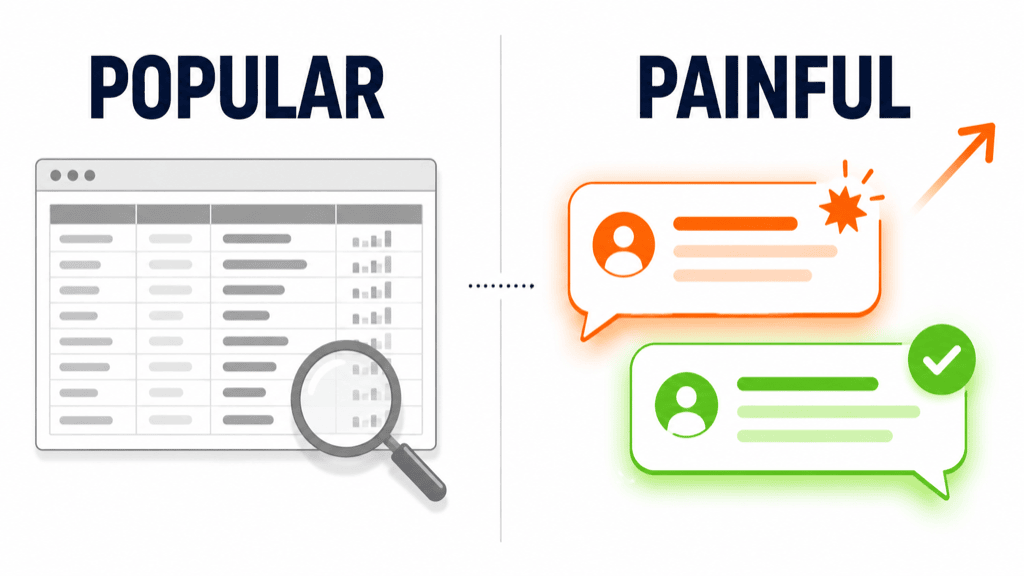
Keyword tools tell you what is popular. They do not tell you what is painful, and pain is what people pay to make stop. When you build a niche around a frustration you have watched real buyers describe in their own words, you are no longer hoping there is demand. You have already seen it.
That also protects the one thing you cannot get back, which is your time. The slow way to fail in affiliate marketing is to spend three months building out a niche that looked good in a tool but had no real urgency behind it. An afternoon of reading threads before you commit saves you from building something nobody was waiting for.
Your 15-Minute Quick Win

Pick one subreddit tied to a hobby or problem you already understand, then:
- Sort by top posts of the month
- Find three complaint threads
- Find two recommendation requests
- Write down the five product categories they point to
That is five candidate niches, sourced from real buyers, in the time it takes to drink a coffee. You do not have to act on them today, you just have to capture them before they scroll out of sight.
“But What If…” (Objections)
“What if the subreddit for my niche is tiny?”
A small, active community can be better than a huge quiet one. What matters is whether people are posting problems and buying solutions, not the subscriber count. If a 20,000-member subreddit has daily complaint and recommendation threads, that is plenty of signal to work with.
“What if there is no affiliate product for the pain I found?”
Then you have found something even more valuable, which is a gap. Sometimes the answer is a related product that solves the same problem from a different angle. Other times it points you toward a niche where a digital product or a different model fits better than a straight affiliate offer. Either way the demand is real, so the opportunity is too.
“What if I find a niche but I’m not sure it’ll actually make money?”
That is exactly the right question, and it belongs to the next step rather than this one. Sourcing candidates and validating them are two different jobs. Once you have your shortlist, you run each one through a quick validation pass before you build anything, which is a process worth its own afternoon.
The reason this works has nothing to do with Reddit specifically. It works because you are reading demand at its source, in the unfiltered words of the people who would actually buy.
So before you open another keyword tool, open a subreddit instead. Keyword tools show you what is popular. Reddit shows you what hurts.

