
Have you thought about starting a YouTube channel? Maybe you even have a topic in mind and a rough idea for the first few videos. But every time you get close to getting started a little voice in the back of your head talks you out of it, telling you that you will not make a penny until the channel “gets big” (and getting big will take forever), so why bother filming anything at all.
At first glance, you may think that voice is right: You generally need 1,000 subscribers plus either 4,000 valid public watch hours in the past 12 months or 10 million valid public Shorts views in the past 90 days before YouTube pays you from advertising. From a standing start with zero videos, that feels like a steep mountain to climb.
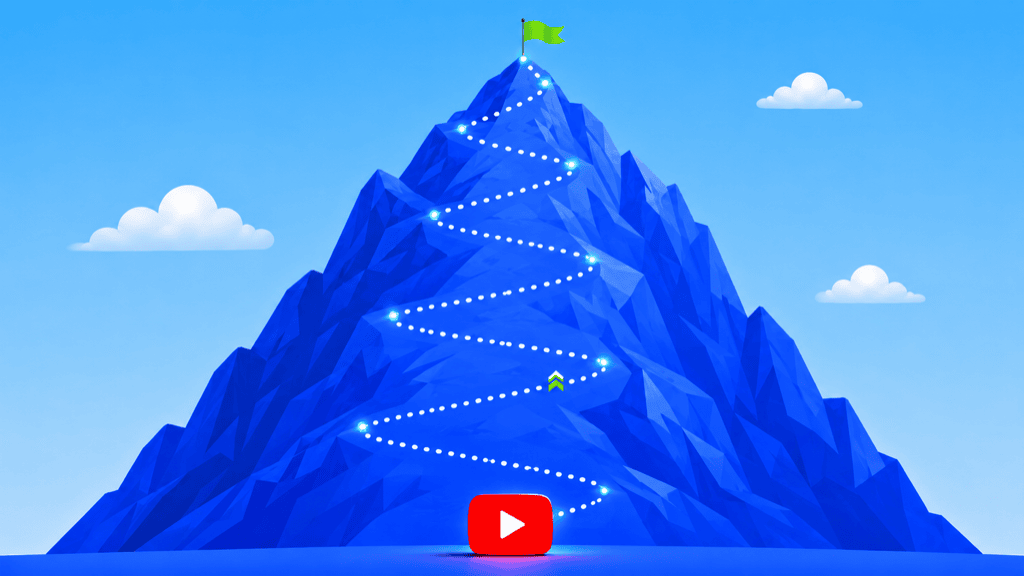
But, the first $100 from a YouTube channel actually shouldn’t come from ads.
Ads are the slowest, smallest money on the platform, and they are locked behind a door you can’t open for months anyway. The people earning early are making money in a different way.
Let me show you the money first and then the plan…
The Money Math: What a Small Channel Actually Earns
There are five ways a YouTube channel makes money, and they pay wildly different amounts at small scale.
- Ad revenue. Pays per 1,000 views, but only after you cross 1,000 subscribers plus either 4,000 valid watch hours in the last year or 10 million Shorts views in the last 90 days. Earnings will vary depending on the niche you are in. In the business or finance niche you might keep $5 to $25 per 1,000 views once it is switched on.
- Affiliate commissions. You earn a cut every time a viewer buys something you recommended through your link. Paid per sale, not per view, which changes everything at small scale.
- Your own digital product. A simple guide, template, or mini-course in the $20 to $50 range, where you keep almost all of the money.
- Sponsorships. Brands paying you directly, usually once you reliably pull a few thousand views per video. This one comes later.
- Fan funding. Tips, memberships, and Super Thanks. Nice to have, tiny for beginners. This shouldn’t be a part of your plan, but instead treat it as a bonus.
Now look at what one video actually earns. Imagine a video in a business niche that gets 5,000 views, using realistic numbers for a tightly focused channel.
| How you monetize it | The rough math | What that one video earns |
|---|---|---|
| Ad revenue | 5,000 views at $10 per 1,000 | about $50 |
| Affiliate | 100 link clicks (2% of viewers), 4% buy, $20 commission on a higher-ticket offer | about $80 |
| Your own $37 product | 100 click-throughs, 4% buy | about $150 |
Those numbers assume a tightly targeted audience and a strong call to action, so treat them as a good-case worked example rather than a guarantee.
The pattern is what matters more than the exact figures. The same 5,000 views earns roughly $50 in ads, around $80 in affiliate commissions when you point people at a decent offer, and more again if you sell your own modest product. And remember, you cannot even run those ads until 1,000 subscribers, while external affiliate links and your own product page work from your very first upload. Those external links are separate from YouTube’s own Shopping affiliate program, which has its own eligibility rules, so you do not need to qualify for anything to start.
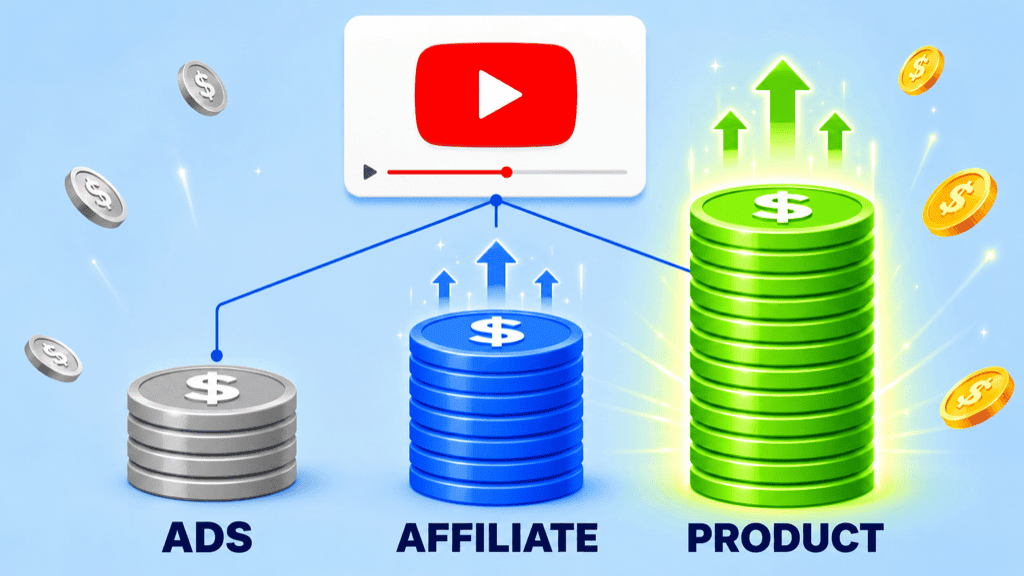
That is why your first $100 usually comes from affiliate products or your own products/services.
A low-commission affiliate link might need thousands of targeted views to get there, but a simple $27 to $37 product of your own only needs a handful of buyers. That is the real opportunity.
The “Earn-From-The-First-Video” Plan
What you want to do is decide how the channel will make money BEFORE you start filming.
Here is the plan in four steps.
Step 1: Pick a channel angle that already has something to sell
Before you worry about cameras or thumbnails, ask one question:
When someone finishes a video, what do I want them to buy or click?
Pick a channel angle where the answer is obvious and natural.
If you love home-office gear, every video can point to the products you actually use. If you are deep into meal planning, a simple paid planner fits at the end of every video. The angle and the offer should belong together so the recommendation never feels bolted on.
Choose the money path first, and the content choices get easier, not harder.
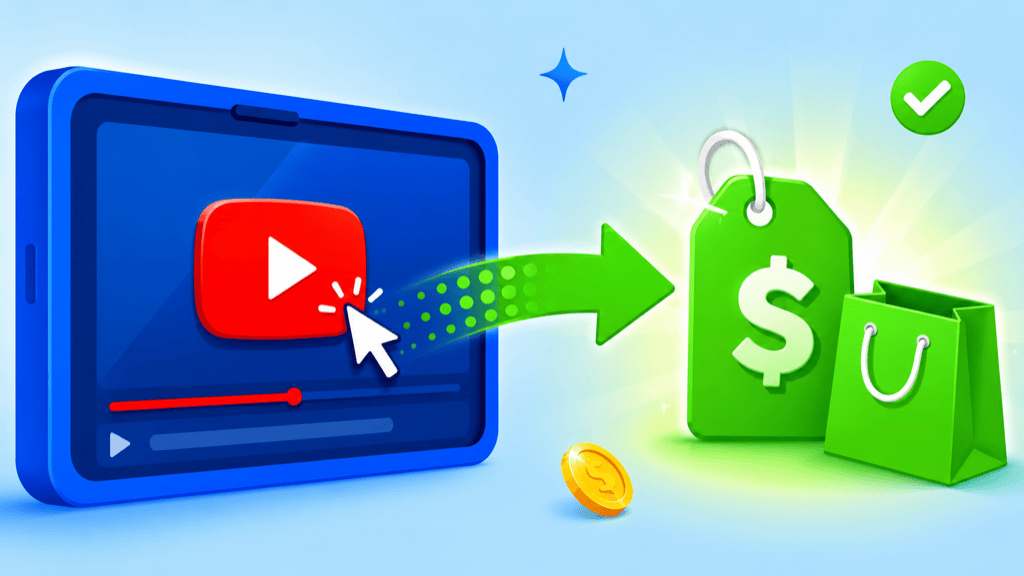
Step 2: Set the channel up to earn from the very first video
Before your first video goes live, get your ducks in a row:
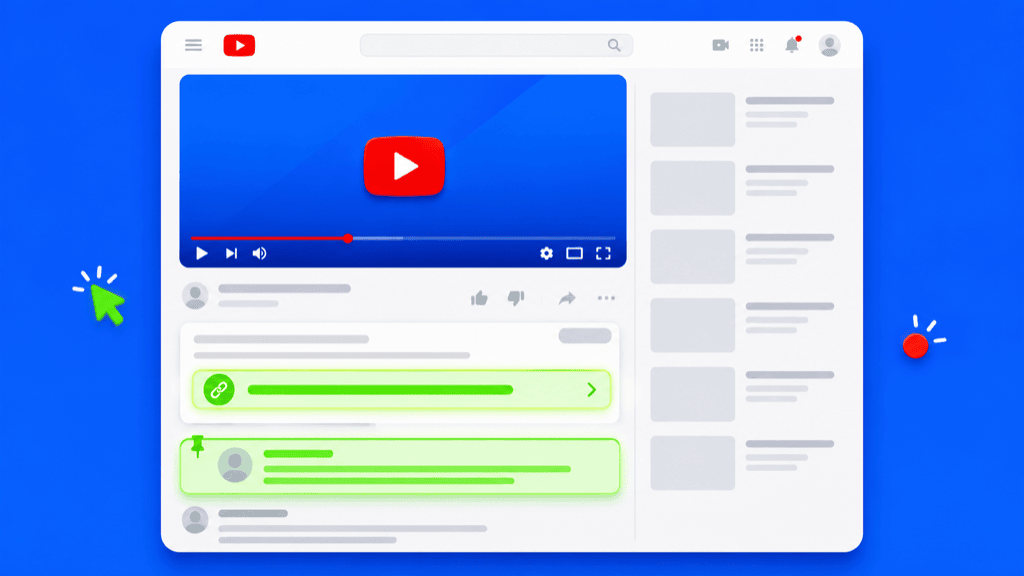
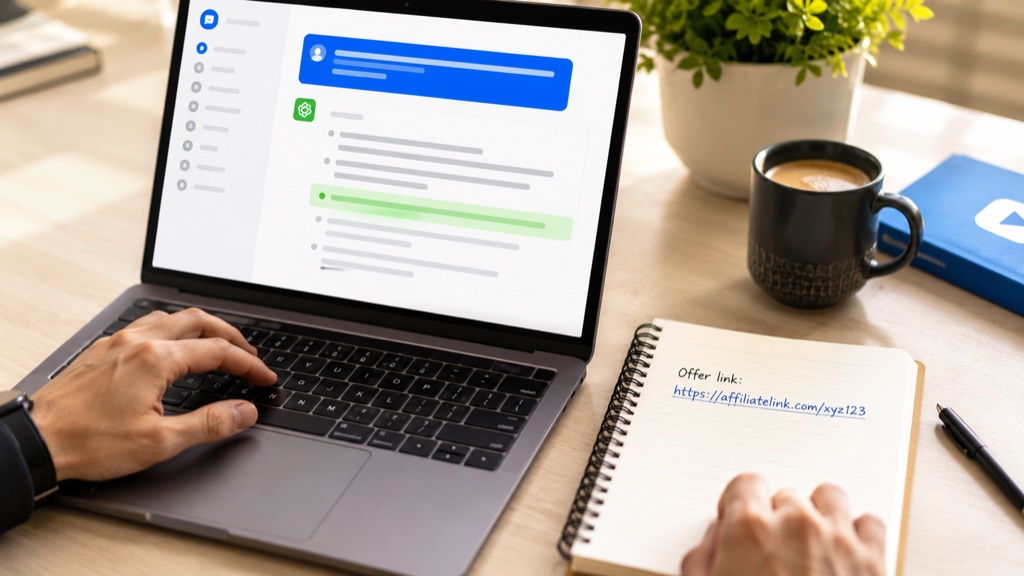
- One offer or affiliate link ready to go, with the actual URL saved where you can grab it.
- A description that leads with that link near the top, not buried under twelve hashtags.
- A pinned comment that repeats the link and tells people exactly why to click it.
- An honest disclosure line so viewers know some links are affiliate links. It builds trust and keeps you compliant.
None of this requires an audience. It just means the moment a video does land, it can pay you.
Step 3: Let AI do the heavy lifting on the content
The reason most channels stall is often not strategy, it’s the thought that making videos feels like a lot of work. However, nowadays AI can massively help beginners because it removes the blank-page problem at every stage. And you don’t need a big stack to get started either. A simple set of tools covers nearly everything:
- Ideas and research: vidIQ shows what people actually search for on YouTube and suggests video ideas. Free to start, and you can simply ask ChatGPT or Claude for a starter list too.
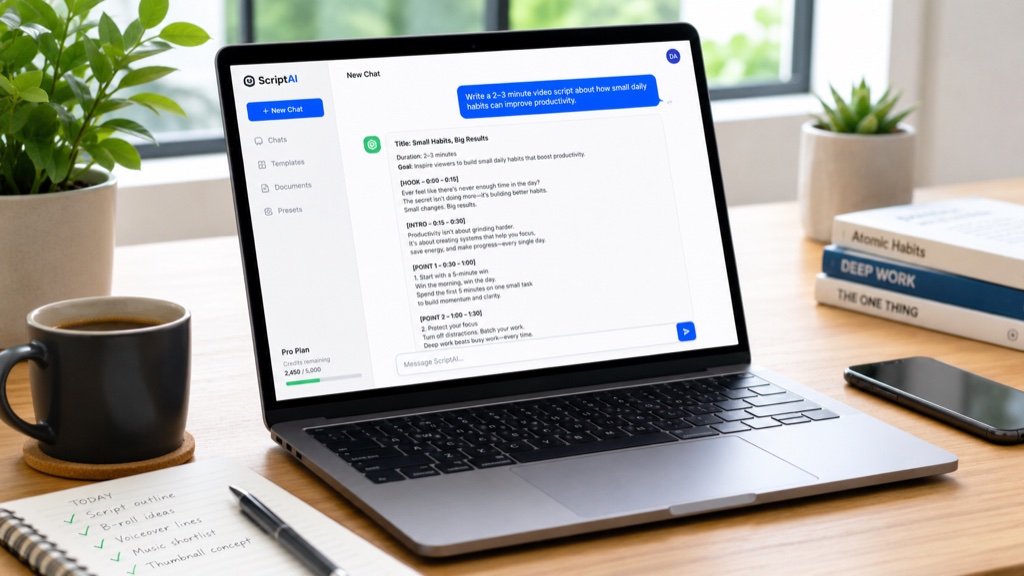
- Scripts, hooks, titles, and descriptions: ChatGPT or Claude can draft all of these from a good prompt. You still bring the examples, the judgment, and your own point of view, but it gets you past the blank page, which is the part that stops most people.
- Thumbnails: Canva templates and AI design tools let you create simple thumbnails without starting from scratch, no design skill needed.
- Not comfortable on camera: ElevenLabs turns a script into a natural-sounding voiceover for a faceless video, and HeyGen creates an AI presenter who reads your script for you.
- Editing and repurposing: CapCut is a free editor with one-click captions, and OpusClip takes one long video and spits out short clips for Shorts and Reels automatically.
You can run a complete channel on just three of these: a chat tool for words, Canva for thumbnails, and CapCut for editing. Everything else is optional.
Just keep in mind that AI does not make the channel profitable on its own. It just makes it easier to keep publishing useful videos around the offer you already chose, which is where the money actually comes from.
Step 4: Publish the first few videos that lead somewhere
Each early video needs one clear next step (and it is not “like and subscribe”). It’s a single, specific call to action tied to your offer.
Recommend the thing, explain why it helps, point to the link in the description and pinned comment, and stop there. One video, one offer, one link. Do that from the start and every view becomes a chance to make some income.
Steal These AI Prompts
Here are three prompts you can paste straight into ChatGPT or Claude. Fill in the brackets and run them one at a time.
Prompt 1: Get 10 video ideas built around your offer
You are a YouTube strategist who helps small online business owners get
views that lead to sales.

My business: [what you do]
The offer I want viewers to click or buy: [product/affiliate offer]
My ideal viewer: [who they are and what they want]

Give me 10 YouTube video ideas that people in my niche actually search
for, that lead naturally into my offer without feeling like an ad, and
that a beginner can film in a day. For each: a working title, the search
intent behind it, and one line on how it connects to my offer. Rank them
easiest-to-convert first.
Prompt 2: Write the full script with a strong hook
Write a complete YouTube script on this topic: [chosen idea from Prompt 1].

Audience: [who they are]
Length: about 6 minutes spoken
My offer to mention: [what it is]
Tone: friendly, plain-spoken, no hype, like talking to a smart friend.

Start with three 10-second hook options that name the viewer's problem or
payoff. Then write the full script in short spoken sentences. Deliver the
real value early so it is useful even if they never buy. Work in one
natural offer mention in the middle and one clear call to action at the
end. Label the sections. No jargon.
Prompt 3: Write the title, description, and link CTA
I made a YouTube video about: [topic or paste your script].
My offer link is: [your URL].

Give me: 8 honest, click-worthy titles under 60 characters, ranked. A full
description that opens with two keyword-rich sentences, summarizes the
video in a short bullet list, puts my offer link near the top and again at
the bottom, and includes a simple affiliate disclosure line. Then 15
comma-separated SEO tags.
Run those three in order and you can go from blank page to a planned, monetized video concept in well under an hour, even if you have never made one before.
Your 5-Minute Quick Win
Open a note right now and write down the single offer or affiliate link your channel would point to. Just one. Then copy Prompt 1 above, drop that offer in, and run it. In five minutes you will have ten video ideas that all lead back to something that can actually pay you, which is further than most channels get in their first month.
“But What If…” (Objections)
“What if I have no audience yet?”
That’s the entire point. Affiliate links and your own product pay per sale, not per view, so a small channel with the right offer earns while a big one with no offer earns nothing. Small is not the problem. No money path is the problem.
“What if I am not comfortable on camera?”
Then don’t be on camera! Use ElevenLabs to turn your script into a clean voiceover over screen recordings or simple slides, or let a HeyGen presenter read it for you. Plenty of channels are built without the creator ever showing their face.
“What if I don’t have my own product to sell?”
Start with affiliate offers, where someone else has already built the product and you just recommend it. Once you see which topics your viewers respond to, you can create a simple $27 or $37 product of your own and keep almost all of the money.
So pick your offer this week, set up the basics before you publish, and let AI handle the parts that used to stop you.
That little voice telling you it’s pointless until you get big? It has never heard of an affiliate link.

