

If you’re over 40 and haven’t picked a niche yet, you’ve probably been looking in the wrong place.
Picture two people starting a site about mobility aids. One is 25 and has never used a walker. She reads Amazon reviews for a week to work out what buyers care about. The other spent the last five years caring for her aging parents, and learned the hard way which walker won’t fit through the bathroom door.
They can both build the same website. Only one of them already knows what to write on it.
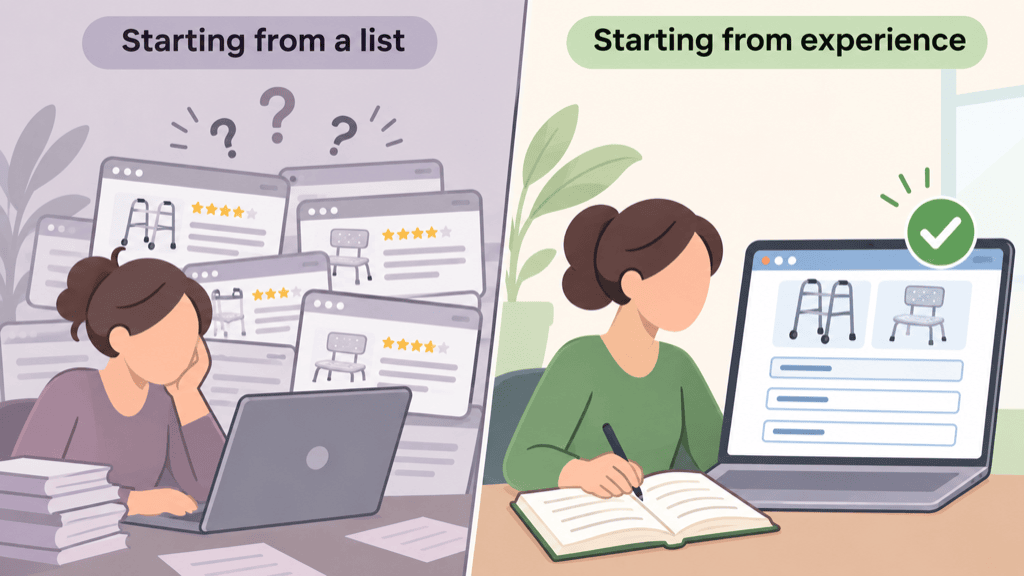
When most beginners go looking for a niche, they Google “most profitable niches,” pick something off a list, and start learning about it from scratch. Everyone else reading that list is doing the same thing.
You’ve got a better starting point. It’s the 20 or 30 years you’ve spent at work, in your hobbies, and in your life. And by “resume” I don’t just mean job titles. Caring for your parents counts. So does renovating a house, or a hobby you’ve kept up for 15 years.
In about 20 minutes, you can pick the one worth testing first.
By the end of this post you’ll have:
- Your Help-Me List, written down
- A 2-question money check you can run on any idea
- Your best niche to test first
- The first questions to write about once you’ve picked it
Why Your Head Start Is Real
A niche is just a group of buyers with a problem. To earn from it, you need to understand what those buyers ask, what they buy, and what they wish they’d known before they bought it.
Someone starting from a list has to learn all of that from outside. You may already have it from years of living it:
- The real questions people ask, in the words they use
- The products that disappoint, and why
- The mistakes beginners in that area make again and again
- Where those buyers go for answers
That doesn’t skip the work. You’ll still have to build pages, write, and wait for people to find you. But you’ll start out knowing which questions matter and what buyers worry about, instead of guessing at both.
Step 1: Write Your Help-Me List
Open a note and write down the things people regularly ask you about. Give yourself 10 minutes. These prompts help:
- At work: what do newer coworkers come to you for?
- At home: what do friends and family call you about?
- Hobbies: what do people at the club, the course, or the forum ask you?
- Life events: what did you have to figure out the hard way, like caring for a parent, a renovation, a move, or a health change?
- Big purchases: what have you researched so hard that you could advise anyone buying one?
Write each one as the question people ask, not as a label. “Looked after my parents” won’t give you much to work with. “What should I get for Mom’s bathroom before she comes home from hip surgery?” will.
Our caregiver’s list might start like this:
- “What should I put in the bathroom before Dad comes home?”
- “Is a walker or a rollator better for getting around the house?”
- “Do compression socks really help on long flights?”
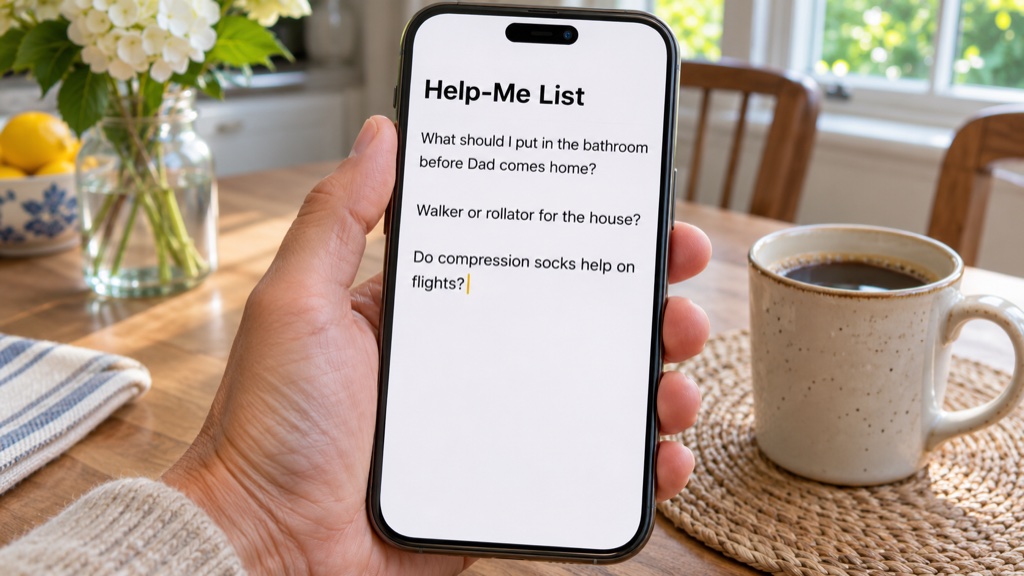
Aim for 5 to 10 lines. Don’t judge them yet.
Step 2: Turn Each Question Into Something People Buy
Next to each question, write down what someone with that problem ends up buying.
For the caregiver, that’s grab bars, shower chairs, raised toilet seats, rollators, and compression socks. Those are all physical products people search for, compare, and buy online.
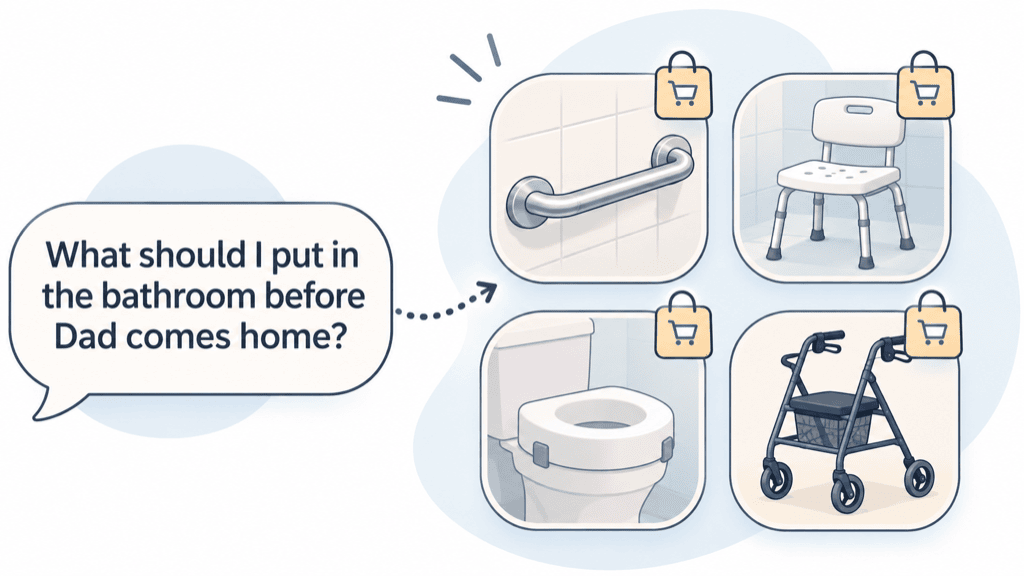
Products, not your time. You’re looking for products to recommend or sell, not your time. If a line only leads to “they’d pay me to help them,” cross it out for now. This post is about affiliate sites and stores, not consulting.
Step 3: Run the 2-Question Money Check Before You Build Anything
Plenty of ideas pass Step 2 and still won’t pay, so run this check on each line. It’s a quick look, a couple of minutes per idea, not a research project.
Question 1: Do people already spend real money here?
- Search for the products on Amazon and look at its Best Sellers pages for that category.
- Note the typical price of the products people are buying.
- If you can’t find steady sellers, or everything costs a few dollars, mark it No.
(Don’t treat review counts as proof of sales. A product can have 10,000 reviews from five years ago.)
Question 2: Is there a way for you to get paid?
- Affiliate route: there’s a program that covers these products, and you can work out roughly what one sale would pay you.
- Store route: you can get the product from a supplier and still have money left after product cost and shipping.
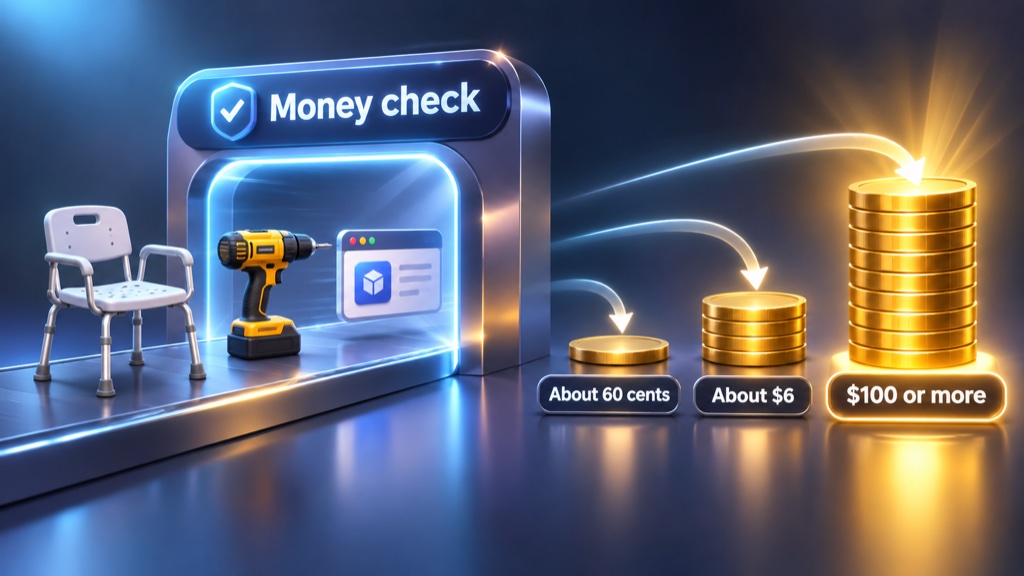
This is where the caregiver’s niche gets interesting. Amazon’s Associates program pays 1% on Health & Personal Care, according to its current fee table. On a $60 shower chair, that’s about 60 cents.
That doesn’t kill the idea, but it does change the plan. She’d look for medical supply retailers that run their own affiliate programs at better rates, or consider the store route with a narrow range of bathroom safety products. Either way, she knows before she builds anything.
One caution for health niches. Her experience tells her which questions people ask and which products cause trouble. Anything that touches health or safety still needs current, reliable sources behind it, and a line telling readers to check with their doctor or therapist.
Compare two other resumes:
- The contractor gets asked “what drill should I buy?” all the time. Amazon pays 3% on Tools and Home Improvement, so a $200 drill kit earns about $6, and some tool brands and retailers run their own programs.
- The office manager gets asked “what do you use for scheduling and payroll?” Business software programs often pay a flat fee per signup, and for some tools that runs to $100 or more. Terms vary a lot, so check the program’s current page.
The same check gives three very different answers, which is why you run it before you build anything.
Step 4: Pick One to Test
Circle every line that got two Yeses. If you have more than one, break the tie with these:
- Which one could you talk about for a year without getting bored?
- Which one has the most questions you already know people ask?
- Which one has a clearer way to get paid?
Pick one. It’s only the niche you test first, and you can switch later if it doesn’t hold up.
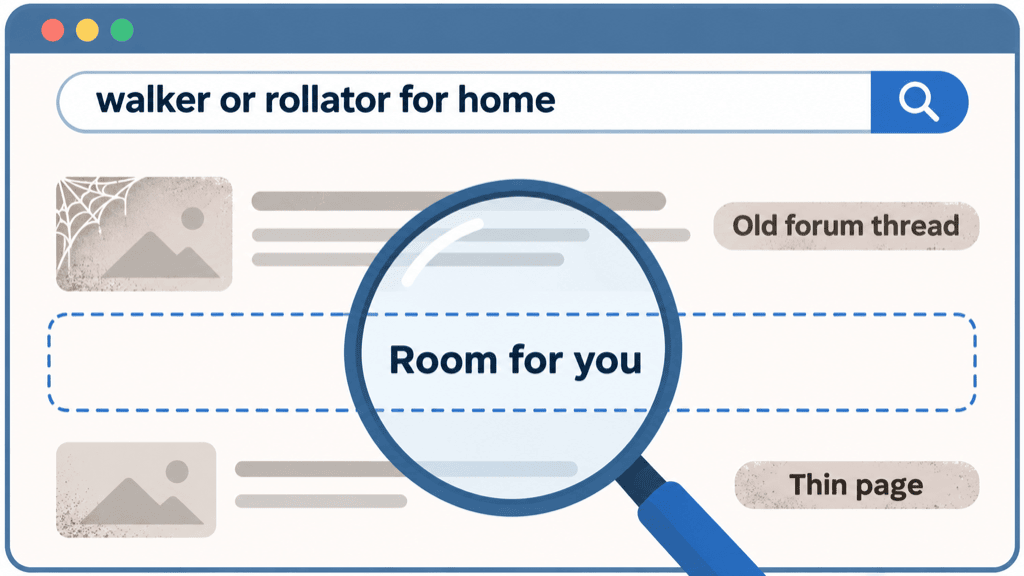
Then find your first questions to write about. This part comes after the 20 minutes, once you’ve picked. Type the questions from your list into Google and look at what comes up. Where the top results are old forum threads, thin pages, or miss what you know, you’ve found a question you can answer better. Where every result is a thorough guide from a major site, try a narrower version of the same question.
Two Yeses don’t prove the niche will earn. They tell you it’s worth testing, and the testing happens when real pages meet real readers.
Once you’ve got your niche, last week’s post shows what to spend (and skip) on a first setup for under $50, and the week before covers how to earn commissions from search.
Your 20-Minute Quick Win: The Help-Me Card
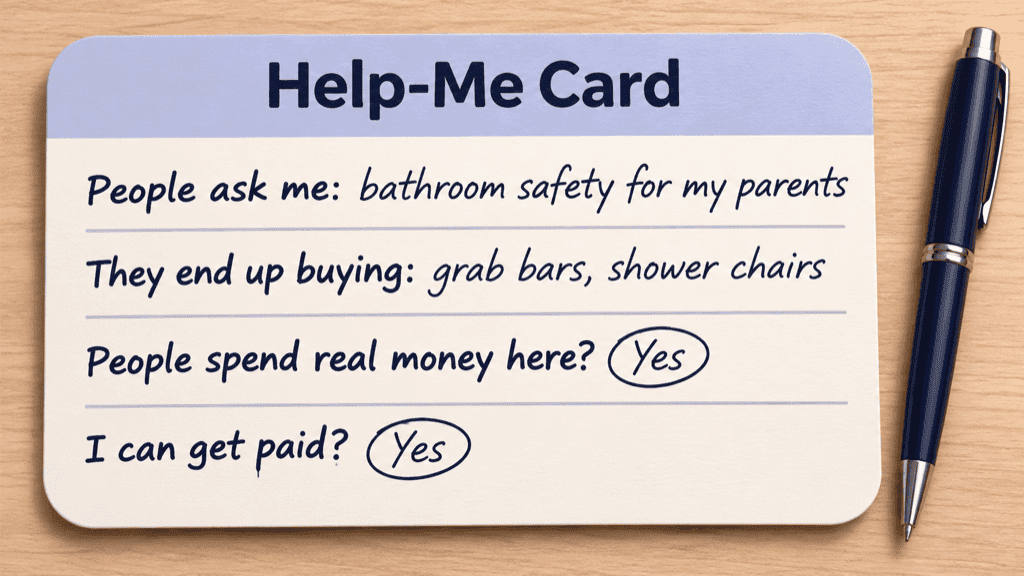
Open a note on your phone and copy this card three times, once for each of your best questions:
- People ask me: ___
- They end up buying: ___
- People spend real money here? Yes / No: ___
- I can get paid (affiliate or store)? Yes / No: ___
Circle the one with two Yeses. That’s the niche you test first.
“But What If…”
“What if my job was boring?”
A boring job can be a good sign. Payroll, insurance, plumbing and logistics come with practical questions that people pay to solve, and they don’t show up on many “hot niche” lists. And if your job really gives you nothing, look at your hobbies and life events instead.
“What if nobody ever asks me for help?”
Then use your own history. Think about the things you’ve bought, fixed, or researched hard for yourself. If you spent three weeks choosing a hearing aid for your father, you know which questions confuse people searching for one today.
“What if my best niche is already crowded?”
Competition usually means people are spending money. What you want is a corner of it where you know the answers, like bathroom safety for people coming home from surgery instead of “health products.”
The usual advice is to find a niche by looking outward, at lists, trends, and keyword tools. That works for some people, but you’d be starting from zero on every question.
You’ve spent decades learning what certain groups of people need and what they wish they’d bought instead. Start with the questions people already bring you.

