

By the time most beginners start planning their first back-to-school promotion, shoppers are already halfway through the buying decision.
The National Retail Federation found that about a third of back-to-school shoppers had already started browsing and buying by early June 2026, the highest share since they began tracking it in 2018. That doesn’t mean the window has closed. It means the window is open right now.
People aren’t waiting for a big August sale. They’re comparing laptops, saving dorm ideas, building supply lists, and filling carts. That’s exactly why this is the moment to put useful recommendations in their path.
And the money on the table is real. In 2025 the NRF pegged K-12 back-to-school spending at $39.4 billion and back-to-college spending at $88.8 billion. That’s more than $125 billion flowing through a single season, with a huge amount of that shopping shaped by online searches, comparison posts, social recommendations, and “best of” lists.
And you don’t need a big audience to get a slice of that. You just need to stand in front of buyers who are already shopping, point them at something genuinely useful, and let the season do the heavy lifting.
This post gives you exactly that: a short, focused sprint you can start now.
By the end, you’ll have:
- One product cluster you’re going to promote
- One affiliate program to sign up for
- Three traffic doors that don’t need a single follower
- A simple 7-day action plan to put it all in motion
Here’s how it works…
The Back-to-School Sprint
The sprint has one rule: stay focused.
1) You pick one tight group of products people are already buying for the new school year
2) You promote it as an affiliate through a few channels that reach strangers instead of followers
3) You do it inside the two to three week window before the season peaks.
One cluster, a few doors, a tight timeline. That’s the whole sprint.
Step 1: Choose One Cart-Ready Product Cluster
The mistake almost everyone makes is trying to promote everything. Ten products, ten links, ten directions. It scatters your effort and confuses the buyer.
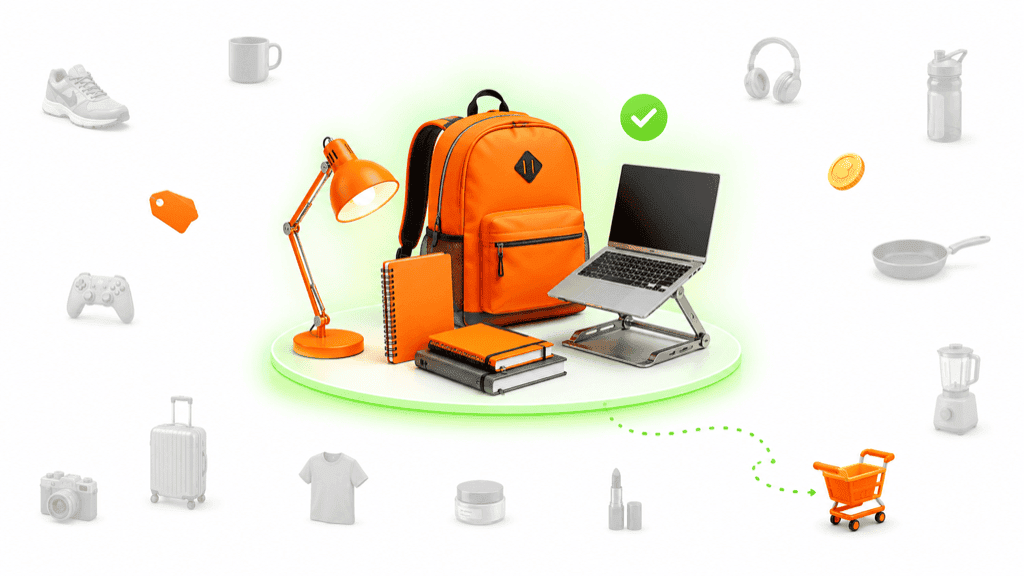
Instead, pick one cluster where the buying decision is already happening. A few that work well every year:
- Dorm setup: bedding bundles, storage, laptop stands, desk lamps
- Budget student tech: headphones, chargers, tablets, keyboards
- Teacher and classroom supplies: organisation bins, planners, labels
- Everyday school gear: backpacks, lunch gear, calculators, planners
Keep the commission math in mind while you choose. Lower-priced items like lunch gear sell in volume but pay a little per sale, and higher-ticket tech pays more per sale but takes a bit more convincing.
Either can work. What matters is that everything you create points at the same kind of buyer, so your effort compounds instead of scattering.
Step 2: Pick the Affiliate Program Before You Create Anything
This one sounds obvious and almost nobody does it in the right order. Too many people make a bunch of content first, then go hunting for a way to monetise it, and half of what they made doesn’t fit any program they can actually join.
Do it the other way around. Choose your program first, get approved, and grab your links before you create a single pin or post. Amazon Associates is the easy default because it covers nearly every product cluster above and shoppers already trust checking out there.
If your cluster has a specialised retailer with a better commission, check theirs too. Either way, the money plumbing is ready before you drive a drop of traffic.
One more thing before you post links: disclose properly. If you might earn a commission, say so clearly wherever the link appears. A simple line like “This post contains affiliate links, which means I may earn a commission if you buy through them, at no extra cost to you” is enough for most beginner content. It protects your account, it builds trust, and it keeps the recommendation honest.
Step 3: Use 3 Traffic Doors That Don’t Require Followers
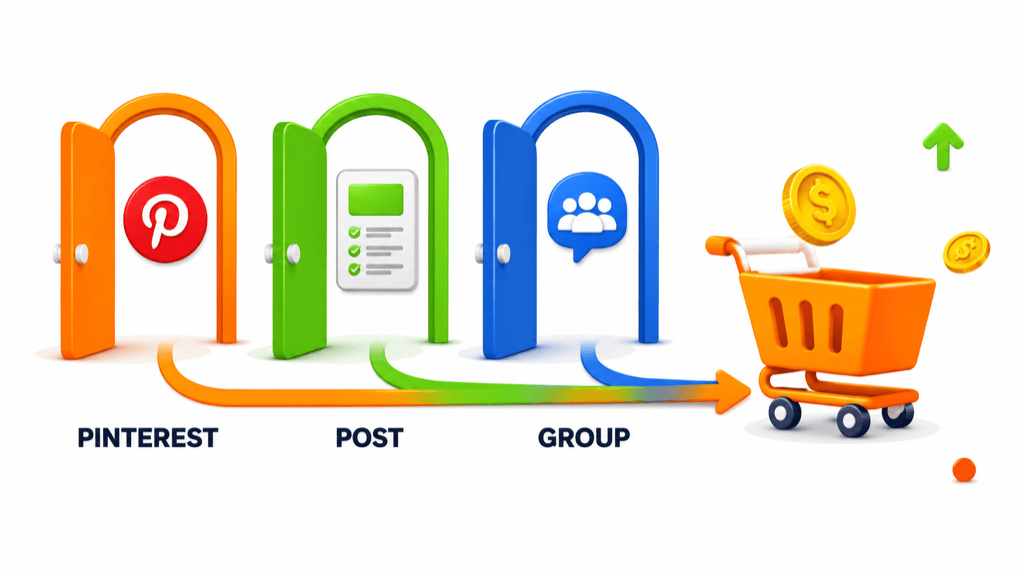
This is the heart of the sprint. Every one of these doors puts you in front of people who have never heard of you, which is exactly what you need when you’re starting from zero.
Door 1: Pinterest search traffic. Pinterest is a search engine that looks like a social feed, and back-to-school is one of its biggest seasons.
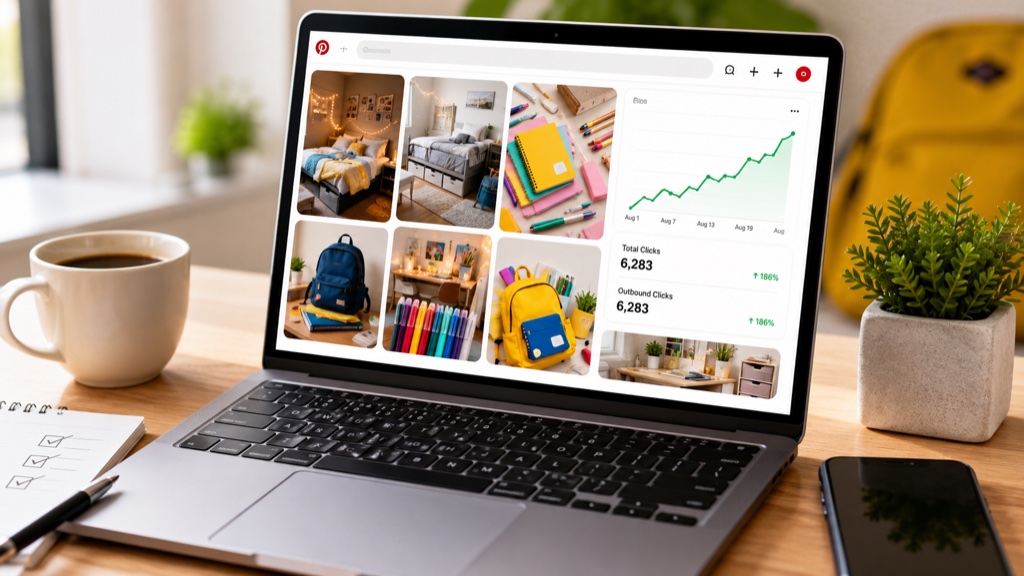
Create simple pins, both static image pins and idea pins, built around what people actually search: “dorm room ideas,” “college packing list,” “back to school organisation.” You’re optimising for search and discovery, not trying to be a social media star.
A pin you make today can still be pulling clicks weeks from now.
Door 2: One buyer-intent comparison post. Write a single, genuinely helpful piece aimed at someone who’s ready to buy and just wants to be told which one.
Think “Best Dorm Essentials Under $25” or “Best Budget Back-to-School Tech for College Students.” You can publish it free on a simple blog or a platform like Medium.
The intent is so high that even a handful of readers can convert, because they arrived already reaching for their wallet.
Door 3: Helpful Facebook group answers. There are groups for college parents, incoming freshmen, and teachers, and every August they fill up with “what should I buy?” questions. Answer them properly. Be the person who gives a genuinely useful reply.
One word of caution: many groups ban affiliate links outright, so respect that. Be helpful first, link only where it’s allowed, or point people to the free comparison post you made in Door 2, which protects both your credibility and your account.
Three People, Three Doors
Here’s what the sprint could look like for three different beginners starting with no audience.
The Pinterest person. Maya picks the dorm setup cluster and spends an afternoon making 15 pins around “dorm room ideas” and “college packing checklist.” She links each one to her Amazon list, and two of the pins quietly take off in search and keep sending clicks for weeks.
The comparison-post person. Jerry writes one honest article, “Best Budget Back-to-School Tech Under $50,” and shares the link in a couple of places. It’s not a huge traffic piece, but everyone who lands on it is deciding what to buy, so a slow trickle of them click through and purchase.
The helpful-group person. Mark joins three parents-of-college-students groups and simply answers packing questions all week. When a group allows it he links his comparison post, and when it doesn’t he just helps, and a few people message him asking for the list anyway.
Step 4: Track Clicks for 72 Hours, Then Double Down
Once your doors are open, resist the urge to keep adding new ones. Give the sprint a 72-hour measurement window and watch where the clicks actually come from. Almost always, one door outperforms the other two by a wide margin.
That’s your signal. Pour your limited time into the door that’s working and let the others sit.
If Pinterest is where your clicks are coming from, make ten more pins, not one more Facebook post. Beginners burn out by trying to do everything everywhere, and the sprint wins because it does one thing well, then doubles down on whatever the data rewards.
Your 7-Day Sprint Plan
Here’s the whole thing on a timeline so you know exactly what to do each day:
- Day 1: Choose your buyer and product cluster.
- Day 2: Apply to one affiliate program and collect your links.
- Day 3: Create your comparison post or product list.
- Day 4: Make 5 Pinterest pins, or find 3 relevant Facebook groups.
- Day 5: Publish and share your first traffic door.
- Day 6: Create more of whichever traffic door feels easiest to repeat.
- Day 7: Check your clicks, pick the best-performing door, and double down.
Is $100 Actually Realistic?
Let’s ground that number because commissions vary a lot by product.
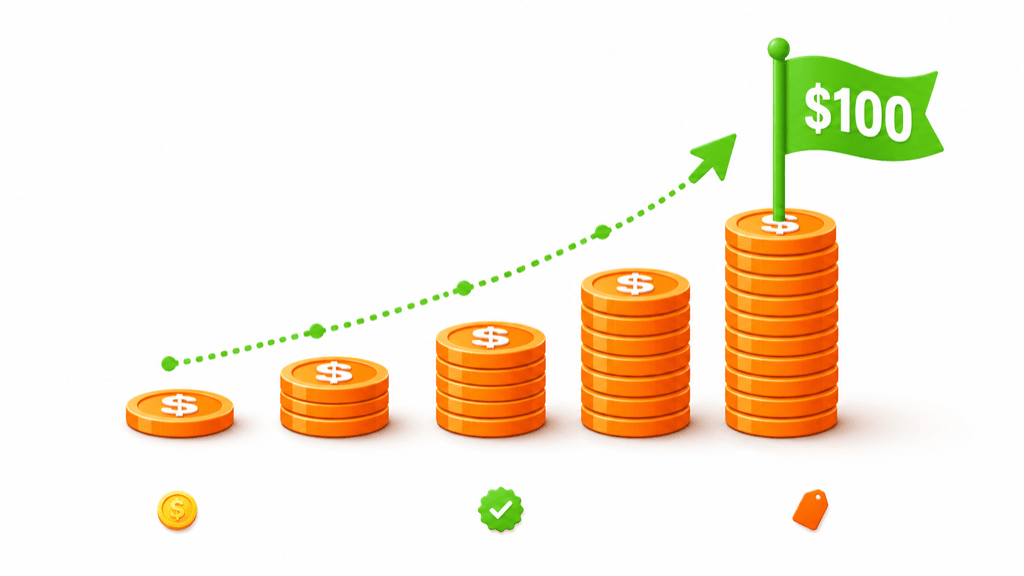
If your average commission is $4, you’d need 25 sales to reach $100. If it’s closer to $8, you’d need around 13. Promote higher-ticket student tech and you’d need fewer still. That doesn’t mean every beginner will hit the number in their first sprint, but it does show why a focused seasonal campaign can be worth doing.
Not every pin will land and not every post will convert, and that’s normal. The point isn’t that everything works. The point is that you only need one small seasonal angle producing steady clicks to get your first commission on the board, and back-to-school hands you the demand for free.
Why This Matters
When you have no audience, the season gets you your audience. You’re not waiting months to build a following before you can earn anything. Instead, you’re borrowing a wave of demand that already exists and pointing a bit of it at something useful.
Seasonal windows reward speed over polish. A rough pin published while people are shopping beats a perfect one published in September when the carts are empty. The people who win these windows aren’t the most talented, they’re the ones who moved while the demand was live.
Your 15-Minute Quick Win

Before you close this tab, open a blank note and fill in these five lines:
- My buyer is: ______
- They’re shopping for: ______
- My product cluster is: ______
- My first affiliate program to check is: ______
- My first traffic door will be: Pinterest / comparison post / Facebook group
That’s it. Five lines, fifteen minutes, and your sprint is already started. Getting specific on paper is the difference between “I’ll do it this week” and actually opening the first door tonight.
“But What If…”
“What if I’ve never sold anything online before?”
That’s exactly who this is built for. You’re not building a store or running ads, you’re recommending products people are already buying and earning a small cut when they do. The first sale is the hardest, and the season makes it easier than any other time of year.
“What if I don’t have time to build content?”
You don’t need much. One afternoon of pins or a single comparison post is enough to open a door. This is a sprint, not a full-time job, and the whole point is doing one small thing while the demand is high rather than a big thing when it’s gone.
“What if the season’s already almost over?”
Shoppers are buying from early June well into September, and college students often shop later than K-12 families, so even in August there’s still a live window. The worst move is deciding it’s too late and doing nothing, because the same sprint works for the next seasonal wave too.
You don’t need an audience to earn your first commission. You need to stand where buyers are already looking and give them what they’re looking for.
Back-to-school season gives you the timing, the urgency, and the demand. Pick your cluster, open one traffic door, and start before the window closes.
The buyers are already shopping. Your job is to show up before they check out.

