
Right now you’re probably getting ready to spend the next four weeks on Black Friday. Polishing the offer, lining up the emails, maybe rebuilding the sales page.
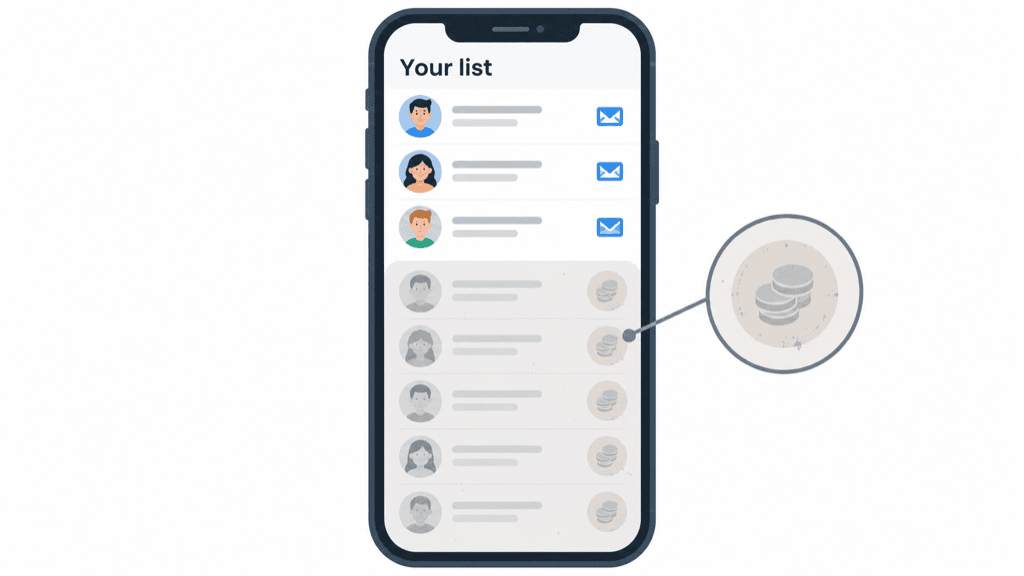
Meanwhile, a big chunk of your list has gone quiet. They haven’t clicked a thing since the summer. Some of them bought from you once and never came back.
Most people miss what that really is. Those quiet subscribers aren’t just people who haven’t bought yet. They’re dead money. You already paid to get them on your list, whether that was ad spend, content, or time, and right now they’re sitting there earning you nothing.
It gets worse. If you keep mailing people who never engage, those weak signals can chip away at your sender reputation over time, which makes it likelier that more of your mail gets filtered to Promotions or lands in spam. So the quiet part of your list isn’t just dead weight. It can drag down the Black Friday email you’re about to send to everyone else.
The good news is you can wake up a slice of them with one short email. Not a sequence, not a funnel. One email you can write in about 15 minutes, and it does three jobs at once.
By the End of This Post You’ll Have
- A one-line rule for who counts as “quiet” so you email the right people
- A fill-in-the-blank win-back email you can send today
- A simple way to tell who woke up, so you know exactly who to hand your Black Friday offer to
The Dead Money Email
The Dead Money Email is a single short message, sent once (twice at most), to the cold part of your list. It does three things in one go:
- It wakes the quiet subscriber, giving them a reason to click again.
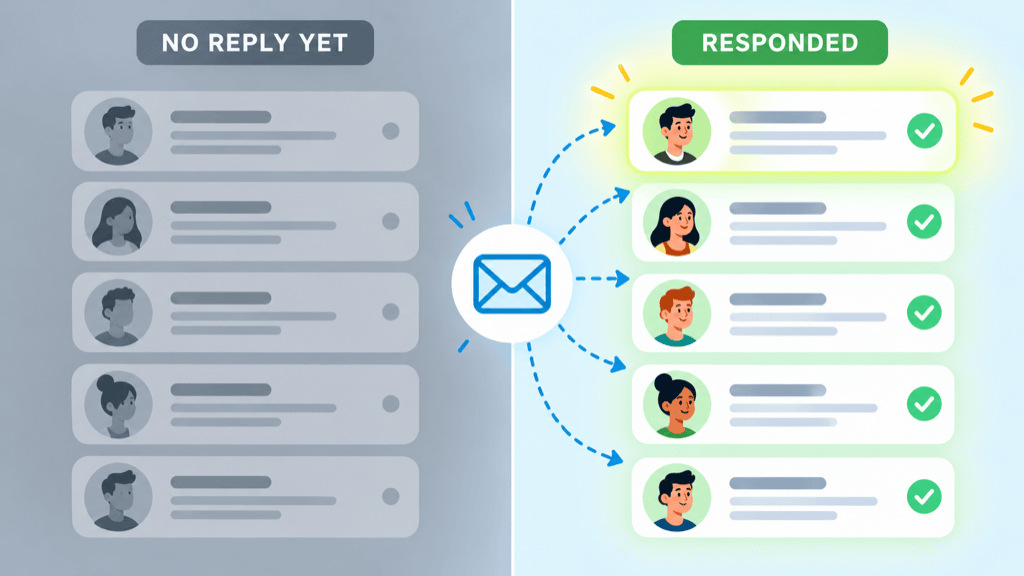
- It re-segments your list, sorting the genuinely interested from the truly gone.
- It primes the ones who respond, so they’re warm and expecting to hear from you when your Black Friday offer lands.
A long nurture sequence is the right tool when you have months. You don’t. Black Friday is four weeks out, so you want one clean signal, fast. One email gets it.
Step 1: Find Your Dead Money
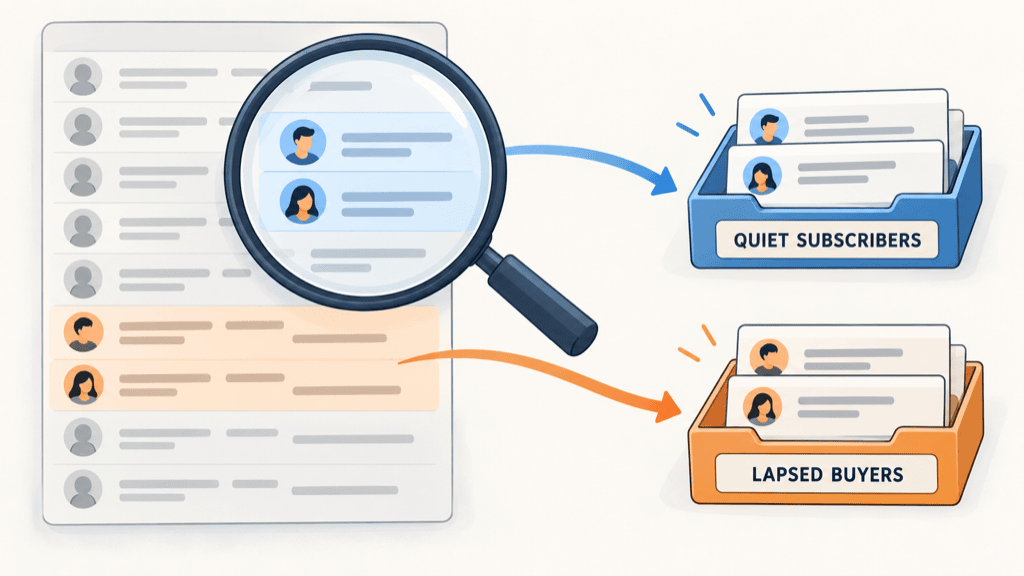
You’re not emailing the whole list. You’re emailing two specific slices, and it helps to keep them separate.
- Quiet subscribers. People who haven’t clicked a link or replied to you in about 90 days. Leave out anyone who only joined in the last month, because they’re not cold, they’re just new.
- Lapsed buyers. People who bought once and haven’t come back within your normal buying cycle. If you sell something people reorder every few weeks, 90 days is cold. If you sell something people buy once a year, that window is much longer. Let what you sell set the line.
One important note on how you pick them. Don’t go by opens. Apple’s Mail Privacy Protection auto-opens emails for a large share of users now, so an “open” often means nothing. A click or a reply is a real human choosing to act, so build your segments on clicks, not opens.
Most email tools let you filter by last click date and last purchase date in a couple of minutes. Pull those two groups and you’ve found your dead money.
Step 2: Write the 15-Minute Win-Back Email
This is the whole thing, so keep it short and low-pressure. Here’s the structure:
- An honest subject line. Admit it’s been a while. “Did I lose you?” or “Still want these?” beats anything clever.
- A short opener that says why they’re hearing from you now.
- One specific reason to care. Not the Black Friday pitch. Something useful or interesting on its own.
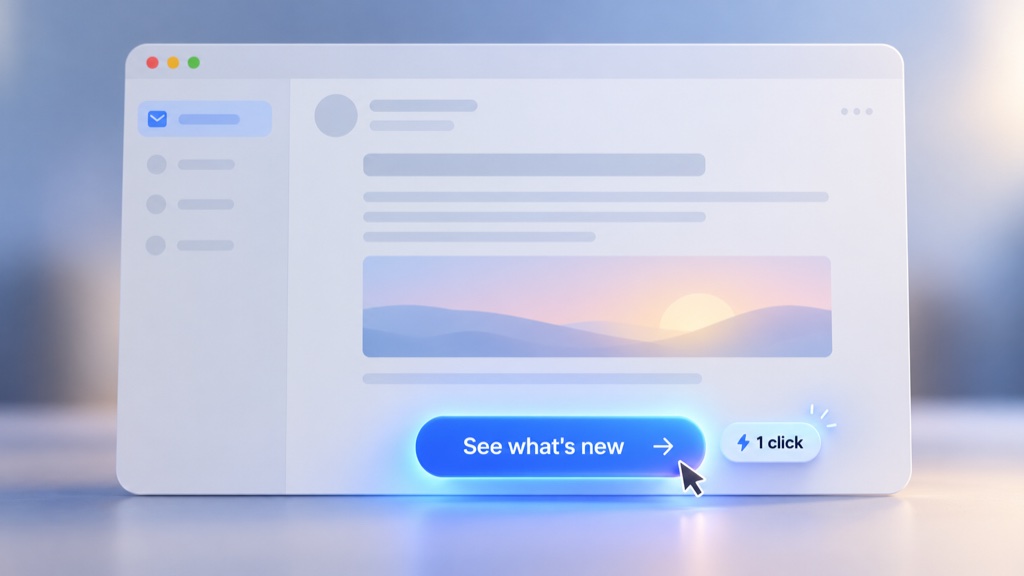
- One clear action. Ask for exactly one click, because that click is your signal.
That single action is the whole mechanism, so decide what it is before you write a word. For a store, it’s a link back to a collection, framed as “here’s what’s new since you last looked” or “the thing you almost bought is back.” For an affiliate or a digital seller, it’s a link to the one resource your reader would most want right now. One link, one signal.
Here’s a fill-in-the-blank template you can copy:
Subject: It’s been a while, [first name]
Hi [first name],
I noticed it’s been a few months since we last heard from you, so I wanted to check you’re still in the right place.
Since you were last here, [one specific thing that’s new or useful: a new range, a popular guide, a change they’d care about].
If that’s still your kind of thing, [one clear action: here’s where to see it].
If not, no hard feelings. You can unsubscribe at the bottom any time.
[Your name]
Fifteen minutes, start to finish. One email, out the door.
Step 3: Read the Clicks to See Who Woke Up
This is where the email starts sorting your list for you, for free.
Whoever clicks the link or replies has shown real interest. They go into your high-interest segment, the people to prioritize when your Black Friday offer goes out, and a reply is the strongest signal of all, so watch for those. Good email tools filter out most bot clicks, but if you see a click with no other activity, don’t read too much into it.
Opens alone don’t count, for the reason we just covered.
Non-responders aren’t automatically dead. One email can miss for all kinds of reasons, from the timing to the subject line to that one link not being their thing. So don’t delete anyone on the spot, and if you’ve got recent customers sitting in that group, you can still include them in your main Black Friday campaign on the strength of what they bought before. What this step really gives you is a smaller segment you know is worth leaning on, not a list of people to shut out.
Step 4: Hand the Responders Your Black Friday Offer
The people who clicked or replied have just told you they’re interested, and they’re expecting to hear from you again.
So when your Black Friday email goes out, it lands on a small group of engaged, warmed-up people instead of a cold list that forgot who you are. Same offer, a far more receptive audience. That’s the difference between shouting into a half-empty room and talking to people who just turned around to look at you.
Prove the Number
A click is not a sale, and I’m not going to pretend it is.
Say you’ve got 2,000 quiet contacts. A win-back email might re-engage a single-digit percentage of them, so at 4% you’d wake up around 80 people. That’s 80 re-engaged contacts, not 80 buyers. What you’ve really done is build a warm micro-list of 80 out of a group that was earning you nothing.
Now the second step, and this one is hypothetical, so treat it as a rough picture and not a promise. If those 80 re-engaged contacts convert on your Black Friday offer at, say, 5%, that’s roughly 4 possible sales from a segment that was earning you nothing a week earlier. On a $50 order that’s $200. On a $150 order it’s $600. Scale the list up and the numbers move with it.
Your real conversion rate will be whatever your offer and audience produce, and some weeks the email underperforms. The point isn’t the exact figure, it’s that the cost is 15 minutes and a list you were paying to store anyway.

Three Real-World Scenarios
A dropshipper re-warming one-time buyers. She pulls everyone who bought once in the spring and never returned, then sends the win-back with a “here’s what’s new” link to her best current products. The clickers go to the top of her Black Friday list, and she sorts the rest by what they bought before.
An affiliate re-engaging dead subscribers. He’s got a list that stopped clicking months ago. His win-back points to one genuinely useful guide in the same topic as his Black Friday offer, so a click signals interest in that subject and not just any link. Those are the people worth sending the offer to.
An ecommerce store sorting a stale list. Before the big promo, the owner sends one win-back to everyone cold. Overnight she can see who’s still paying attention, so her Black Friday campaign leads with those people and brings in past buyers from there.
Why This Matters
Your list is an asset you already paid for. Every name on it cost you something to acquire, and the cheapest sales you’ll make in Q4 are the ones from people who already know you. You don’t have to win their trust from scratch. You just have to remind them you exist and give them a reason to lean back in.
Chasing brand-new subscribers in the four weeks before Black Friday is slow and expensive. Re-warming the ones you’ve already got is fast and nearly free. When time is short, you work the asset you have.
Your 5-Minute Quick Win
Don’t just save the template. Make it yours right now, in a note, before you close this tab. Fill in these three blanks for your business:
- My subject line: ______
- My one reason to care (what’s new or useful): ______
- My single click action (the one link): ______
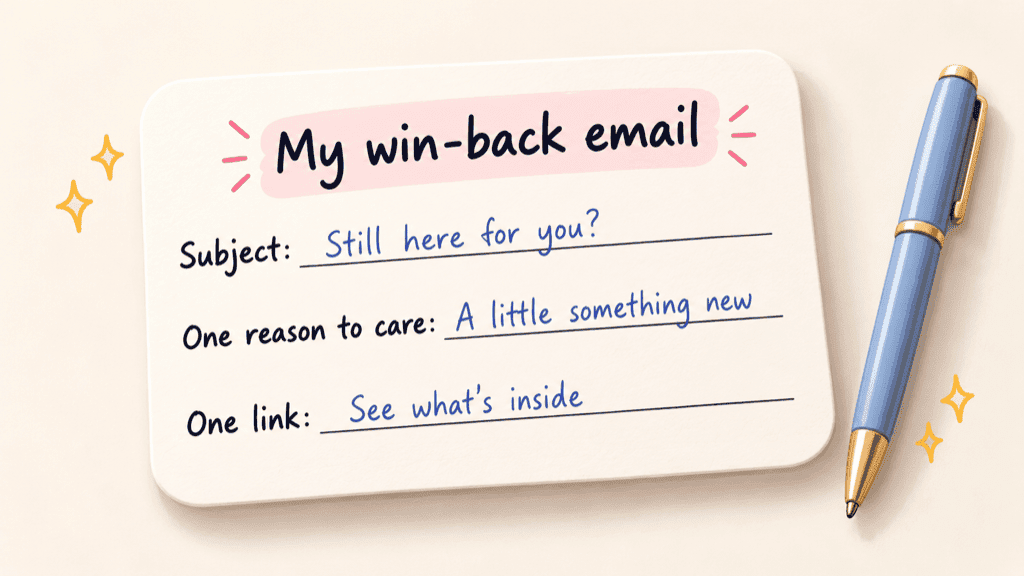
That’s the hard part done. Tomorrow you paste it into your email tool, pick your two cold segments, and send.
“But What If…”
“What if my list is tiny?”
It still works, and it still costs you nothing but 15 minutes. Be realistic though. On a very small list the payoff is modest, a handful of re-engaged people rather than dozens. The method scales with your list size, so the bigger your cold segment, the more this is worth.
“What if they unsubscribe?”
Let them. An unsubscribe from someone who was never going to buy helps you, because it lifts your engagement rate and protects your deliverability for everyone who stays. A clean list beats a big one.
“What if I don’t sell physical products?”
This works just as well for affiliates and digital sellers. The only thing that changes is the single click action. Instead of a product collection, you point them at the one resource, guide, or offer they’d most want to see right now.
The month before Black Friday, everyone’s looking forward. Building the next thing, chasing the next subscriber. The quiet money is behind you, sitting on the list you already have.
Fifteen minutes and one honest email is all it takes to find out how much of it is still there.

