
Every November the same gift guides go up. Wirecutter, Oprah Daily, Amazon’s own holiday lists and a hundred magazine roundups of “the best gifts of 2026.” They have big budgets, product testers and years of search rankings behind them, and if you try to build a guide that competes with them head on, you’ll lose.
You don’t need to compete with them, though, because they’re answering the wrong question for most of the people on your list.
The people on your list aren’t shopping for “people.” They’re shopping for their son-in-law, the neighbour who just retired, the friend who’s about to become a grandmother for the first time. They want a short list they can trust for one specific person, at a price that won’t wreck the budget. And budgets are tighter this year. PwC’s 2026 Holiday Outlook has shoppers planning to spend an average of $708 on gifts, about 2% less than last year.
A guide called “10 Gifts Under $50 for New Grandparents” is something the big sites rarely bother to build, and it’s something a small email list or a Facebook group will open, use and pass along. Build it once this weekend and you can put it in front of the same readers three separate times before Christmas.
By the end of this post you’ll have
- One buyer and one price ceiling for your guide
- A 10-product shortlist on a page you control
- Three dated sends that carry the guide from October to the December rush
The One-Buyer Gift Guide: Build It in Five Steps
Once you’ve settled on your buyer, writing the guide itself can be an afternoon’s work, and the whole thing can come together over a weekend. Here’s the order that keeps it from sprawling.
Step 1: Pick One Person, Not a Category
“Gifts for her” is a category. “Gifts for the new grandmother who already has everything for the baby” is a person. The narrower you go, the easier the guide is to write, and the more likely someone forwards it to the exact person who needs it.
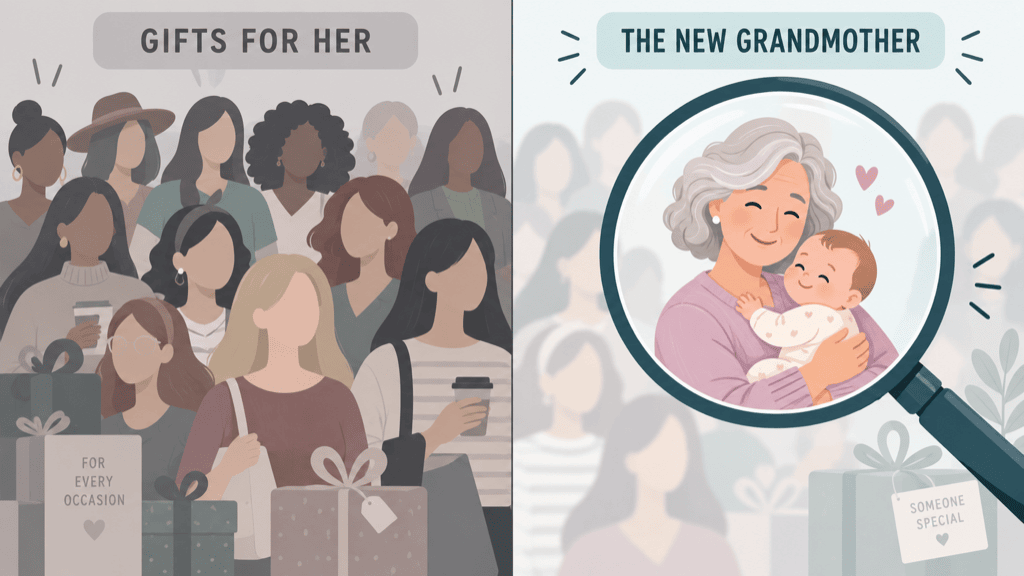
Pick a buyer your readers shop for. A few starting points:
- New grandparents
- The dad who golfs (or fishes, or gardens)
- A friend who just retired
- The teenager nobody knows how to buy for
Step 2: Set a Price Ceiling Before You Look at a Single Product
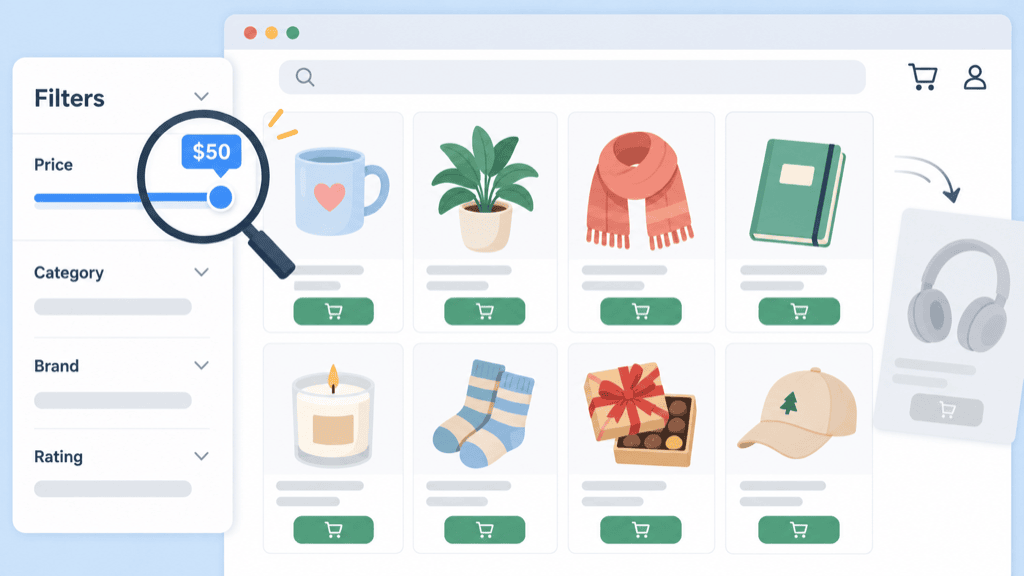
“Under $50” or “under $25” does two jobs. It filters your product hunt so you don’t lose an evening browsing, and it tells the reader you respect their budget. Put the ceiling in the guide’s title and hold to it, even when you find something great at $59.
Step 3: Pick 10 Products You’d Stand Behind
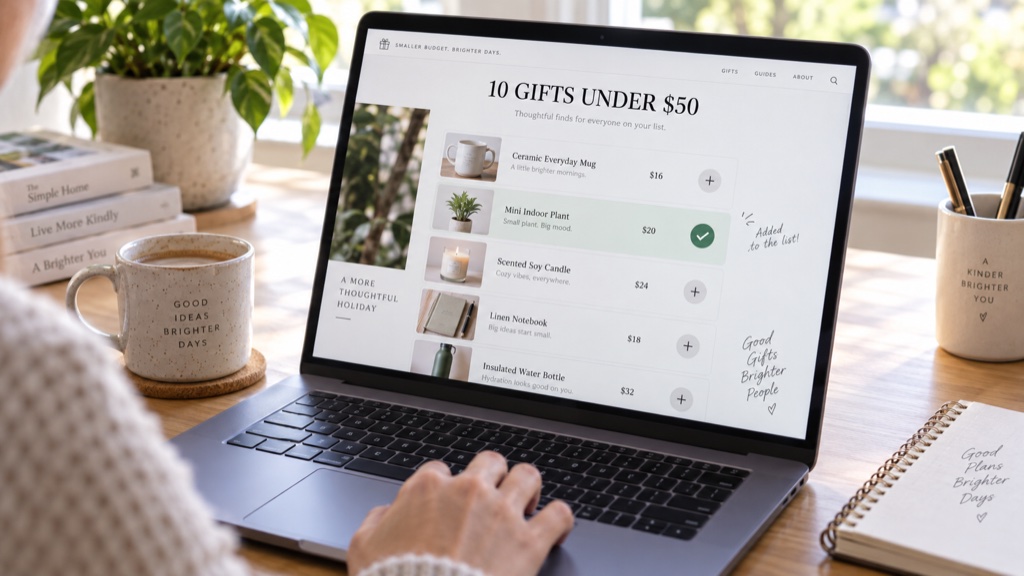
Ten is enough to feel like a real choice without turning into a catalogue. Pull them from programs you can join:
- Amazon Associates for the widest range (most gift categories pay 3% to 4.5%)
- Etsy and individual brand programs, many of which run through networks like Awin or Impact
- Products you’ve used yourself, wherever you can
Before a product makes the list, check that it’s in stock, has solid genuine reviews and ships reliably.
A guide full of items that are sold out by Black Friday is a guide nobody trusts twice.
Step 4: Write One Honest Line Per Product, and Disclose
Skip the copied product description. Write one sentence on why this particular person would like it, for example: “Grandparents on the move will use this every week, and it folds flat in a carry-on.”
Put a plain disclosure at the top of the guide. The FTC expects you to tell readers you earn from these links, and Amazon requires its own wording: “As an Amazon Associate I earn from qualifying purchases.”
Step 5: Put the Guide on a Page You Control, Then Pick Where to Share It
Your guide needs a home. That can be a page on your blog, or a free one-page site if you don’t have one. Then choose the first place you’ll send people to it:
- Your email list. Link to your guide page rather than dropping Amazon links straight into the email. A page you control is easier to update, can mix in several merchants, and keeps you clear of Amazon’s stricter conditions for links sent by email.
- Pinterest. One pin with the guide’s title on the image, linking to your page.
- A Facebook group you already belong to, but only if the rules allow links, and ideally after checking with the admin.
A brand-new page is very unlikely to rank on Google before Christmas. That’s fine, because this plan leans on people who already know you, or who find you through a pin or a group post, rather than on search.
One Guide, Three Paydays
Most people treat a gift guide as a one-off Black Friday post. The shopping calendar says there are three separate windows, and each one is a fresh chance to earn from the same page. That’s what I mean by three paydays.

It also suits the way Amazon tracks sales. It generally only credits you for purchases made within 24 hours of the click (longer if the item goes into their cart in that time), so each send needs to get people buying that day, not bookmarking for later.
Send 1: early October. Shoppers start earlier than most marketers plan for. Attentive’s Consumer Pulse research, published in July, found that 46% of shoppers begin buying before November. Send the guide as built, with a simple “getting ahead this year?” angle.
Send 2: Thanksgiving to Cyber Monday (November 26 to 30). This is the big one. PwC’s outlook puts roughly 40% of planned gift spending in those five days. Before you send, swap out anything that’s sold out, recheck prices and point out any genuine deals on your items.
Send 3: December 10 to 14. By 19 December, plenty of your readers will still have nothing for their brother-in-law, and a short list from someone they trust is exactly what they want. Get the guide to them a week before that panic, with delivery in mind:
- Check each retailer’s holiday delivery cutoff. They vary by store. For anyone posting gifts themselves, USPS recommends mailing Ground Advantage by December 17 this year.
- Add one or two digital gifts, subscriptions or experiences for anyone who leaves it too late.
The Honest Math
“Paydays” can sound bigger than it is, so here are some numbers. They’re hypothetical, and you should plug in your own:
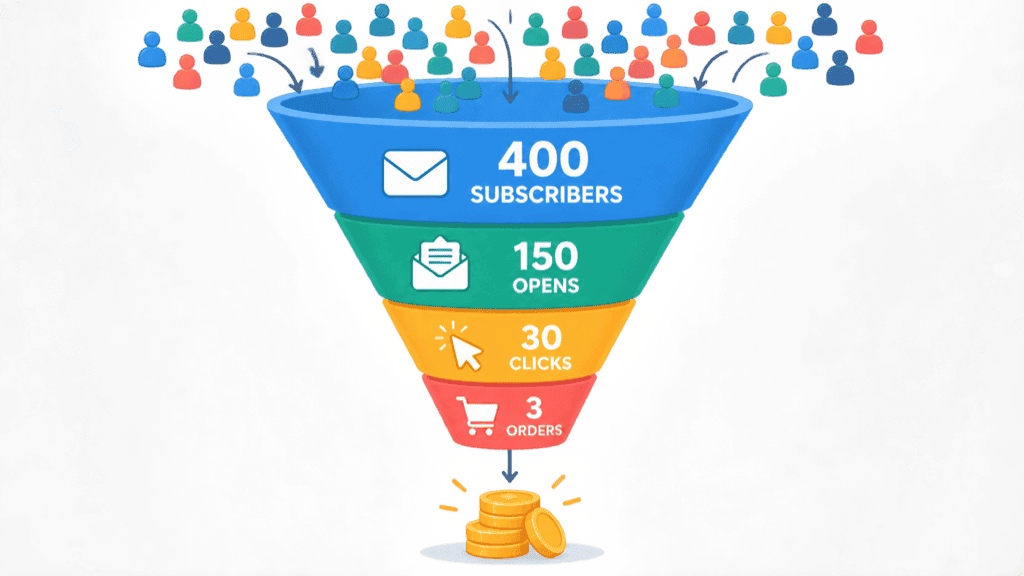
- You email a list of 400 subscribers, and about 150 open it and see the guide
- 1 in 5 of those clicks through to a product, which is 30 people
- 1 in 10 of those buys something, which is 3 orders
- Each order earns you around $1 to $4. At Amazon’s 3% rate, a $50 gift earns $1.50 and a $30 gift about 90 cents, and the higher end assumes other items land in the basket (Amazon pays on other qualifying items bought in that visit, not only the one you linked)
That works out to roughly $3 to $12 per send, or about $10 to $35 across all three.
For a 400-person list, that’s a small first stream, and I’d rather you knew that now than in January. Commissions also arrive weeks after the sale (Amazon pays about 60 days after the end of the month), and not every guide will sell. What moves the numbers is reach and rate: a bigger list, a pin that keeps getting saved, or a brand program that pays more than Amazon’s 3% to 4.5%.
Three Real-World Scenarios
These are illustrations of how the plan fits different starting points, not case studies.
Scenario one: the small email list. Someone with 400 subscribers builds “10 Gifts Under $50 for New Grandparents” on a free one-page site. Each of the three emails is a few sentences and one link to the page, and each one is another chance to earn from the same page.
Scenario two: no list, but an active hobby. A keen golfer builds “Gifts Under $40 for the Dad Who Golfs,” pins it on Pinterest and shares it in a golf Facebook group whose rules allow links, after checking with the admin. Their three “sends” are three dated pins or group posts, and each pin can keep bringing visitors after it goes up.
Scenario three: the existing hobby blog. Someone with a small gardening blog adds one guide page, then works it three ways: a link from their most-visited post in October, an email to their subscribers around Thanksgiving, and a refreshed “last-minute gifts for gardeners” push in mid-December. Readers who already trust them on gardening see a gift guide for the gardener in their own life.
Why This Matters
You get three chances to earn from one weekend of work this season, and the same page can be refreshed and sent again next year. The edge you have over the big sites is knowing one buyer well, which no amount of budget buys them.
Your 5-Minute Quick Win
Open a note on your phone and fill in these five lines:
- I’m building a guide for: ___
- My price ceiling is: ___
- Three products I’d stand behind: ___
- The guide will live on: ___
- Send 1 goes out on: ___
Once those are filled in, the hard decisions are made, and building the page is a job for this weekend.
“But What If…”
“What if I pick the wrong buyer?”
You’ll find out on Send 1, which is useful. Look at which products got clicks. If nothing moves, build a second guide for a different person before Send 2. There’s time.
“What if I don’t want to post links in Facebook groups?”
Then don’t. Plenty of groups ban them, and pushing links where they aren’t wanted costs more trust than it earns. Your list, Pinterest and your own site are enough to run this plan.
“Isn’t late September too early to think about Christmas?”
Not for your readers. As the Attentive numbers above show, a lot of them start before November, so building now means you’re ready when they do, instead of scrambling to catch up in late November.
You don’t have to beat the big gift guides. They’re built for everyone, which leaves plenty of room for someone who knows exactly what to buy for one particular person.
Pick that person, put the guide on one page, and send it three times before Christmas.

