

Picture the next six weeks. Every affiliate you follow is about to line up behind the exact same products: the same headphones, the same robot vacuum, the same discounted TV. They will all write the same “best Black Friday deals” post, email the same offers on the same Thursday night, and bid on the same keywords.
Here is the problem with standing in that line. The crowd isn’t where the easy money is. It’s where the competition is fiercest, which makes those clicks the hardest and most expensive you will try to win all year.
Meanwhile, a handful of seasonal offers are already warming up, for reasons that have nothing to do with a doorbuster deal. The buyers are motivated, the demand shows up on the calendar like clockwork, and far fewer people promote these than the headline gadgets, because everyone’s too busy getting ready for the big day.
There are three of them worth your attention right now, weeks before most affiliates even start thinking past Black Friday.
By the end of this post you’ll have:
- Three specific offer types you can go check on an affiliate network today
- The one calendar signal that explains why each one is climbing now
- A simple filter to spot more of these overlooked offers in your own niche
Why the Overlooked Offers Are Easier to Win
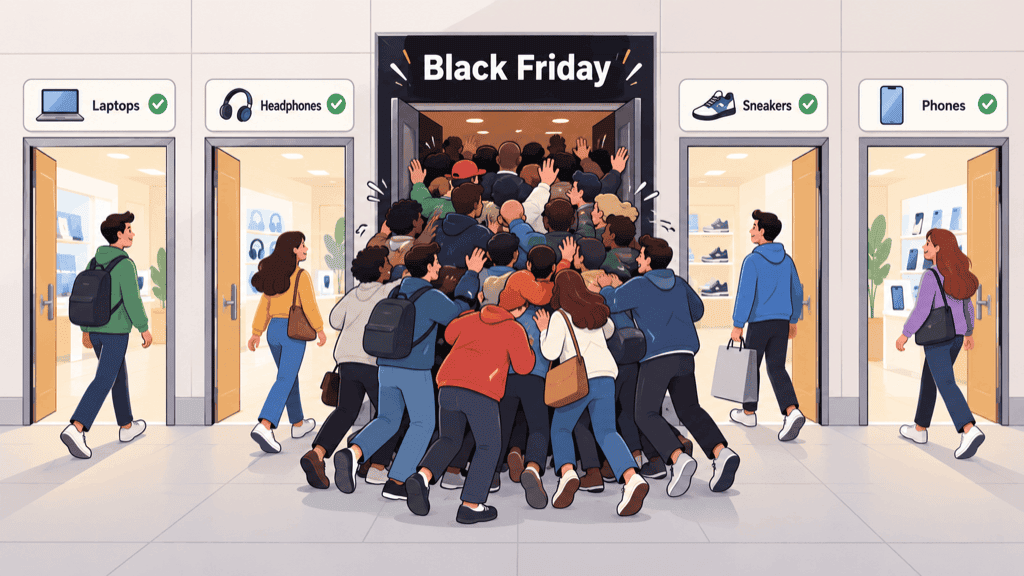
The advantage is real, but it’s easy to misread, and a lot of “low competition” advice gets it wrong.
When thousands of affiliates pile onto the same Black Friday products, the attention gets expensive. Ad inventory costs more, the search results are packed, and your email lands in an inbox stuffed with forty other people selling the identical thing. You’re not fighting for the sale so much as fighting to get seen at all.
The overlooked seasonal offers skip most of that. Fewer people are competing for the buyer’s attention, so the clicks are usually cheaper and easier to win in the first place.
What lower competition does not do is magically pay you more once someone clicks. That part never changes. Your return still depends on the offer’s commission rate, the price of the product, how well the page converts, and how long the cookie lasts. So the play is simple: win the clicks cheaply where nobody else is looking, then put them in front of offers whose economics hold up.
That second half matters, which is why you run every idea through the same quick check first.
Run This 5-Point Check Before You Promote Anything
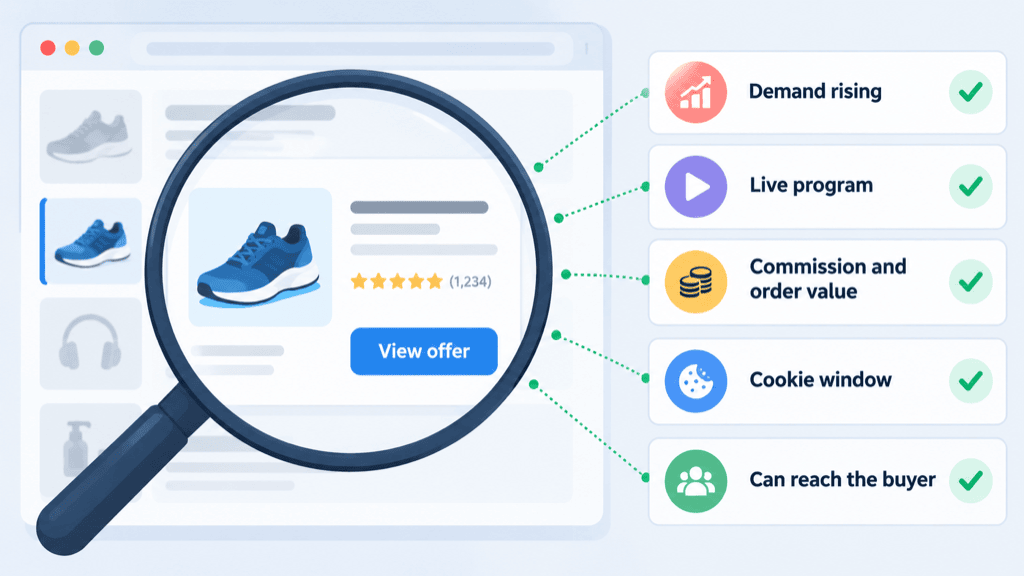
Seasonal popularity alone does not make a good affiliate offer. Before you build a post or an email around any of these, spend two minutes confirming it’s worth your time:
- Is demand genuinely rising now? A quick look at Google Trends for the product tells you whether the season has started.
- Is there a live affiliate program? Check the network or the brand’s own site for an active program you can join today.
- What’s the commission rate and average order value? A low rate on a high-priced item can still pay well, while the same rate on something cheap usually isn’t worth it.
- What’s the cookie window? Longer is better, especially for gift buyers who browse now and buy later.
- Can you realistically reach the buyer this week? Your list, your social following, or traffic you already have beats hoping a brand-new post ranks in time.
If an offer clears those five, you’ve got something real. Here are three worth checking.
Offer #1: Light Therapy Lamps

Every autumn the clocks go back, the UK in late October and the US and Canada on November 1 this year, and the daylight drops off a cliff. People feel it almost immediately, and over the next few weeks a lot of them go looking for a fix. Demand for light therapy lamps, the daylight lamps marketed for darker-day energy and mood, climbs sharply from October through December. Retailers have reported sales of some models rising several times over compared with the start of autumn.
This is a motivated buyer, not a browser. Someone searching “best light therapy lamp” in November has a problem they want solved this week, which is exactly the buyer intent you want behind a click.
On the money side, be a little careful. Amazon’s rates for this kind of product can be low (the US health category is around 1%), and they vary by country and by how Amazon classifies the item, so check your own storefront before relying on it. A cheap lamp at a low rate isn’t worth much. The economics get better two ways: point readers toward specialist health or wellness brand programs that often pay more (search a network like ShareASale or Impact for light-therapy and daylight-lamp brands), or focus on the higher-priced, better-designed lamps where even a modest rate adds up.
The easiest thing to publish this week is a plain, honest “what to look for in a light therapy lamp” guide, or a short comparison of two or three models at different price points. Keep it practical and skip any medical promises. You’re helping someone choose a product, not diagnosing anyone.
Offer #2: Advent Calendars

This one has a deadline built right into it, and that deadline does your selling for you.
An advent calendar has to be in someone’s hands before December 1, so the entire buying decision gets pulled forward through October and November. Nobody needs to be convinced to hurry. The calendar is the urgency.
Advent calendars have also grown way beyond the chocolate ones from your childhood. There are beauty calendars, coffee and tea calendars, whisky and gin calendars, even ones for dogs and cats. A beauty advent calendar often runs $50 to $150, which means the average order value is far higher than a single small gift, so even a standard commission rate turns into a respectable payout. The popular ones genuinely sell out, which gives you real scarcity to write around instead of the fake countdown-timer kind.
The big beauty calendar roundups get crowded early, so the opportunity is in the narrower niches. “Best advent calendars for dog owners” or “for coffee lovers” is a far quieter search than the beauty lists everyone writes, and it’s still a motivated buyer. Look for retailer and brand programs on networks like Awin, CJ, Rakuten, or Impact (pet retailers such as Chewy, beauty retailers, specialty food and drink brands), then build a simple roundup post and an email around the niche you pick.
Offer #3: 2027 Planners and Diaries

As the year winds down, a predictable wave of people start setting up for the next one, and the planner and diary buying window opens in November and runs through December.
You’ve got two buyers for one product here. There’s the person buying a planner for themselves, already thinking about getting organized in the new year, and there’s the gift buyer who wants an affordable, genuinely useful stocking stuffer. Both are ready to spend without much convincing.
The honest catch is price. Most planners are inexpensive, so a single link won’t add up to much. This is a volume play, and it works best as a roundup rather than a one-product pitch. Group them by the reader’s goal, something like “the best 2027 planners for fitness, small business, or students,” and let people find the one that fits. Many planner brands run affiliate programs through ShareASale or Impact, and Amazon covers the rest, so a roundup can mix both and pull steady clicks right through December.
Spot Your Own November Offer
These three won’t fit every niche, and you don’t need them to, because the thinking behind them travels anywhere. The filter is one question:
What does the calendar pull people to buy in the next few weeks that has nothing to do with a doorbuster deal?
Then run any idea you come up with through three quick tests:
- A real deadline. The demand is time-boxed, so buyers can’t put it off.
- A motivated buyer, not a bargain hunter. They want the thing, not just the cheapest version of it.
- Less attention than the mainstream. Fewer affiliates are crowding the space.
Anything that passes goes through the five-point check above before you commit to it.
Why This Matters
Your scarcest resource in November isn’t time or even money. It’s attention, both yours and your buyer’s. Pouring all of it into the single most contested week of the year is the most expensive way you can spend it, because you’re buying your way into a fight everyone else is also having.
The calendar quietly shows you demand you can serve calmly, before everyone else piles in, where the clicks are cheaper and the buyers are just as real. Not every seasonal offer will be a winner, and some of what you try will flop. But you’ll learn more from one calm, well-chosen November test than from throwing yourself into the Black Friday scrum and hoping to get noticed.
Your 5-Minute Quick Win
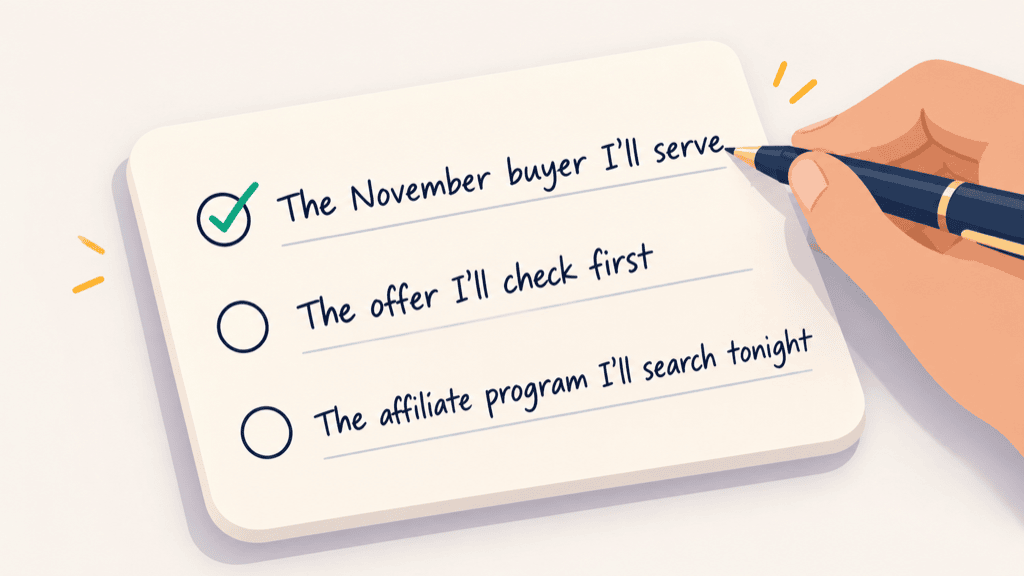
Don’t close this tab yet. Fill in these three blanks right now, in a note on your phone:
- The November buyer I’ll serve is ______
- The offer I’ll check first is ______
- The affiliate program I’ll search tonight is ______
Then open one affiliate network and run that offer through the five-point check. Five minutes, and you’ll know whether you’ve got something worth building this week.
“But What If…”
“What if none of these fit my niche?”
Use the filter instead of the list. Almost every niche has a time-boxed seasonal buyer right now, whether that’s pet advent calendars, fitness planners, or lamps sold as a wellness gift. The three offers are examples, not the whole menu.
“What if it’s too late to rank or get traffic?”
These don’t depend on a six-month SEO play. The buyers are already searching, and you can reach them this week through your list, your social following, or traffic you already have. One good email can catch the wave.
“What if the commissions are too small to bother with?”
That’s exactly what the validation check is for. Advent calendars and higher-priced lamps can carry a real payout thanks to the order value, while cheap planners only make sense bundled into a roundup rather than promoted one link at a time. Check the numbers before you commit, not after.
The money in November was never only behind the biggest discount. A lot of it sits in the demand nobody else bothered to serve, because they were too busy shouting over each other about the same ten products.
You don’t have to join that fight. Read the calendar, pick the buyer the crowd forgot, and get there first. Demand you can read off a calendar beats a deal you have to shout over.

