

It’s September, and you’re staring at the same decision every store owner is staring at right now. Black Friday is coming, the inbox arms race has already started, and the easy answer is sitting right there: 20% off everything.
It feels safe. It’s what you did last year. It’s what the competition is doing.
Almost nobody actually runs the numbers, though. A 20% discount doesn’t take 20% off your profit. It can take most of it. And this year, when every single email in the inbox is shouting the same “20% off,” the discount itself has stopped being the thing that wins the sale.
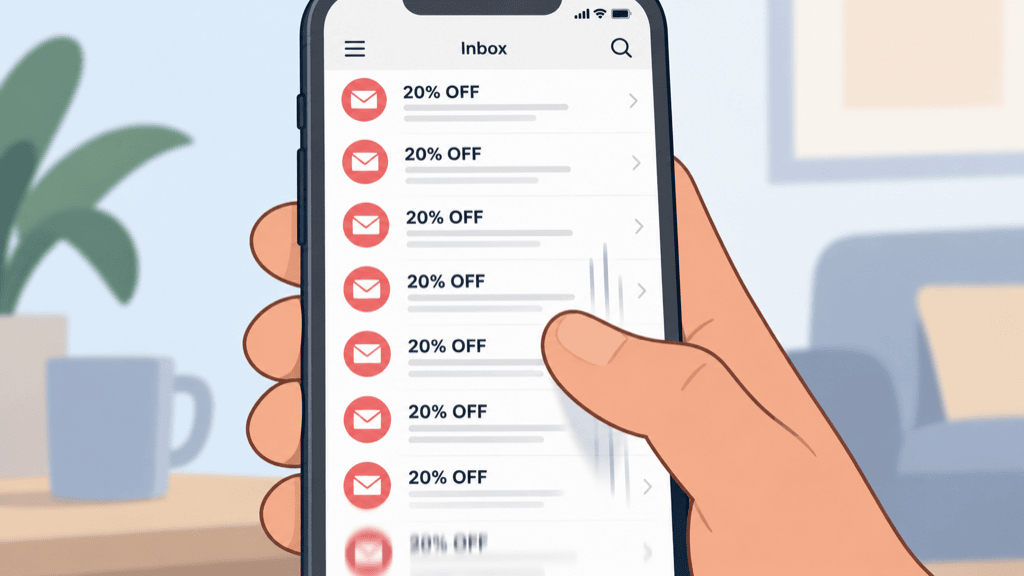
I’m not going to tell you to skip the sale. Discounts work, and Q4 is the season to run them. What I’m going to show you is how to run the discount so it actually moves a buyer, instead of quietly handing your margin to people who were going to buy anyway.
What a 20% Discount Really Costs You

Start with one number: your contribution profit. That’s what a sale leaves after the costs that change with each order, so the price minus product cost, fees, shipping, and anything else that moves per sale.
Say you sell something for $50 that costs you $30 all in. That’s $20 of profit per order. Take 20% off and the price drops to $40, but your costs don’t budge, so your profit falls from $20 to $10.
You cut the price by 20%, and you cut your profit in half.
The discount comes off your margin, not your revenue, so to make the same total profit, in this example you’d have to sell twice as many units. Double. And a good chunk of those buyers would have happily paid $50 anyway, so for each of them that $10 wasn’t persuasion, it was a gift.
So before you set any Q4 discount, run it through one question:
Will the extra orders it brings in earn more than the margin you give away on the people who’d have bought anyway?
Sometimes yes. Often it’s closer than you’d think. Either way, the rest of this post is about making that discount pull its weight.
The Engineered Discount: Four Moves That Make a Discount Work Harder
A reflex discount just lowers the number. An engineered discount is built to move a specific buyer at a better margin.
I’m not promising these four moves always beat a deeper cut. What they do is give you a stronger, more margin-conscious offer than “another 10% off,” so the sale you make is worth more when you make it.
Move 1: Anchor the deal against a real reference price

A discount only lands as a deal if the shopper believes the original price was real. If your store has had a “SALE” banner up since August, the discount isn’t a drop anymore, it’s just the price, and buyers have learned to wait for the next one.
So anchor it. Show the genuine usual price next to the sale price, and make sure the usual price is one you actually sell at the rest of the year. Keep it honest, because both the US FTC and the UK’s CMA take a dim view of invented “was” prices, and shoppers spot a fake anchor faster than any regulator.
Move 2: Add value instead of cutting deeper

When the pressure is on to compete, the reflex is to go from 20% off to 30% off. That’s the most expensive lever you can pull, because it comes straight off margin.
Adding value often wins the same sale at a better margin, though you’ll want to check the real cost of each on your own numbers:
- Bundle products so the deal feels bigger, usually for far less added cost than a deeper price cut
- Add a bonus the buyer wants that’s cheap for you to give, like a guide, a template, or a small add-on
- Set a free-shipping threshold that nudges the order size up instead of the price down
Two of those do something a blanket cut can’t. A threshold or a bundle asks the buyer who was going to purchase anyway to spend a little more, instead of paying them to buy. The shopper feels like they got more, and you kept more of the margin.
Move 3: Frame the affordability truthfully
Sometimes the price is fine, and what’s stopping the buyer is how the number feels. This year in particular, people are watching their totals more carefully, so how you present the cost matters.
Pick the most honest unit of affordability for what you sell:
- The per-item price inside a bundle (“that’s $12 each”)
- A “less than X” frame where it genuinely fits the product
- Financing or pay-later, but only on higher-ticket items where it actually makes sense, never on a $15 order
One rule holds across all of them: the total cost has to stay clear. Affordability framing helps a real deal feel reachable. It should never be used to hide what someone’s actually paying.
Move 4: Give the discount a reason and a deadline
A discount with no reason and no end date trains buyers to wait, because there’s always another one coming. A discount with a why and a deadline gives them a reason to act now.
Tie the offer to something real: a holiday, a bundle launch, an early-bird window that genuinely closes. Then hold the deadline. The urgency only works if it’s true, and a countdown that resets every week teaches people to ignore it.
Three Real-World Scenarios
Scenario one: the dropshipper. She was about to mark her $39 gadget down to $29 for Black Friday. Instead, she checked her own history, confirmed $39 was the real everyday price, and anchored the sale clearly against it. Same discount, but now it reads as a genuine drop rather than a number pulled from nowhere.
Scenario two: the ecom store. He was ready to jump from 20% off to 30% off to match a competitor. Instead he held the discount at 20%, added a free-shipping threshold a little above his average order, and threw in a low-cost bonus product he’d checked the numbers on. The offer felt bigger to the shopper, and his margin held.
Scenario three: the affiliate. The four moves are a store owner’s tools, so here’s the affiliate version: offer selection and honest framing. She doesn’t control the merchant’s price, bundle, or checkout, so she works the lever she does control. She lined up three Q4 promos she could send, compared what each was actually worth to her readers, picked the strongest one, and wrote it up with the real terms and the real deadline spelled out. No begging the merchant for a bigger coupon, just a clear, honest pick.
Why This Matters

Q4 is the one stretch of the year where sheer volume can paper over a margin leak. The orders pour in, the revenue looks great, and it’s only in January, when you total up what you actually kept, that a too-deep discount shows its real cost.
That’s what makes the reflex so dangerous. It feels safest exactly when it’s most expensive. Revenue is the number that feels good in November. Profit is the number that’s still there in January, and it’s the one the whole season is supposed to earn you.
Your 5-Minute Quick Win
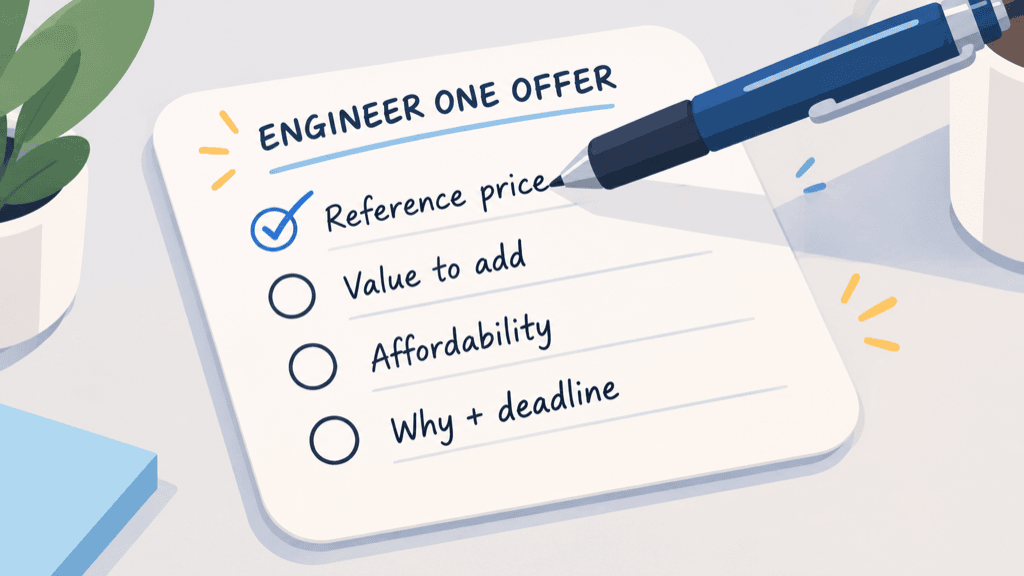
Pick one offer you’re planning to run this Q4 and draft it properly. Open a note and fill in these four lines:
- Reference price: the genuine everyday price I’ll anchor against is ___
- Value I’ll add instead of a deeper cut: ___
- How I’ll frame the affordability: ___
- Why this offer exists and when it ends: ___
Five minutes, and you’ll walk away with one engineered offer instead of a reflex “20% off everything.” Do it for your best-selling product first, because that’s where a protected margin is worth the most.
“But What If…”
“What if my competitors are all doing 40% off?”
You don’t have to match the number, you have to make your offer the better deal. A well-anchored 20% off with a real bonus can be worth more to a shopper than a raw 40% off a price they don’t trust. Compete on the whole offer, not just the size of the cut.
“What if I have thin margins and can’t afford to add bonuses?”
Then a smaller, well-anchored, time-boxed discount protects far more than a deep reflex cut you can’t afford. When margin is tight, the reference price and the deadline do most of the work, and they cost you nothing.
“What if discounting less means fewer sales?”
The goal isn’t fewer sales, it’s a healthier margin on the sales you do make. The four moves are built to improve the economics of the offer, not to guarantee you’ll sell exactly as many. If a deeper cut genuinely brings in enough extra orders to clear that break-even question from earlier, run it. Just make it a decision, not a reflex.
The discount was never the enemy. The reflex is. Anyone can cut a price, and this year everyone will. The stores that win Q4 are the ones that make the cut mean something.
So run the sale. Just engineer it first.

