
Almost everybody plans to test their biggest offer of the year during the season that matters most.
Which means the first time they run it live is also the first time it can cost them.
You can check your own links and discount codes, and you should, because plenty of problems will show themselves before a single buyer arrives. What you can’t simulate is what happens when real people get the email, land on the page and decide whether to buy. That part only shows up under real traffic.
So you want that traffic on a weekend where a mistake is cheap.
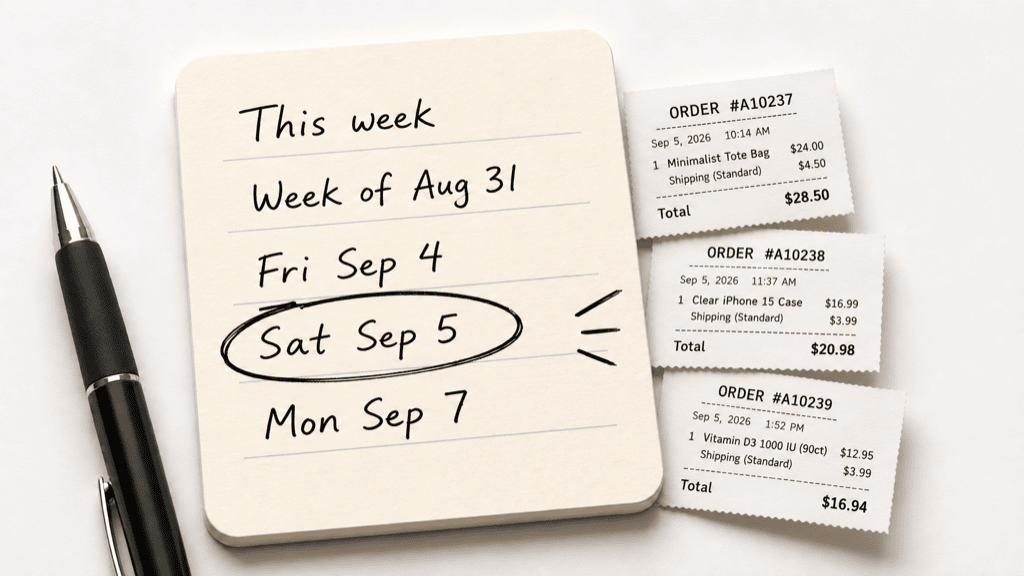
Labor Day weekend runs Saturday September 5 through Monday September 7 this year. It’s about three weeks away, which gives you enough time to set up a small live test without scrambling to get ready.
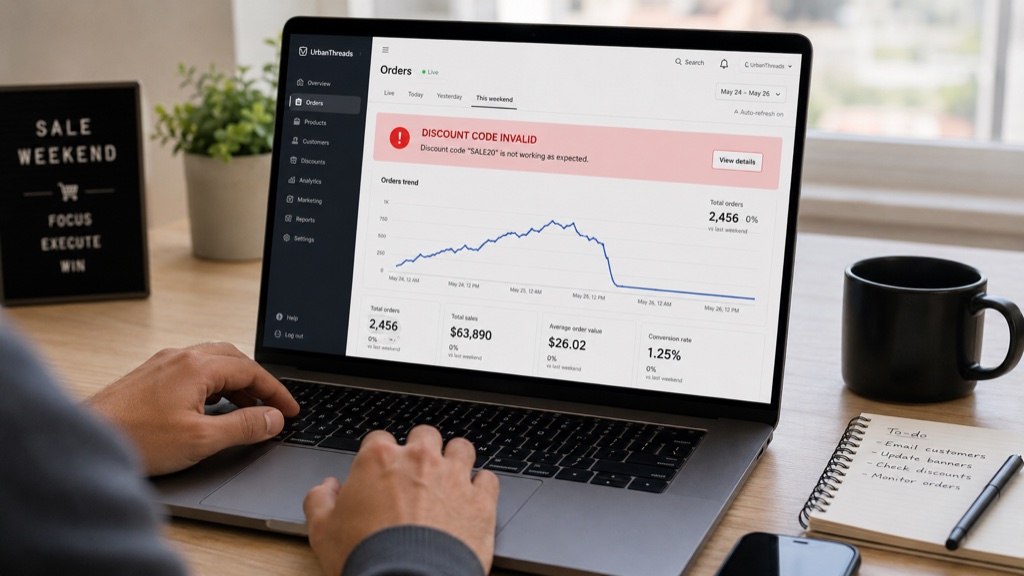
If you only judge the weekend by what it made, you won’t learn much. Run it to see where people drop off, what breaks, and what needs fixing before Q4.
This works best if you’ve already got something you can put in front of people, whether that’s your own product or an affiliate offer you can promote. If nothing’s live yet, the three changes below are still the right setup, you’re just testing whether the machine runs rather than what the offer is worth.
By the end of this post you’ll have:
- The one offer you’ll put on test, instead of a store-wide discount that tells you nothing
- A buyer’s-path check you can run on your own phone
- A dated run sheet for September 5 to 7
- Three numbers of your own to plan the rest of the year against
The Labor Day Test Run
Three changes before the weekend, one small sale during it, three numbers afterwards. Whatever those three days earn is a bonus rather than the reason you’re doing it. You’re there to find out what breaks while the weekend still doesn’t matter very much.
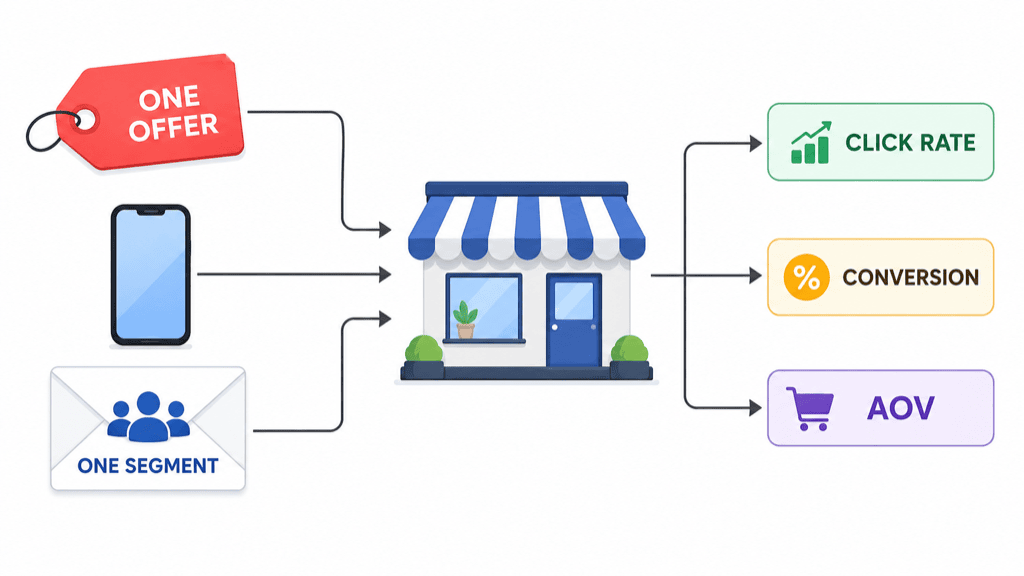
Aim to finish it knowing three things: whether people clicked, whether the page converted, and what the average order was worth. More on how to work those out further down.
A small test won’t give you a clean statistical answer. It’s good for spotting what’s broken and roughly what converts, so don’t use it to split hairs over a couple of percentage points.
Change 1: Put One Offer on Test, Not the Whole Store
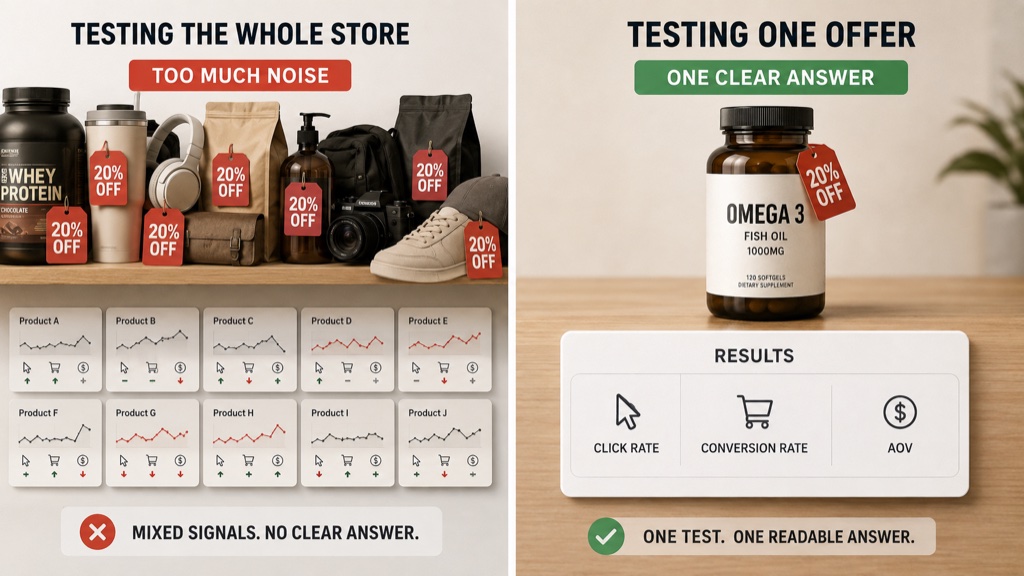
A store-wide discount produces a blur. You can’t tell which product carried the weekend, or whether the discount did anything at all, so you finish with a number and no idea what caused it.
Pick the single offer you expect to lean on later in the year, and discount only that. Everything else stays at full price.
Then work out what’s left per sale before you commit to a discount, because the arithmetic catches people out. Say a product costs you $12 and sells for $39. At full price, after $6 of shipping, you keep $21. Take 20% off and the sale price is $31.20, so you keep $13.20. Same order, nearly 40% less profit, and that’s before any ad spend.
None of which means don’t discount. It means know the number first, because a weekend that sells well and earns nothing is its own kind of failure.
The things that tend to break at this stage:
- A code that won’t stack with a price that’s already reduced
- A code that applies to the wrong collection, so it either covers everything or nothing
- A discount that wipes out the margin once shipping comes off it
Change 2: Walk the Buyer’s Path Yourself, on a Phone
Do this on your own phone, on cellular data rather than home wifi, logged out of your own account. That’s much closer to what a real buyer sees than the version you get on your laptop with everything cached.
If it’s your own store, complete a real test purchase from start to finish:
- Tap the exact link you plan to send
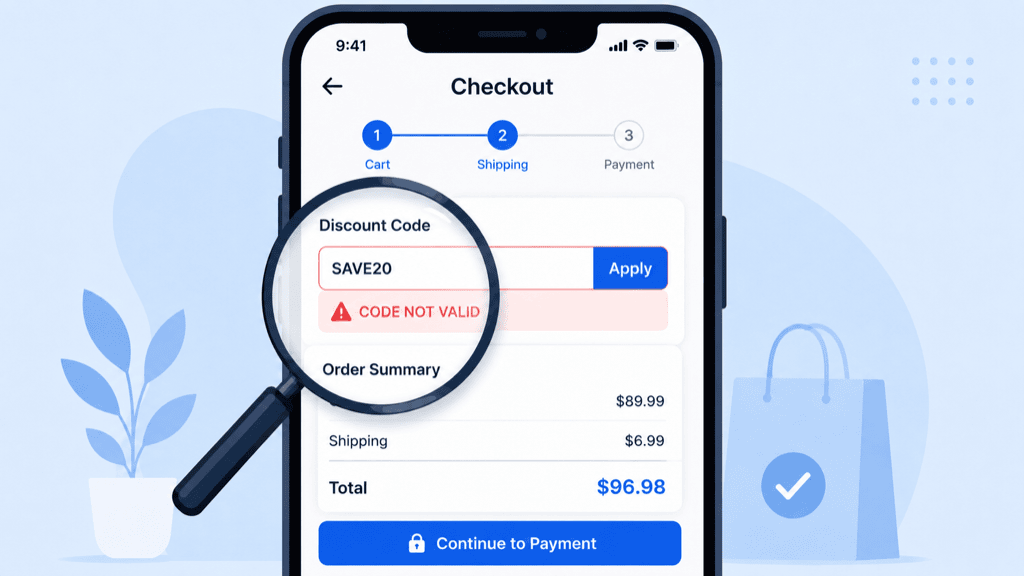
- Apply the code
- Add the exact product and variant you’ll be promoting
- Go through checkout to the confirmation screen
- Check that the confirmation email arrives and reads correctly
Then refund yourself.
If it’s an affiliate offer, you can’t complete somebody else’s checkout or control their confirmation emails, so follow the path as far as the merchant allows and verify what you can see:
- Does the link land on the right page
- Is it the right product and variant
- Is the price what you’re about to promise in the email
- Does your affiliate link still work and track correctly
What this catches:
- A link that lands on the wrong page, or a page that no longer exists
- A code that silently fails
- A shipping cost that only appears at the final step
- A checkout that’s awkward with one thumb
- A confirmation email that never lands
Finding one of these on September 5 costs you a few minutes. Finding it during your biggest weekend of the year costs you the weekend.
Change 3: Send to One Segment, Not the Whole List
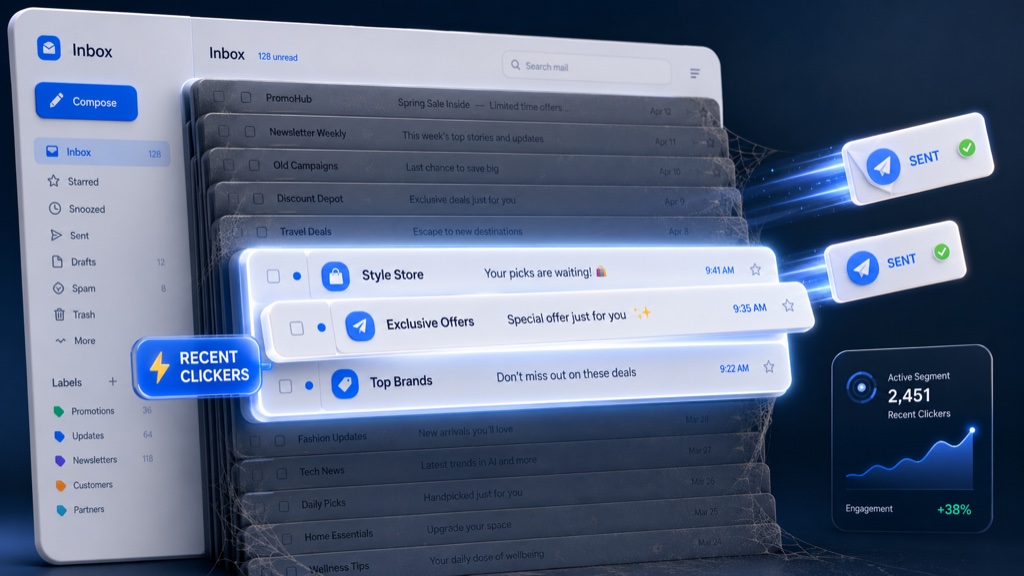
A warm segment gives you a cleaner signal about whether the offer interests people who already like you. Send to everybody and a soft click rate could mean the offer missed, or it could mean most of the list stopped paying attention months ago, and you won’t know which.
It also protects your sender reputation going into Q4. Emailing people who haven’t heard from you in months tends to produce weak engagement, and weak engagement can hurt your reputation and your inbox placement right before the months when email matters most.
Who to send to: recent clickers and recent buyers. Keep it simple.
What tends to break here:
- A link that goes to the wrong page (worth checking separately in the email itself, not just on the site)
- An email that gets opened and then goes nowhere
- An email that doesn’t reach the inbox at all
If your list is genuinely cold, waking it up is its own separate job, and a test weekend isn’t the place to try it for the first time.
Three Real-World Scenarios
Scenario one: the dropshipper. He puts the whole store at 20% off and on order count the weekend looks decent, but the items that sold hardest were the thinnest-margin products he stocks. Very little profit in it, and no signal about which product to build the season around. Good sales, no winner.
Scenario two: the ecom seller. Traffic arrives, but her code won’t stack with a price that was already marked down, so it fails at checkout. The only evidence she gets is one polite support email, while everybody else assumed the offer was a mistake and left without saying anything.
Scenario three: the affiliate. He sends to his whole list and gets a respectable open rate with almost no clicks, so he can’t tell whether the offer was wrong for the audience or the audience had gone cold. He learns nothing he can use in November.
Your Run Sheet for September 5 to 7
- This week: pick the offer, set the discount, work out what’s left per sale
- Week of August 31: walk the buyer’s path on your phone, fix whatever breaks, build the segment
- Friday September 4: one email to that segment, no fanfare, no five-part launch sequence
- Saturday September 5: the sale opens, and this is the part people skip, so watch the first three orders specifically. On each one, confirm the code applied correctly, shipping was charged as expected, the right product and variant came through, the confirmation email went out, and the margin held up
- Monday September 7: close it, then write down your three numbers the same night while it’s all still fresh
A problem that shows up on order one can still be fixed by Saturday lunchtime, so sit with those first three rather than checking the total on Monday.
The Three Numbers to Write Down
- Click rate on the email you sent. This gives you a signal about whether the offer, and the way you presented it, were interesting enough to make warm readers take the next step.
- Conversion rate on the page. Orders divided by visitors.
- Average order value. On its own, AOV doesn’t tell you what a customer is worth to you. Paired with the margin you worked out in Change 1, it starts to tell you what you can afford to spend getting a customer later in the year.
At small numbers these are directional, so treat them as a starting point you’ll refine rather than a forecast. Write them somewhere you’ll find them again in November.
Why This Matters
The busiest selling season of the year is the worst possible time to discover a broken code, a cold list or a checkout that annoys people, because that’s when competition for attention is fiercest and every missed buyer matters more. On Black Friday weekend, every hour spent fixing something is an hour of your best traffic going to waste. A quiet weekend in early September is where the same discovery costs you far less.
Your Quick Win: Name the Offer and the Weekend
Fill these five lines in on your phone before you close this tab:
- The one offer I’m putting on test: ___
- The discount, and what’s left per sale after shipping: ___
- The segment I’m sending to: ___
- The day I walk the buyer’s path on my phone: ___
- Sale runs: Saturday September 5 to Monday September 7
“But What If…”
“What if my margins are too thin to discount?”
Then test the mechanics with something other than a price cut. Free shipping, a small bundle or a bonus all run the same path through your emails, your cart and your checkout, so they expose the same failures.
“What if my list is too small for the numbers to mean anything?”
Then this is a mechanics test rather than a measurement test, and the buyer’s path check in Change 2 is the part worth doing. A broken checkout costs the same whether you have 200 subscribers or 20,000.
“What if nobody buys?”
Work back down the chain to find which part went quiet:
- Few opens points you toward the subject line, or toward how well the list remembers you
- Opens but few clicks points toward the offer, or the way you presented it
- Clicks without orders points toward the page, the price or the checkout
Open numbers are rough these days, so treat the first rung as a hint rather than a verdict. However it lands, you’ve found the weak link in September rather than November, which is what you were paying for.
Three changes, one small weekend, three numbers. What you usually come away with is knowing which of the three changes turned out to be the one you needed.
Run it while a mistake still costs you a Tuesday afternoon instead of your best weekend of the year.

