

You open ChatGPT and type something like “what are the trending products to sell for Q4 2026.”
Ten seconds later you’ve got a list.
Weighted blankets. LED strip lights. Pet grooming gloves. Some skincare gadget. A neck massager that’s been on every trending product list since roughly 2019.
You read down the list and can’t picture yourself selling any of it, so you close the tab and tell yourself you’ll come back to it.
You asked a broad question, so you got the average of everything ever written about trending products, which is exactly what a language model is good at producing. Thousands of other people typed a version of that question this month and got a version of that list. If the answer arrives that easily, it isn’t an edge.
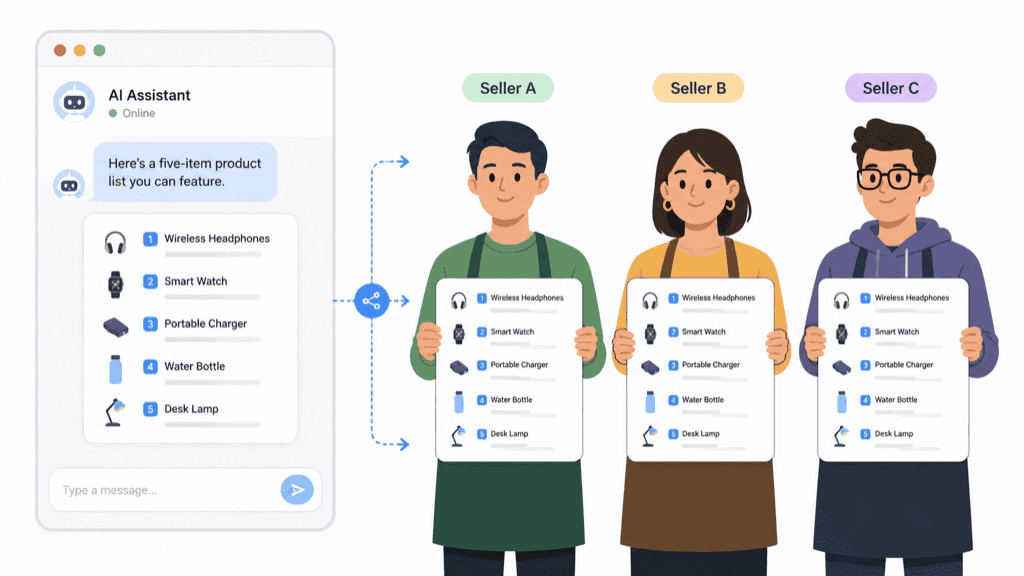
The tool isn’t the problem. You handed it a decision when the only thing it can give you is a candidate, and deciding is your job. So the work splits in two: narrow the question until what comes back is worth looking at, then check whether it survives contact with the real world.
By the end of this post you’ll have:
- A constrained prompt written around your situation, not a generic one
- A shortlist of candidates that aren’t on everybody else’s list
- A four-step screen that tells you which ones are worth testing and which ones to drop
- A reason for every candidate you cut, before you spend a dollar
The Constrain and Verify Method
The model produces candidates. You supply the proof.
And when I say a winner, I mean a candidate that survives all four checks and has earned a real test. The checks screen out the obvious losers and tell you where the economics get tight, which is a long way from proving something will sell, because nothing proves that except selling it. Anybody telling you a product is a sure thing in August is guessing the same way you are.
Part 1: The 5 Constraints That Change What Comes Back
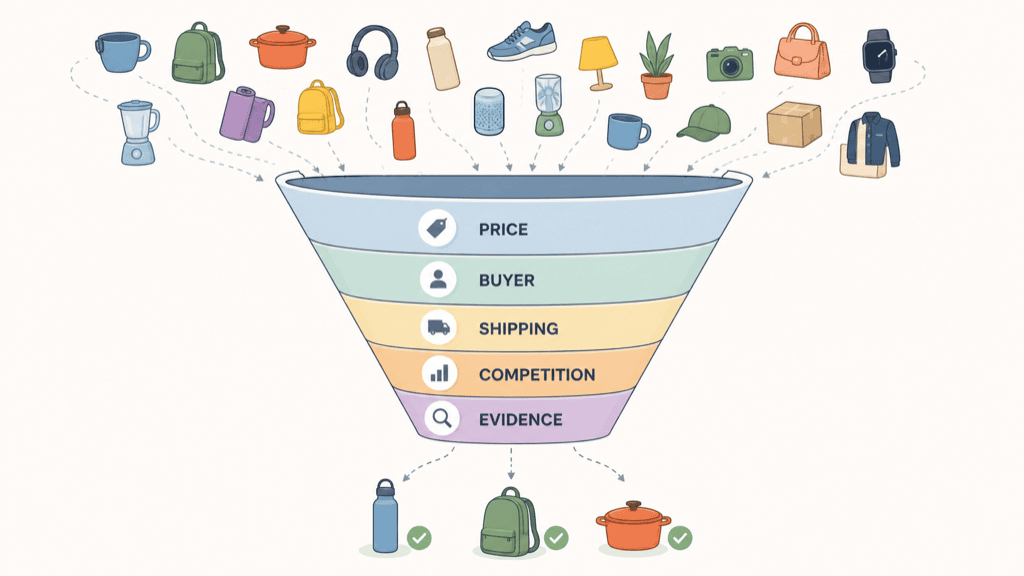
Name a Price Band Before You Name Anything Else
Price drives nearly everything downstream. It sets your shipping economics, whether you can pay for traffic, and how much convincing a buyer needs before they hand over a card.
Pick your band first and put it in the prompt. A $35 to $45 retail product, say, or an affiliate offer paying around $20 a sale. That number does more filtering than any other instruction you can give.
Give It One Buyer, Not an Audience
“Gift shoppers” isn’t a person. It’s a census category, and a model asked about a category will return category-level answers.
Name someone with a specific Q4 occasion. Someone buying for a friend who’s just started running outdoors in the dark evenings. Someone kitting out an adult child’s first apartment. The narrower the buyer, the further the suggestions travel from the standard list.
Tell It What You Can Actually Ship
The model has no idea what you can fulfill unless you tell it, which is why it cheerfully suggests fragile glassware to someone dropshipping from overseas in November.
Give it your real constraints:
- Whether you’re dropshipping, holding stock, or promoting as an affiliate
- Roughly where your supplier ships from and where your buyers are
- What you can’t handle: fragile, oversized, battery-restricted, perishable, anything needing sizing
Put a Ceiling on the Competition
Ask it to skip categories dominated by household-name brands and by Amazon’s own private labels, because that’s where the obvious answers live and where your margin goes to die.
Unless it’s browsing live and citing sources, the model can’t reliably tell you who dominates a category today, and it’ll sound confident either way. This constraint narrows the question rather than settling it, and step two of the Proof Check is where you find out for real.
Make It Show Its Evidence, Not Its Enthusiasm
Add a line telling it that for every suggestion it must state why it believes demand exists, and what it’s unsure about.
It won’t stop the model being wrong, but it makes the guessing visible instead of hiding it behind a confident tone, so you can see which suggestions are built on something and which ones are vibes.
What the Same Question Returns Once You Constrain It
Here’s the difference, using a made-up buyer so you can see the shape of it. This is an illustration of how the output changes, not a live run, so treat the products as examples rather than recommendations.
Unconstrained: weighted blankets, LED strip lights, pet grooming gloves, neck massagers, phone stands.
Constrained (“$35 to $45, buyer is someone shopping for a friend who’s just started running outdoors on dark winter evenings, dropshipping from a US supplier, nothing fragile, avoid categories owned by the big brands, and tell me what you’re unsure about”): a rechargeable running headlamp, a reflective vest with a light strip, thermal gloves with touchscreen fingertips.

Different list, and not because the model got smarter. You stopped asking it to guess what you meant.
Now take one candidate through the checks. I’ll use the headlamp.
Part 2: The Proof Check
Four steps, and none of them is a clean pass or fail. Each one gives you a signal, and part of the skill is reading what a weak signal means rather than treating it as a verdict.
1. Is the Demand Real?
Open Google Trends and search the terms a buyer would type, not the term you’d use as a seller. “Running headlamp”, “head torch”, “reflective running gear”. Check related queries while you’re there, since that’s where you find the words you didn’t think of.
What you want to see is a repeating seasonal shape, the same rise appearing in the same weeks three years running, which is a season you can plan around. A single spike is usually a fad or a news story that won’t come back.

If a term is flat, that might mean no demand, or it might mean the search volume is too low to register. Low-volume products can still sell well, so a flat line is a reason to check another way, not a reason to quit.
2. Is Anybody Already Selling It?
Go and look at live listings on Amazon, eBay, Etsy, wherever your buyer shops.
Read the listings for signs of actual buyers, not just sellers:
- Recent reviews, dated within the last few weeks
- Listings that have clearly been running a while and are still being maintained
- Sponsored placements, because somebody is spending real money to be there
An empty category is a question, not an opportunity. Sometimes nobody’s selling it because nobody wants it, and sometimes it’s genuinely early, so find out which before you commit. A category thick with listings doesn’t prove healthy demand either, since plenty of crowded ones are crowded with people making nothing.
3. Can You Actually Get It or Promote It?
This is the step people skip, and it’s the cheapest one to run.
If you’re selling it, find a named supplier who can get it to your buyers in time and confirm it in writing. There’s no universal Q4 cutoff date, since it depends on the supplier’s location, your buyers’ location, the shipping method and the product. Ask your supplier for their dates instead of trusting a number you read somewhere.
If you’re promoting it, find the affiliate program and check three things before anything else: the commission, the cookie window, and the traffic rules. A program that pays well but bans the traffic source you were planning to use is a dead end you want to hit today, not in November.
4. Does the Money Actually Work?
A candidate can pass all three checks above and still lose you money on every single order.
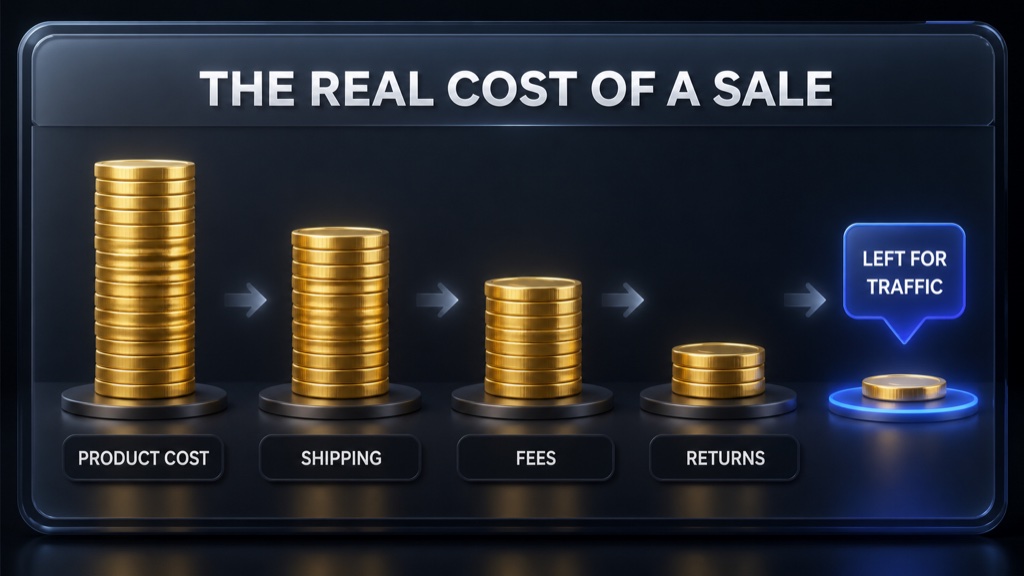
For a physical product, write out the real numbers: product cost, shipping, payment and marketplace fees, and an allowance for returns. Subtract all of it from your selling price and look at what’s left. That remainder is what you have to pay for traffic, and if it’s thin, you’re relying on free traffic to make the whole thing work.
For an affiliate offer, a $20 commission is worth a good deal less than $20 once a short cookie window and a restricted traffic source get involved.
Back to the headlamp. Say it shows a clean seasonal rise every fall, plenty of listings with fresh reviews, and a US supplier who’ll confirm dates. It reaches step four in decent shape. Then you run the numbers on a $40 sale, take off the cost, the shipping and the fees, and find there’s very little left to spend acquiring a customer. That doesn’t kill the candidate. It narrows how it can work, so you’d bundle it up to a higher price point, or sell it to an audience you already have rather than to cold traffic, or promote it as an affiliate if step three turned up a program with better economics than selling it yourself.
The screening cost you an afternoon and no money, and the supplier’s reply arrives while you get on with something else. Finding the same thing out in November costs a lot more.
Your 5-Minute Quick Win
Open a note and fill in these five blanks, then paste the result straight into ChatGPT:
“Find me products selling between $ and $ for a buyer who is __ in the run-up to the holidays. I’m __ (dropshipping from ___ / holding stock / promoting as an affiliate) and I can’t handle _____. Skip anything dominated by major brands or Amazon’s own labels. For each suggestion, tell me why you believe demand exists and what you’re unsure about.”

Five blanks, five minutes. Whatever comes back goes through the four checks before it gets another minute of your time.
“But What If…”
“What if I don’t have a store yet?”
Then run it for affiliate offers instead of products. The constraints barely change, step three becomes finding a program rather than a supplier, and the whole thing costs you nothing but an afternoon.
“What if I already have a store that’s selling?”
Then skip the discovery part. Use the constraints to describe the buyer you’re already selling to, ask what else that person needs in December, and run the four checks on the answers. An add-on to an item that already moves is the shortest route to Q4 revenue there is.
“Isn’t it too late to start a Q4 product now?”
For sourcing something new from overseas and building a store around it, you’re getting tight. For choosing an affiliate offer, adding a product to a store you already run, or selling something a domestic supplier can ship, there’s runway. Ask your supplier for their dates rather than assuming.
“What if ChatGPT invents the evidence too?”
It might, which is why the Proof Check exists. Anything it tells you about demand is a claim to be tested in Trends, in live listings, and with a supplier or a program. Nothing gets believed inside the chat window.
The thing that costs you in Q4 isn’t picking a bad idea. It’s spending six weeks building around one, at the point in the year when you don’t get those six weeks back.
Ask a lazy question and you’ll get the answer everyone else got. Ask a narrow one, then check what comes back against live evidence and confirm the shipping and the commission with the people who actually owe you those answers. The model can hand you a candidate in ten seconds. Finding out whether it’s worth your Q4 is the part that’s yours.

