
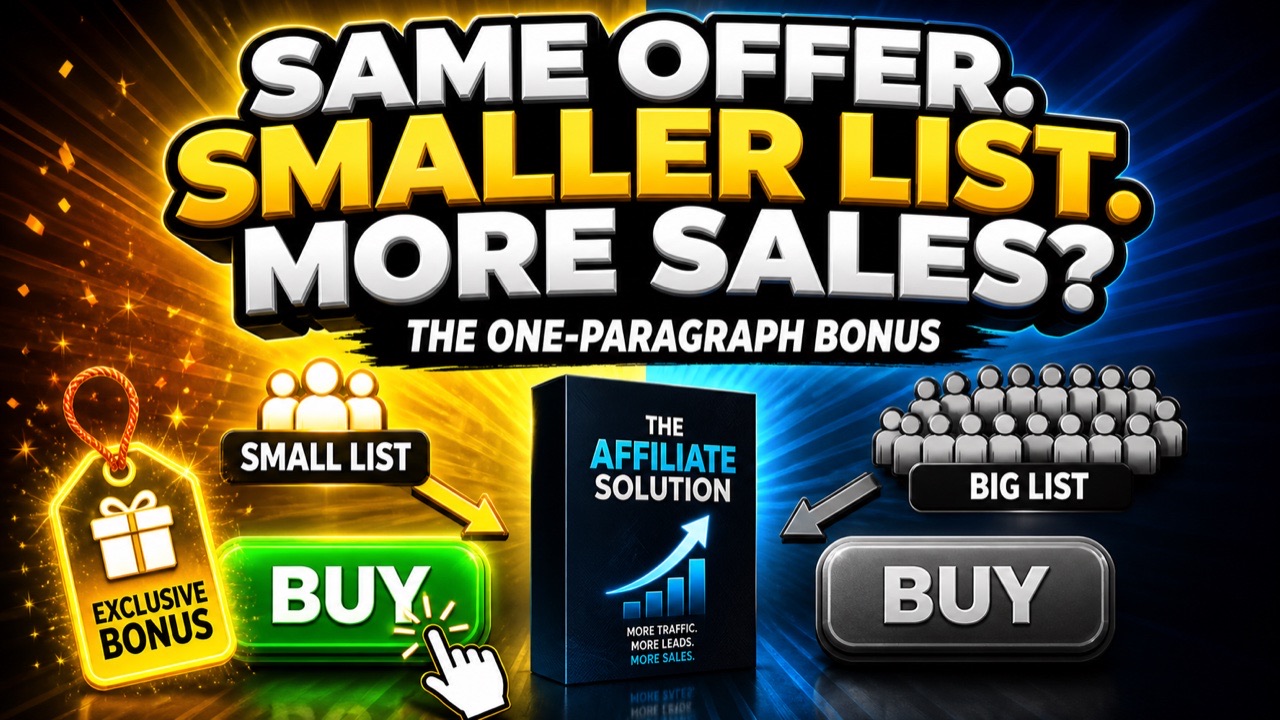
Two affiliates promote the exact same offer in the same week. One has a list of 40,000. The other has barely 3,000. When the commissions come in, the smaller list has out-earned the bigger one, on the same product, to a fraction of the audience.
It happens more often than you’d think, and it’s tempting to write it off as luck or a warmer relationship with the list. Sometimes that’s part of it. A smaller list can win for all sorts of reasons: more trust, a tighter fit with the offer, higher engagement, better timing, sharper segmentation, or a stronger warm-up before the pitch. Those all matter, and I’m not going to pretend one trick beats them.
But there’s one reason that comes up over and over, and it’s the one you can actually control this week. The bigger affiliate sent the same link as everyone else. The smaller one gave the buyer a reason to click their link instead of the other eleven people mailing the identical offer. That reason was a bonus. Not a generic freebie bolted on to look generous, but an exclusive, relevant extra that made buying through them the obvious choice.
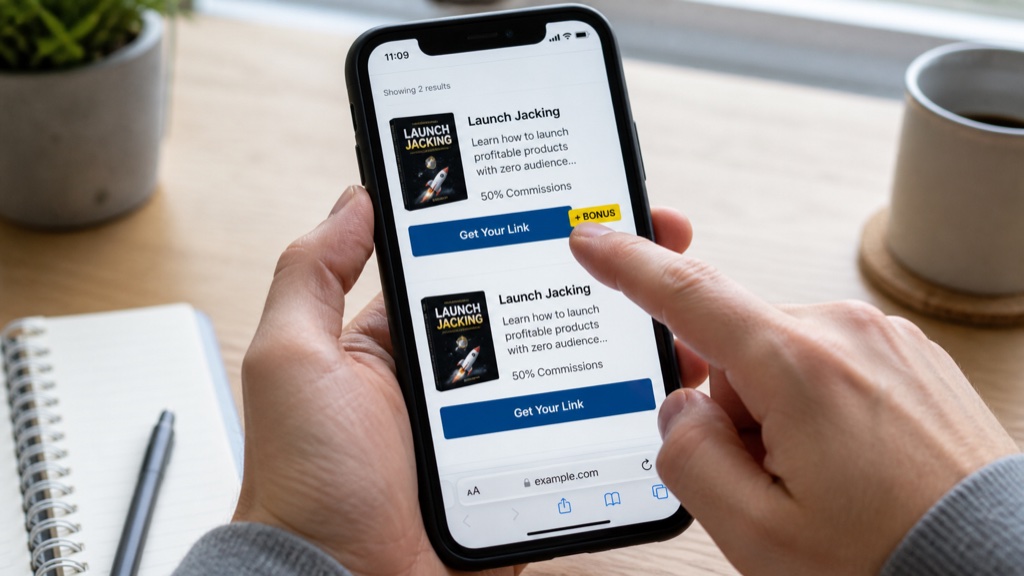
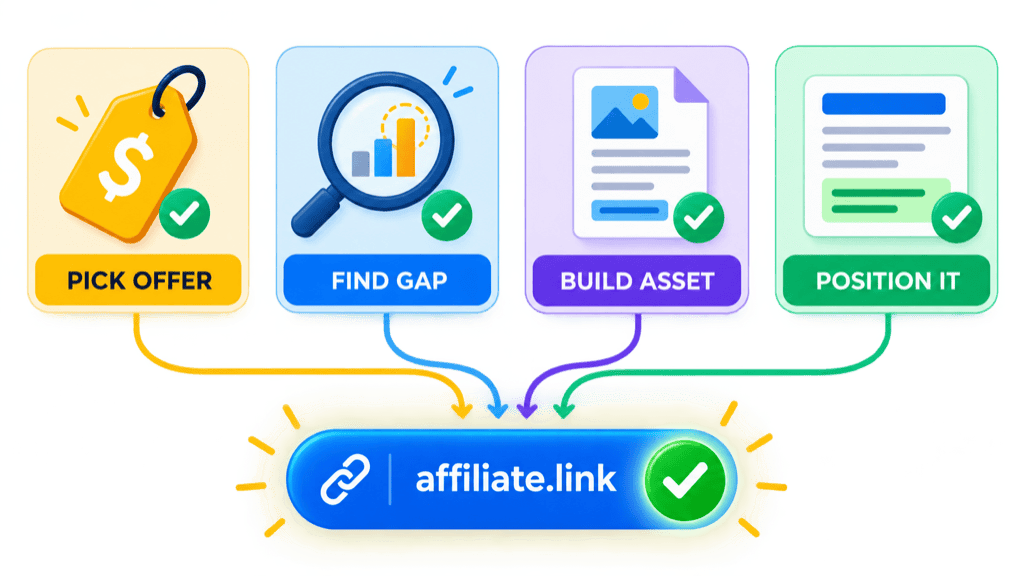
If you’re not promoting anything yet, this still matters, because it’s the difference between an affiliate link that earns and one that just sits there. Building one takes four steps.
By the end of this post you’ll have:
- One offer chosen, the kind where a bonus can genuinely tip the decision
- The gap that offer leaves, the problem your buyer hits next
- The smallest possible asset that closes that gap
- The paragraph that positions it, so the value is obvious before anyone clicks
The One-Paragraph Bonus
The name is doing two jobs, so let me separate them before we start. The bonus is the small asset you create, a checklist or a template or a short walkthrough. The paragraph is the bit most affiliates skip: the few lines that position that asset and make someone want it before they buy. Get both right and the size of your list starts to matter a lot less.
Step 1: Pick the Offer Where a Bonus Can Actually Change the Decision
Not every offer is worth building for. A bonus earns its keep when the buyer is genuinely weighing the decision, so you want an offer with real hesitation baked in. Run each candidate through a few quick checks:
- It’s a considered purchase, not an impulse buy. The more someone deliberates, the more a bonus can tip them.
- There’s real hesitation you can name. If people buy without thinking, a bonus adds nothing.
- The commission is worth the effort of creating and supporting the asset.
- Other affiliates are promoting it too. That overlap is where a bonus becomes especially useful, because it’s what makes your link the one that stands out.
- The program allows bonuses. Some affiliate programs forbid incentives outright, so there’s no point creating an asset you’re not allowed to offer.
That last one trips people up, so confirm it before you spend any time on the rest. Reading the terms after the asset is built is how good afternoons get wasted.
Step 2: Find the Gap the Offer Leaves, Not the One It Already Fills
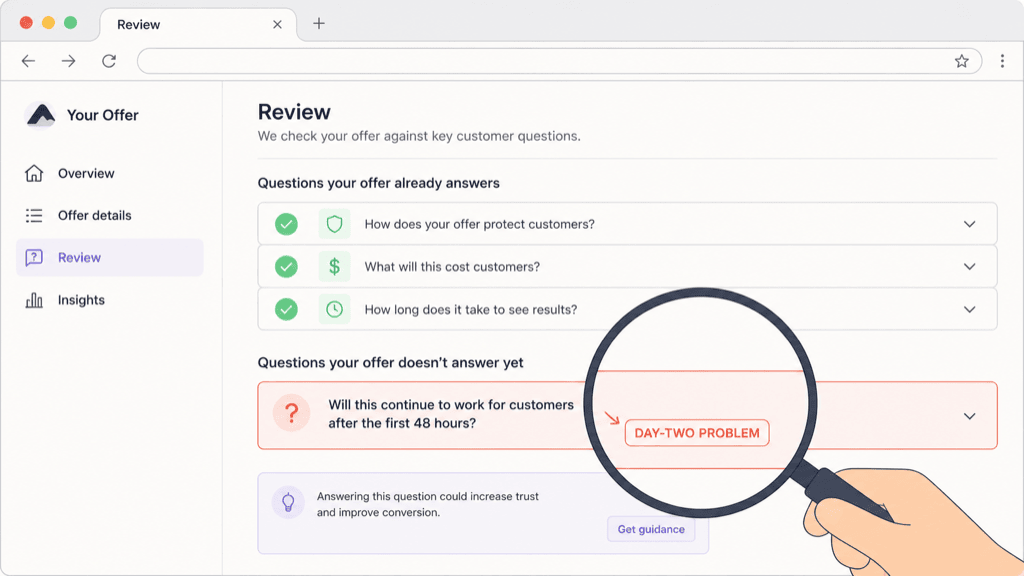
The best bonus solves the buyer’s next problem, the thing they’ll run into on day two once the offer is in their hands. The offer itself handles day one. Your job is to look one step further and hand them what they’ll wish they had next.
You don’t need inside information to find that gap. You need to read what’s already public:
- The offer’s own sales page, and specifically what it conveniently leaves out
- The FAQ, where the awkward questions get answered
- Public reviews, where buyers say what they wish they’d known first
- Product communities and support threads, where people describe where they got stuck
- The comments under videos and posts about the offer
- Your own audience’s replies, the questions they email you before they buy
If you’ve got an affiliate manager, ask them directly what buyers get stuck on. They talk to more customers than you do, and they want you to convert.
Step 3: Build the Smallest Thing That Closes the Gap
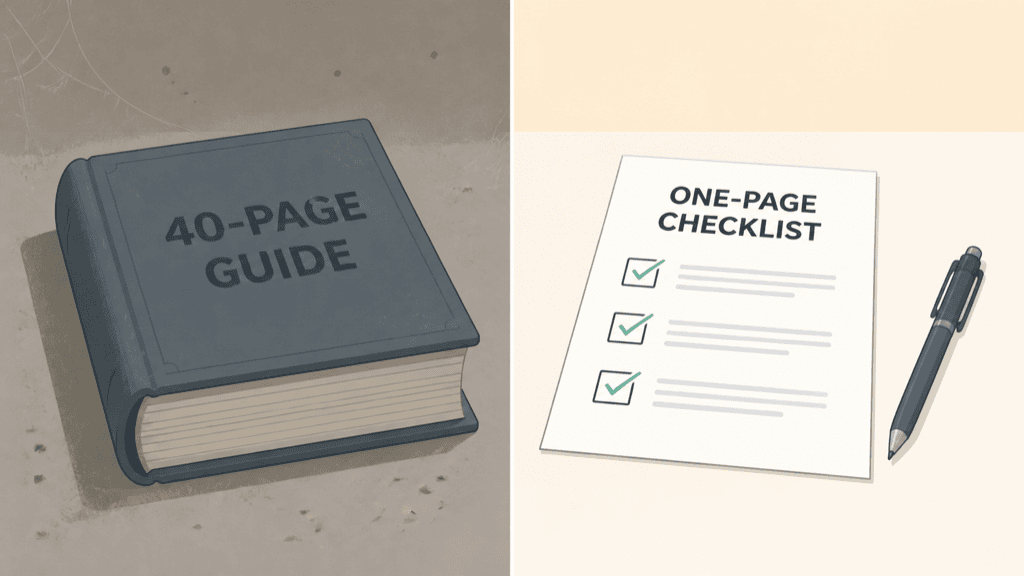
Once you know the gap, resist the urge to build something big. The goal is the smallest asset that closes it, because a one-page tool people use beats a 40-page guide they never open. A few formats that work well:
- A one-page checklist that walks them through the day-two problem
- A filled-in spreadsheet or template they can copy and adapt
- A swipe file of examples they’d otherwise have to write from scratch
- A short walkthrough, ten minutes of video showing the thing done once
And a short list of what not to build, because this is where evenings disappear:
- Anything that takes longer to make than the commission is worth
- A full course when a checklist would do
- Something so generic it could be attached to any offer, which defeats the point of making it exclusive
Step 4: Write the Paragraph That Positions the Bonus
This is the part that converts, and it’s the part most people rush. A strong asset with no framing just sits in a footer. The paragraph does three things:
- Names who it’s for, so the right reader feels spoken to
- Names the specific thing it saves them, the time, money or headache
- Says how they claim it, so there’s no friction after they buy
Strung together it reads something like this: “If you’re switching email tools and worried about losing subscribers along the way, buy through my link and I’ll send you my one-page migration checklist so you don’t drop a single contact. Forward me your receipt and it’s yours.” That’s two sentences covering the three jobs: who it’s for and the day-two problem, then the asset, what it saves them, and how they claim it. Swap in your own offer and gap and you’ve got your paragraph.
Then handle the practical mechanics. Decide how you’ll deliver the bonus, whether that’s an automatic email after purchase or a simple form where they forward their receipt. Keep it inside the program rules you already checked in Step 1. Promise only what you can deliver, and deliver it fast, because a bonus that shows up late does more harm than no bonus at all.
What a Bonus Can Be Worth
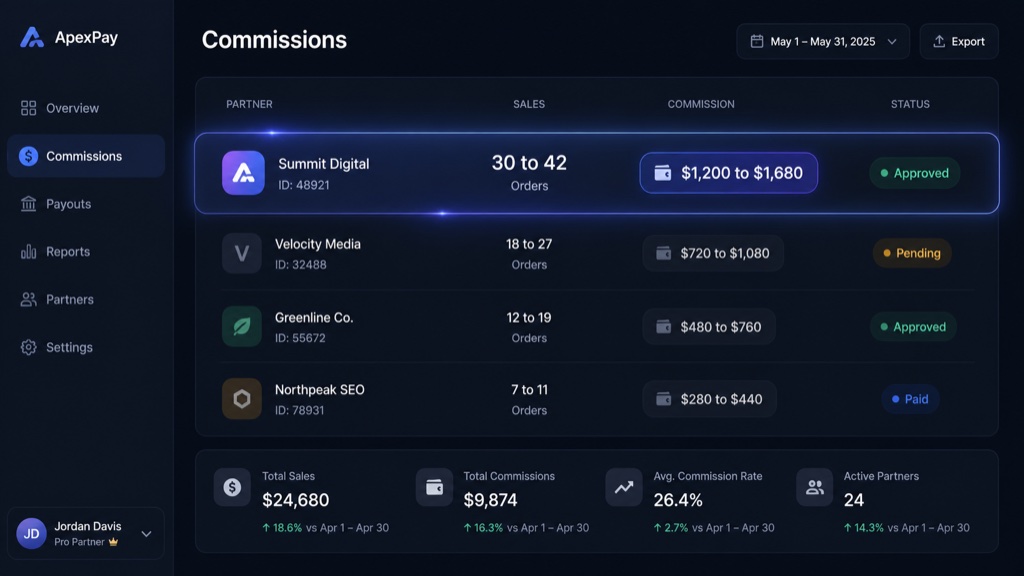
Here’s a rough illustration, and I do mean rough, because the point is the shape of it rather than the exact figures. Say you send the same offer to the same 3,000 people either way. Without a bonus, maybe 1% buy through your link, so 30 sales. Add a relevant bonus that nudges a few fence-sitters and lifts that to 1.4%, and you’re at 42 sales. On a $40 commission, that’s the difference between $1,200 and $1,680 from the same list and the same email.
That’s an example, not a promise. Not every offer or audience will move the same way, and some won’t move at all. The asset costs you something to make and deliver, and refunds or tracking gaps will shave a little off the top. But even a small lift on traffic you already have can be worth an afternoon of building, which is the whole idea.
Three Real-World Scenarios
Scenario one: the affiliate review site. She reviews email tools and keeps seeing the same question in her comments: people don’t know how to move their existing list to a new tool without losing subscribers. That’s the day-two gap. So she builds a one-page migration checklist, positions it with a line that says exactly that (“grab my step-by-step migration checklist so you don’t lose a single subscriber when you switch”), and delivers it automatically to anyone who buys through her link. The tool already has demand, and her checklist gives the buyer a reason to use her link.
Scenario two: the small email list promoting software. He has 1,800 subscribers and he’s promoting a scheduling tool that a dozen bigger affiliates are also mailing. The gap he spots is setup: people buy the tool and then stall on connecting their calendar. His bonus is a ten-minute walkthrough video doing exactly that, positioned for “anyone who’s bought a tool before and never finished setting it up.” He delivers it by replying with the link once buyers forward their receipt.
Scenario three: the ecommerce seller. She runs a small store and uses a particular inventory app every day, and it happens to pay an affiliate commission. Her audience is other small sellers. The gap is knowing which settings matter, so she shares her own filled-in configuration as a template, positioned as “the exact setup I use to run my store.” Because she genuinely uses it, the bonus is credible in a way a stranger’s version never could be.
Why This Matters
The moment results plateau, most people go looking for more traffic. More subscribers, more ads, more posting. That’s the expensive path, and it’s often the wrong one to start with. Before you go chasing more people, it’s usually cheaper to raise what each person you already reach is worth, and a relevant bonus is one of the few levers that does that without buying more traffic.
There’s a real limit here, though. A bonus can’t rescue an offer your audience doesn’t want, and it can’t manufacture trust you haven’t earned. Relevance and trust come first. But when the fit is already there and you’re promoting the same thing as everyone else, the bonus is what makes your link the one that gets clicked.
Your Quick Win: Map Your Bonus in Five Lines
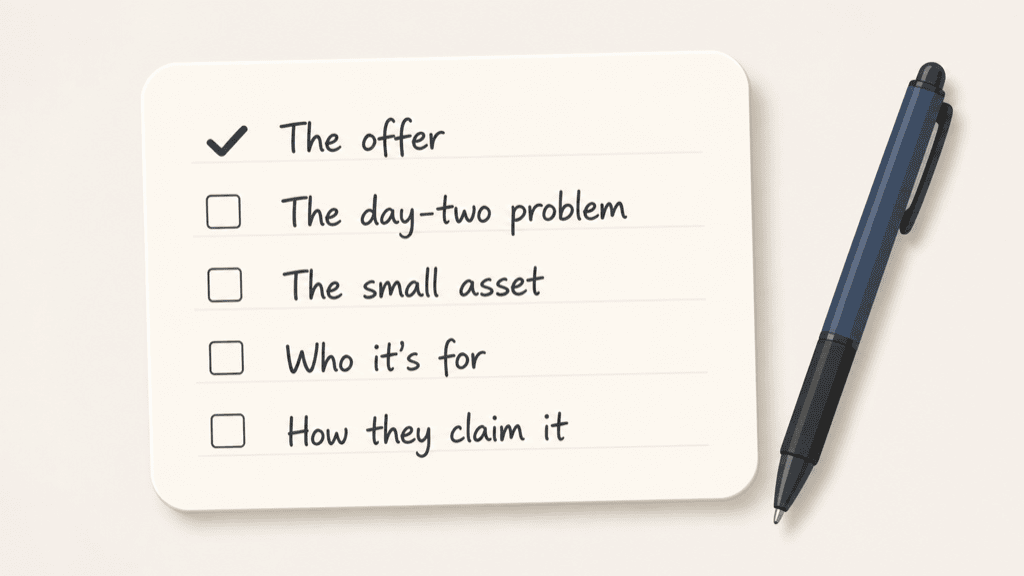
Before you close this tab, write these five lines in a note. It takes a couple of minutes, and it turns a vague idea into something you can build this week:
- The offer I’ll promote: ___
- The day-two problem my buyer hits: ___
- The small asset that closes it: ___
- Who it’s for, in one line: ___
- How they’ll claim it: ___
You don’t need the finished bonus today. Get these five answers down and you’ll know exactly what you’re building next.
“But What If…”
“What if my list is tiny, or I don’t have one yet?”
If your list is tiny, this is exactly where a bonus helps. If you don’t have an audience or any traffic yet, you still need somewhere to promote the offer first, because a bonus changes why someone picks your link, but it can’t create the people clicking it. You don’t need a big list, though. Start with the people you can already reach and give them a better reason to buy through you.
“What if I don’t have anything worth giving away?”
You almost certainly do. The best bonuses aren’t polished products, they’re the checklist, template or short walkthrough that solves one specific problem. If you’ve used the offer yourself, the way you use it is the bonus. If you haven’t, the research from Step 2 hands you the gap to fill.
“What if I’m not sure the program allows it?”
Then don’t build anything until you know. Check the affiliate terms or ask the manager directly before you spend an afternoon on an asset you might not be able to use. It’s a two-minute question that saves you the whole build.
Go back to those two affiliates from the start, the 40,000-person list and the 3,000-person list promoting the identical offer in the same week. All sorts of things could have separated them, and most you can’t fix by Friday. This one you can. The bigger list sent a link. The smaller one sent a reason.
Same offer, same week, same product. You may not be able to control the size of your audience by Friday, but you can give the people you already reach a better reason to choose your link.

